Where to Put Cat Carrier While Driving: Complete Guide for Pet Owners
Why Cat Carrier Placement Is Critical
Transporting your cat safely is about more than convenience—it’s essential for both your pet’s safety and your own. Incorrect placement of a cat carrier can result in injury, stress, and even escape during sudden stops or an accident. Vet-backed guidelines strongly recommend avoiding placement that could put your cat at risk, like the front passenger seat or unsecured cargo areas.
Understanding the Dangers of Incorrect Placement
Sudden braking, swerves, or collisions can cause an unsecured carrier to slide, tip, or fall, possibly injuring your cat. Placing the carrier on the front seat risks trauma from airbags or dashboard impact. Even the cargo area of an SUV or hatchback usually lacks adequate restraint points and can become a danger zone in a crash [Sploot Vets].
Loose cats also cause distractions, leading to accidents. Always keep your pet contained in a closed carrier.
Optimal Placement: Where Should You Put the Cat Carrier?
-
Best Option: The floor behind the front passenger seat is the safest, most stable area for a cat carrier—especially if your carrier is not crash-tested for seatbelt use. The floor has the lowest center of gravity, preventing tipping and sliding.
-
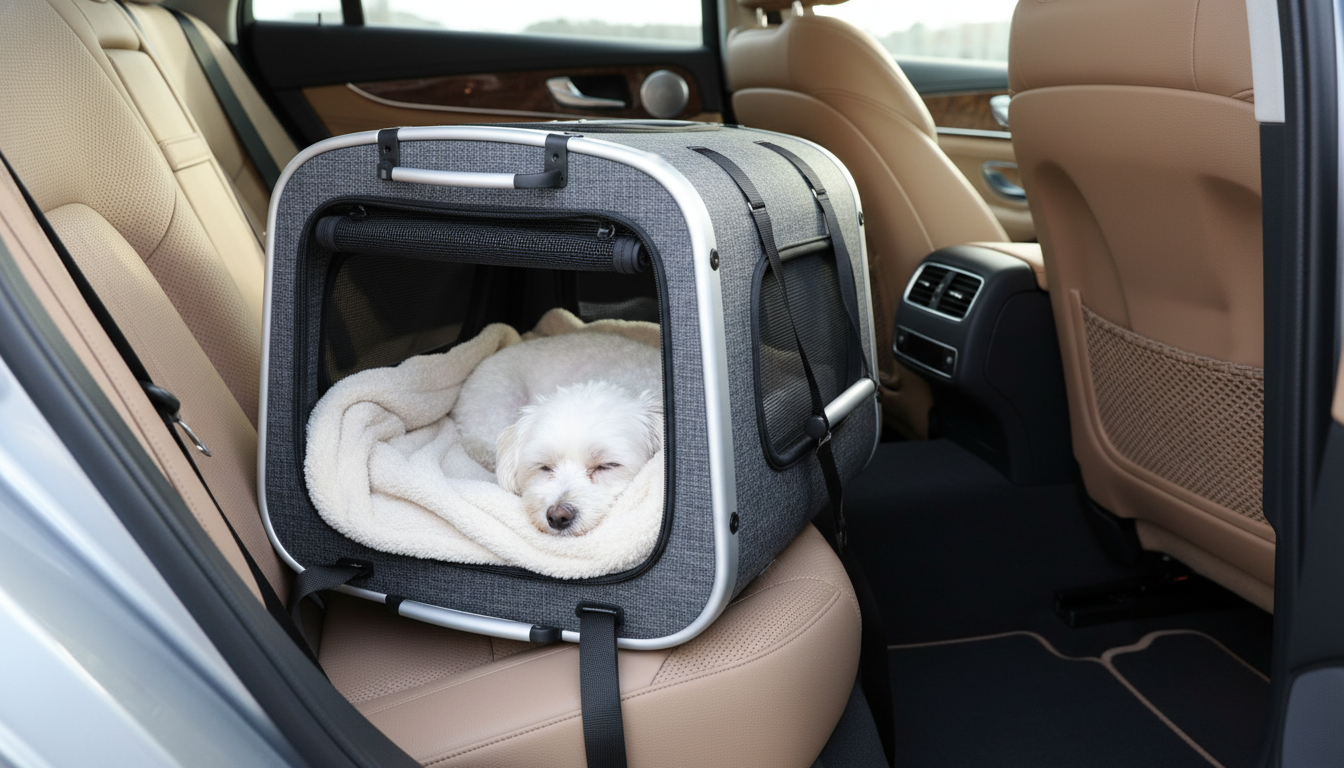
Great Alternative: The back seat, securely buckled in with a seatbelt, is also recommended for well-designed, crash-tested carriers. Secure the carrier using loops or dedicated harness points built into the carrier.
-
What to Avoid: Never place the carrier on the front seat due to airbag risks, nor in the cargo zone where it might slide or tip freely [GoPetFriendly].
How to Secure the Carrier Properly
- Use a hard-sided carrier (preferred for impact protection) or a premium, well-constructed soft carrier with secure strap options.
- Flat positioning: Make sure the carrier is level. If your seat tilts upward, place a folded towel underneath for stability.
- Seatbelt loops: If your carrier is certified for seatbelt use, follow the manufacturer’s guidance to attach it firmly.
- Non-slip mat: Place a rubber mat or towel underneath to help keep the carrier from sliding.
- Ventilation: Leave all air vents unobstructed, and avoid positioning next to drafty or sun-exposed windows.
Choosing the Right Cat Carrier for Safe Car Travel
There are many carrier styles, but hard-sided carriers provide the best crash protection. If using a soft-sided option, opt for rugged, ergonomic brands with reinforced sides and sturdy straps—like King Wuff’s line of dog and small pet carriers, which are designed for security, durability, and eco-friendliness.
Key features of a high-quality carrier:
- Strong structural integrity
- Effective seatbelt loops or strap systems
- Breathable, padded interiors for comfort
- Machine-washable bedding
- Lockable, easy-to-close doors
Travel Tips for Calming and Comforting Cats in Carriers
- Place familiar bedding or your cat’s favorite towel inside the carrier for comfort and scent reassurance.
- Partially cover the carrier with a light, breathable cloth to minimize visual stressors and noise.
- Acclimate your cat before travel by placing the carrier in your home as a safe resting spot for several days in advance.
- Never open the carrier while the car is moving, and never allow your cat to roam free, even on short drives.
- On long trips, schedule regular stops—but only open the carrier in a secure, enclosed space.
For more advanced travel advice, consult trusted sources like the Tractive Pet Travel Guide or the SPCA’s official tips on crate and carrier travel.
Spotlight: King Wuff Carriers for Optimal Safety & Comfort
At King Wuff, safety meets style. The brand’s Dog Carrier Bag Black “Seashell” and Puff Puppy Car Carrier are ideal for small pets, combining ergonomic design, secure closures, padded interiors, and eco-friendly materials. Their “Tote’n’Go” Black Canvas Carrier meets the needs of pet parents seeking durability and easy maintenance. Give your cat a safe and stylish ride no matter the distance.
| Placement Location |
Advantages |
Considerations |
| Floor behind front passenger seat |
Most stable, low risk of movement |
Best for non-crash-tested carriers |
| Back seat (belted) |
Accessible, elevated visibility, secured against sliding |
Only use with certified or very sturdy carriers |
| Front seat or cargo area |
Not recommended |
High risk from airbags, excessive movement, or instability |
Frequently Asked Questions
- Where is the safest place for my cat carrier in the car? The floor behind the front passenger seat, or buckled securely in the back seat with a crash-tested carrier.
- Can the carrier go on the front seat? No—risk of airbag deployment and impact injury.
- Should I buckle in the carrier? Yes, if it’s designed or certified for seatbelt restraint. Otherwise, use the floor spot.
- Is it ever safe to let my cat out during the drive? Never. Always keep your pet in a locked, secure carrier.
- What makes King Wuff carriers suitable for cats? Ergonomically designed, secure, and comfortable for both dogs and small pets like cats.
Conclusion: Give Your Cat the Ultimate Travel Advantage
Choosing the right placement and carrier makes all the difference in keeping your cat protected and calm on the road. Always prioritize a secure, well-designed carrier positioned on the car floor behind the front seat or strapped in on the back seat, following veterinary advice and expert resources. Ready to upgrade your pet’s travel safety? Explore King Wuff’s carrier range—where comfort meets security for every trip, big or small.



Leave a comment