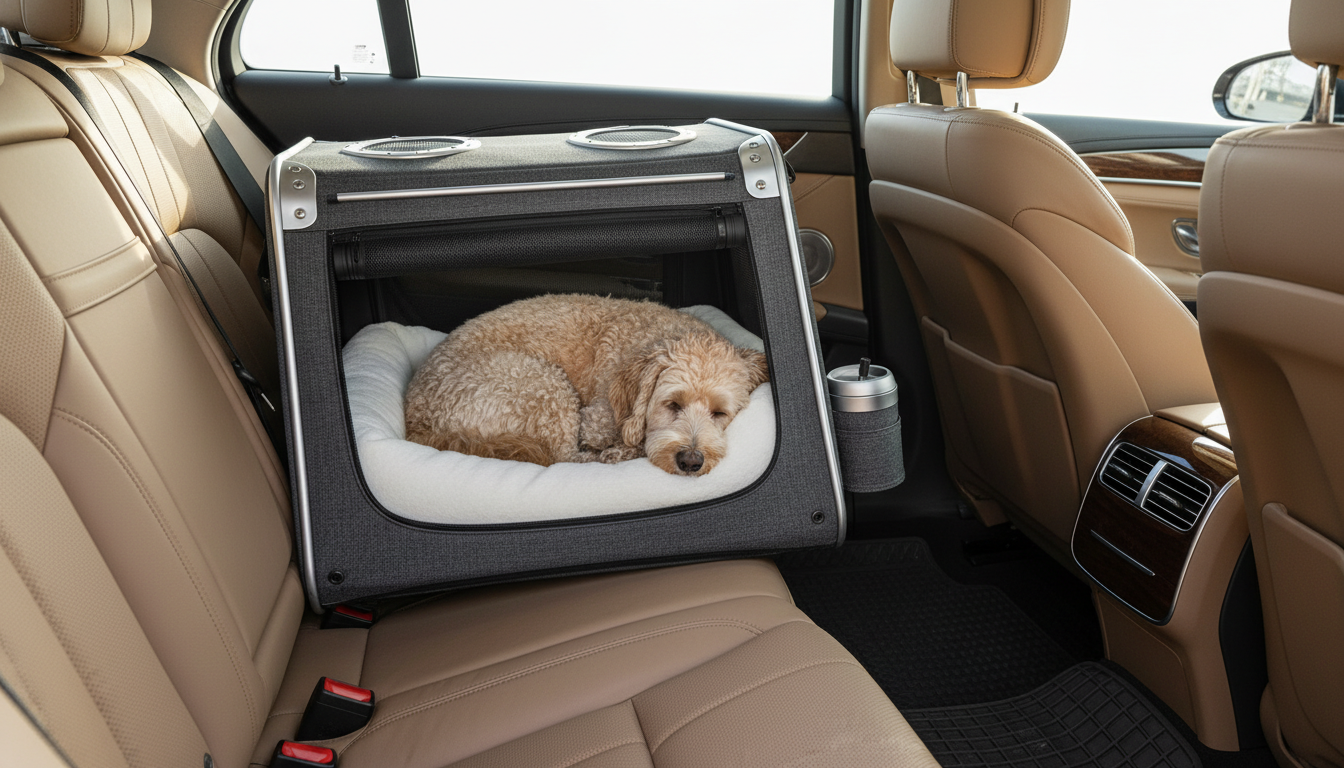
When traveling by car with your dog, the right approach to securing your pet carrier ensures both your pup’s safety and your own peace of mind. The wrong placement could put your dog at risk from sudden stops, airbags, or turns, while also distracting you at the wheel. Proper, stable, and crash-tested equipment is just as important as choosing the best spot in your vehicle. Here, we break down expert-backed placement recommendations, security essentials, and the unique safety features of premium brands like King Wuff.
The safest place for your pet carrier is on the back seat, secured directly behind the driver or front passenger seat (ASPCA). This keeps your pet away from active airbags, which can seriously injure or kill an animal on deployment. Position the carrier on the vehicle floor for extra stability, especially for small to medium-sized dogs or miniatures.
Use your car’s seatbelt to wrap around the length of the carrier, buckling it firmly. For compatibility with various carrier styles, use built-in loops or dedicated safety straps designed for your carrier model. A properly tightened belt should allow almost zero movement around turns or during sudden stops (Petmate Academy).
Illustration: Pet carrier secured in the optimal position behind front seats, ensuring stability and crash protection.
Once you have the ideal spot, proper securing is critical. Here’s an expert-driven step-by-step to maximize your dog’s safety and comfort on every trip:
Tip: For anxious or travel-sensitive pets, place familiar bedding or a favorite toy inside to reduce stress and help with acclimatization.
Quality matters when your dog’s safety is on the line. King Wuff carriers are built for small and miniature dogs, designed with ergonomic shapes, eco-conscious fabrics, and thoughtful details. Their carriers are compatible with standard car restraints and undergo safety tests to meet or exceed industry guidelines.
Choose from the Black Seashell Carrier, the Puff Puppy Car Seat Carrier Bag, or the Tote’n’Go Black Canvas Carrier for a blend of luxury, safety, and ergonomic excellence.
Responsible travel starts with informed choices. Always position and secure your pet carrier in the back seat or on the floor behind the front seats, and choose only high-quality, crash-tested carriers for your canine companions. King Wuff’s ergonomic, eco-friendly designs deliver the safety your pet deserves, plus style and comfort for you both. Upgrade your dog’s travel experience today—and never compromise on safety. Explore the King Wuff collection here.
Want more expert advice? Discover additional tips on safe pet transport from organizations like the ASPCA, Center for Pet Safety, and PetMD.

Leave a comment