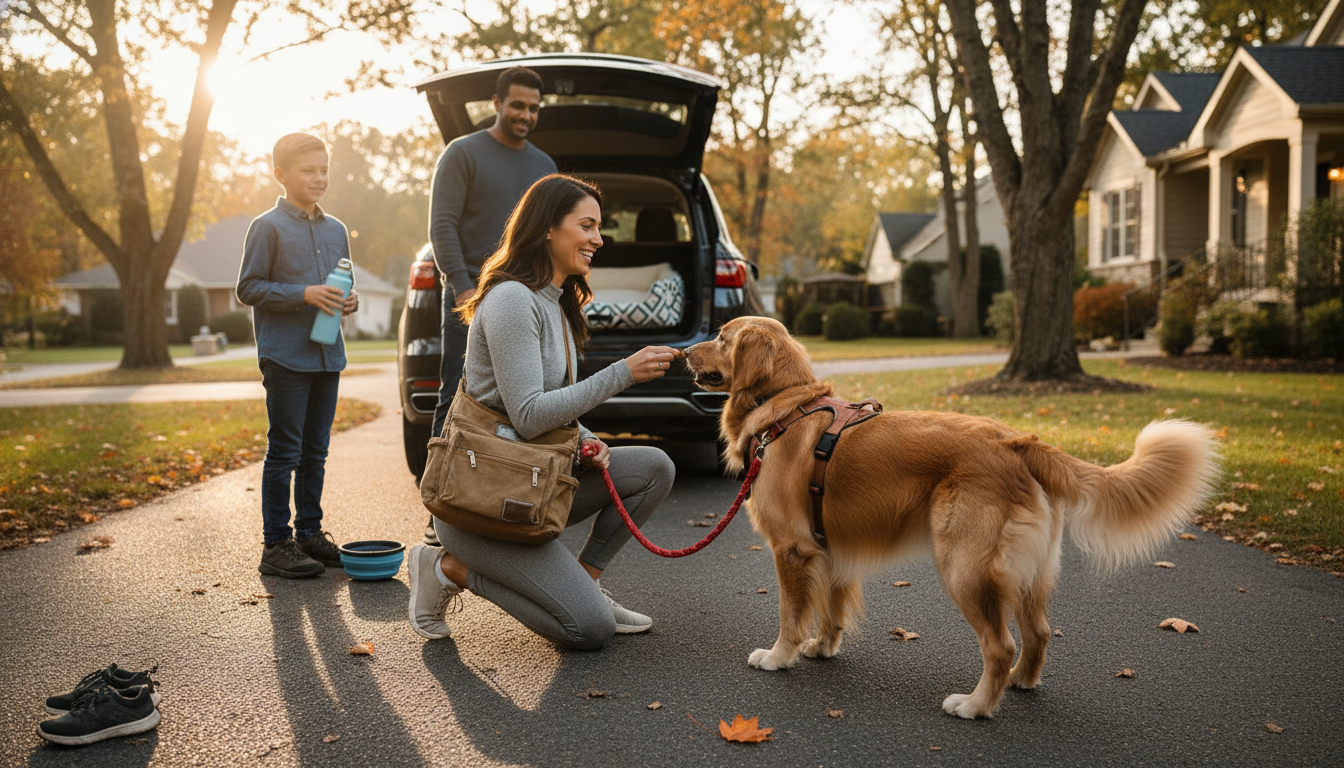
Daily walks can absolutely help a dog lose weight—when they’re consistent, long enough to raise the heart rate, and paired with the right portion sizes. Walking burns calories, builds lean muscle, and supports healthier joints and digestion, which can make weight loss feel more comfortable for many pups.
That said, walks alone won’t always do the whole job. If treats are frequent or meals are a little too generous, it’s easy to “out-eat” the calories burned on a stroll. For the best results, combine a steady walking routine with measured meals, fewer high-calorie snacks, and regular weigh-ins.
Start where your dog is. If your dog is currently sedentary or significantly overweight, begin with shorter, slower walks (10–15 minutes) and add time gradually. Consistency matters more than intensity at first.
Build in gentle challenges. Once your dog is comfortable, add a few minutes each week, include mild hills, or alternate between brisk walking and easy “recovery” minutes. This helps burn more energy without pushing too hard.
Watch for signs of overdoing it. Heavy panting, lagging behind, limping, or refusing to continue are signals to slow down and consult a veterinarian—especially for senior dogs or breeds prone to breathing or joint issues.
Weight loss works best when walks feel simple and enjoyable. Keeping essentials organized—waste bags, treats, water, and a small towel—can make it easier to head out daily without forgetting something. For ideas on staying hands-free and prepared, visit this guide to a hands-free, organized dog walking bag.
Most dogs benefit from 30–60 minutes of total daily walking, but the right duration depends on age, breed, and current fitness. A veterinarian can help set a safe target if weight loss is a goal.
Brisk walking is often the safest, most sustainable starting point. For dogs who can handle more, adding short play sessions or gentle jogging intervals can increase calorie burn.
Yes, many dogs can lose weight with daily walks, especially when walks are long enough and consistent. Results improve significantly when paired with controlled portions and fewer high-calorie treats.