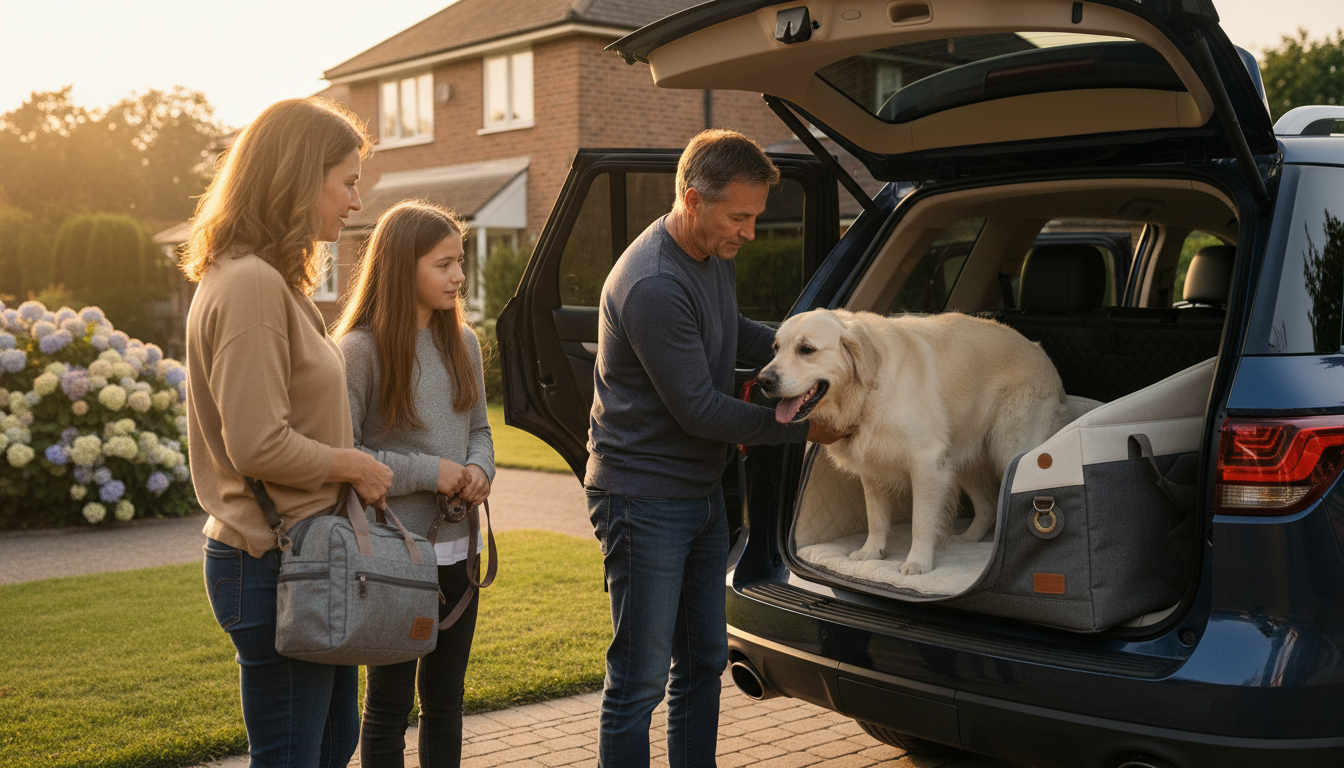
Panting and shaking in the car is most often a sign of stress, nausea, or overstimulation—not stubbornness. Many dogs learn to associate rides with something uncomfortable (motion sickness, loud road noise, slippery seats) or scary (past vet visits, sudden braking, unfamiliar smells). Sometimes it’s simply too warm in the vehicle, especially if your dog is excited and can’t settle.
Car anxiety: A dog who feels unsteady or confined may shake, pant, drool, or whine. Anxiety can build the moment the keys jingle or the door opens.
Motion sickness: Nausea can look like heavy panting, trembling, lip-licking, yawning, or vomiting. Puppies often outgrow it, but some dogs need training and support.
Heat and poor airflow: Dogs don’t sweat like humans; panting is how they cool down. Warm air, direct sun, and thick bedding can make panting much worse.
Pain or medical issues: If your dog is also lethargic, coughing, has pale gums, or the behavior suddenly appears out of nowhere, it’s worth calling your vet promptly.
Start with comfort and stability. A secure, supportive car seat or carrier reduces sliding and helps your dog feel “held” during turns and stops. Position them where airflow is good, keep the cabin cool, and offer a familiar blanket that smells like home.
Build positive associations with short, easy trips: sit in the parked car with treats, then drive around the block, gradually increasing time. Avoid feeding a big meal right before travel, and take breaks on longer drives.
For a deeper look at setting up a cozy, safe ride—especially for small dogs—visit this guide to the Puff Puppy Dog Car Seat & Carrier.
Keep the car cool, improve airflow, and use a stable seat or carrier so your dog isn’t bracing with every movement. Practice short, calm rides with rewards, and talk to your vet if panting is extreme or paired with nausea.
This combination often points to anxiety, discomfort, or a sudden change in routine. If it’s new, intense, or accompanied by vomiting, diarrhea, limping, or unusual tiredness, contact your vet.
Sudden fear and constant clinginess can happen after a scary event, pain, or illness. If it persists beyond a day or two or seems severe, it’s safest to get a veterinary check.