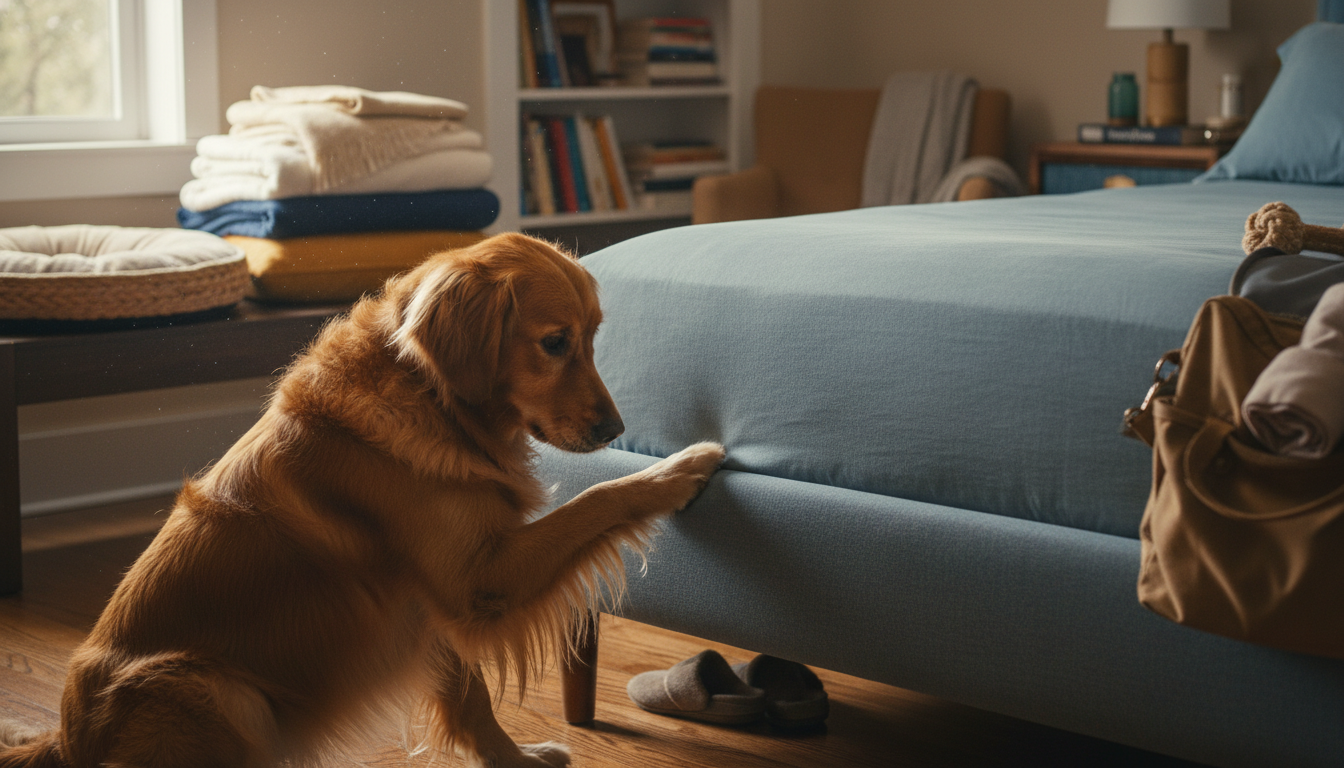
Dogs scratch at mattresses for a mix of instinct, comfort-seeking, and communication. In the wild, scratching and “digging” helps create a safer, softer sleeping spot, and that behavior can carry right into the bedroom. If your dog paws at your mattress before settling down, it’s often a homemade version of fluffing a nest.
Another common reason is scent. Your bed smells strongly like you, and scratching can be a way to “mix” scents and claim a cozy, familiar spot. Some dogs also scratch when they’re excited to join you, looking for attention, or anticipating rest.
Below are practical points for common reasons dogs scratch bedding.
Scratching can help a dog find the “right” spot and temperature. They may be trying to bunch up blankets, cool the surface, or make a dip that feels secure.
If scratching is intense, repetitive, or paired with pacing or whining, it can signal anxiety or overstimulation. Changes in routine, travel, guests, or noise can trigger restless bedtime habits.
Mattress scratching can be part of a bigger itch picture—especially if you notice frequent licking, rubbing, or scratching elsewhere. Fleas, dry skin, environmental allergies, or even detergent residue on bedding can contribute.
When a dog doesn’t have a dedicated, comfortable sleep spot, they’ll improvise. A supportive bed can reduce mattress digging and protect your sleep space while giving them the cozy security they’re looking for.
Start by offering an inviting alternative: a plush, supportive dog bed placed near your bed (or wherever your dog wants to settle). Reward calm behavior when they use it. Keep nails trimmed to reduce fabric damage, and wash bedding with a gentle, fragrance-free detergent if irritation seems possible.
If the scratching becomes sudden, frantic, or comes with hair loss, redness, or broken skin, a vet check is the safest next step.
For a cozy option designed around small dogs and puppies, see this guide to a comfortable round bed: https://kingwuff.com/blog/guide-paw-pillow-round-dog-bed-small-dogs-puppies/.
It’s a simple guideline that many trainers use: give a cue once, then wait up to about seven seconds for your dog to process and respond before repeating or helping. It encourages clearer communication and reduces nagging repetitions.
Common signs include avoiding interaction, hiding, decreased appetite, excessive licking, changes in sleep, tucked tail, pinned-back ears, or increased irritability. A sudden personality change is a good reason to talk with a veterinarian.