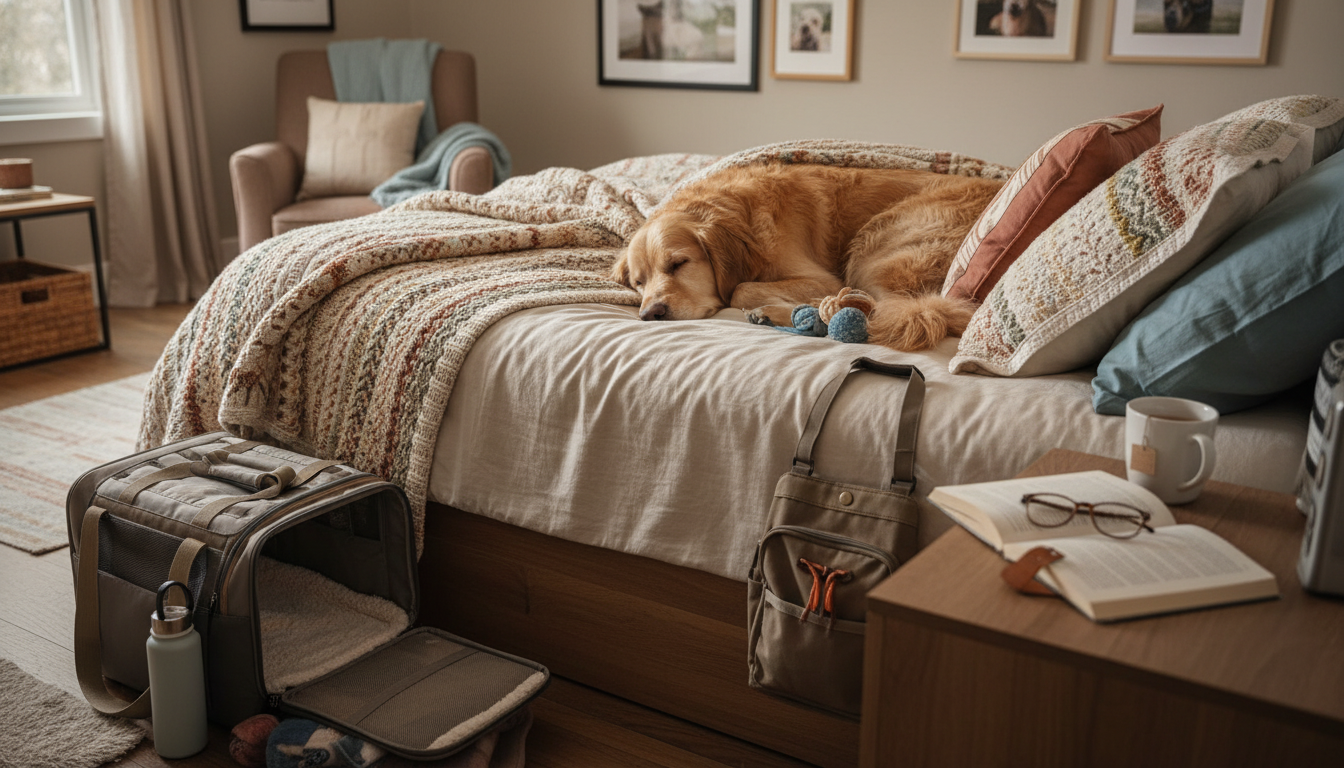
Dogs often choose your bed because it feels like the safest, softest “home base” in the house—even when you’re away. Your scent is strongest there, and that familiar smell can help your dog relax, settle, and feel connected to you. For many pups, your bed is also a high-value spot: warm blankets, a cushy surface, and a view of the room that makes it easier to rest without feeling vulnerable.
Comfort and warmth: Mattresses and comforters trap heat and feel plush under joints, which is especially appealing to small dogs, senior dogs, or pups who get chilly.
Security: Beds are typically quiet, elevated, and away from foot traffic. That can make them feel like a protected den.
Your scent: Clothing and bedding carry a comforting “you” signal. When you’re gone, your dog may gravitate to that scent to self-soothe.
Routine: If your dog is used to cuddling or napping there, they’ll return even when you’re not present—habits stick.
If bed-sleeping comes with signs of anxiety (pacing, whining, destructive behavior, or excessive clinginess), your dog may be using the bed to cope with stress. Sudden changes can also point to discomfort—if your dog starts seeking softer surfaces or seems stiff, a vet check can help rule out pain.
Set up an inviting “yes spot” nearby: a supportive dog bed with a washable cover and a stable base so it doesn’t slide when your dog turns or digs. Add a familiar blanket or a worn T-shirt for scent, and reward your dog for choosing it. If you prefer the human bed stays off-limits, be consistent and keep the bedroom door closed when you’re away.
For more tips on choosing an easy-clean, secure, comfort-first sleep setup, visit this guide to washable, non-slip dog bed mattresses and plush pads.
Your side usually has the strongest scent and leftover warmth, which can feel calming and cozy. Some dogs also see it as a way to stay close and “hold your spot” until you return.