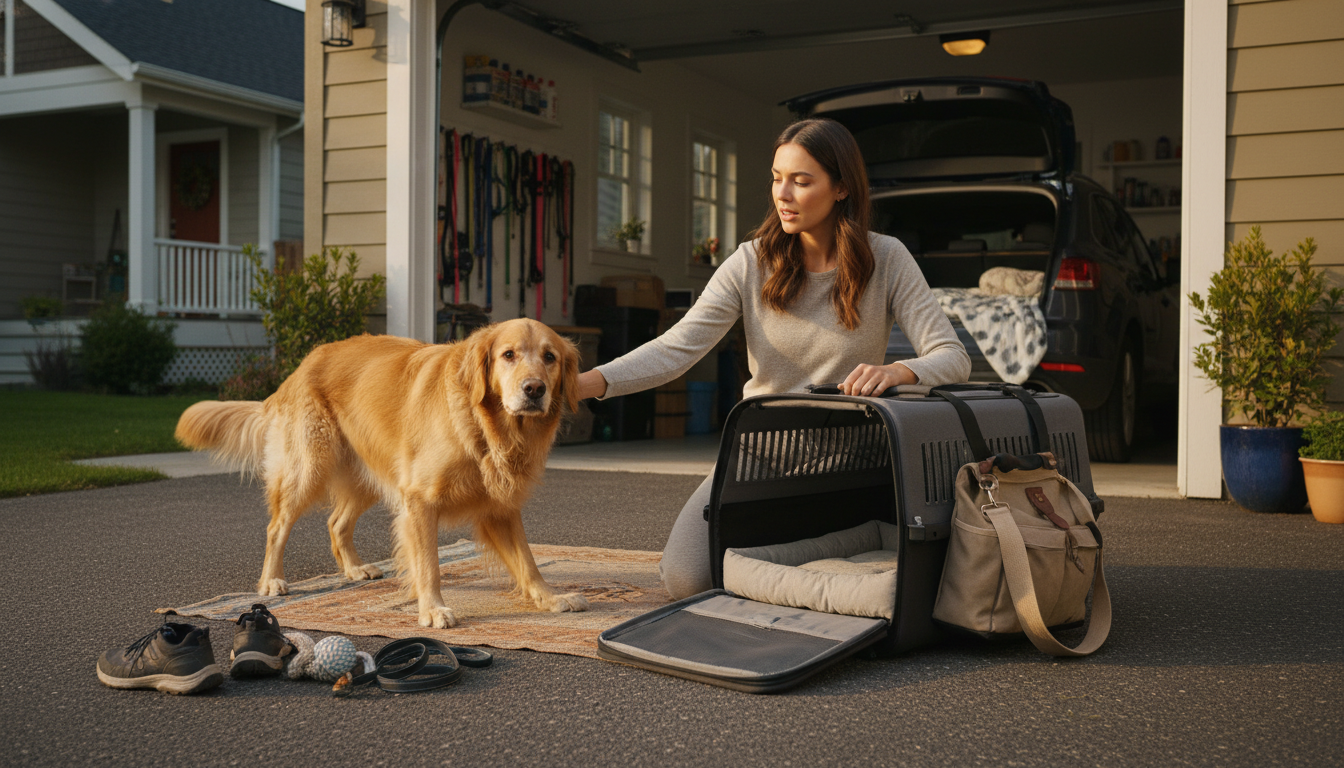
Dogs are excellent at noticing tiny changes in people—breathing, posture, voice, pace, and even how you move through a room. When anxiety shows up, many dogs respond with “displacement behaviors,” like scratching the carpet, digging at a rug edge, or pawing the floor. It’s not stubbornness; it’s often a self-soothing habit that helps them release nervous energy when something feels off in their environment.
For some dogs, your anxiety can become a cue that routines might change (less play, fewer cues, different energy in the house). Scratching can also be an attention-seeking signal—your dog may have learned that it reliably brings you closer, makes you talk, or leads to petting, even if it started as stress.
Below are practical points for what the scratching may be communicating.
Scratching mimics instinctive digging or nesting. It can help your dog “reset” when they feel uncertain, much like pacing or yawning can.
Some dogs scratch to make a space feel right before lying down—especially if they’re trying to settle near you while you’re tense. Offering a cozy, consistent resting spot can reduce the urge to “fix” the floor.
If scratching tends to happen during the same moments (phone calls, pacing, leaving the room), the behavior can become part of a pattern. The goal is to make calm behavior easier and more rewarding than scratching.
Start by meeting the need underneath the behavior: give a calm cue (“bed” or “place”), offer a chew, or sprinkle a few treats on a designated mat to encourage sniffing and settling. Increase daily enrichment (walks, sniff time, puzzle toys) and keep departures/arrivals low-key.
Also protect paws and floors by giving your dog a durable, comfortable place to nest and relax. For a cozy option sized for small dogs and puppies, see the guide to the Paw Pillow Round Dog Bed here: https://kingwuff.com/blog/guide-paw-pillow-round-dog-bed-small-dogs-puppies/.
Yes. Scratching or “digging” can be a stress-relief behavior that helps dogs release tension or self-soothe when they feel uncertain.
This can be a sign of separation-related stress, boredom, or a learned habit that happens during your departure routine. A predictable pre-leave routine, enrichment, and a safe resting spot can help.
Many dogs scratch as a nesting behavior before settling, similar to making a bed. If it becomes intense or sudden, rule out discomfort, anxiety triggers, or nail/paw irritation.