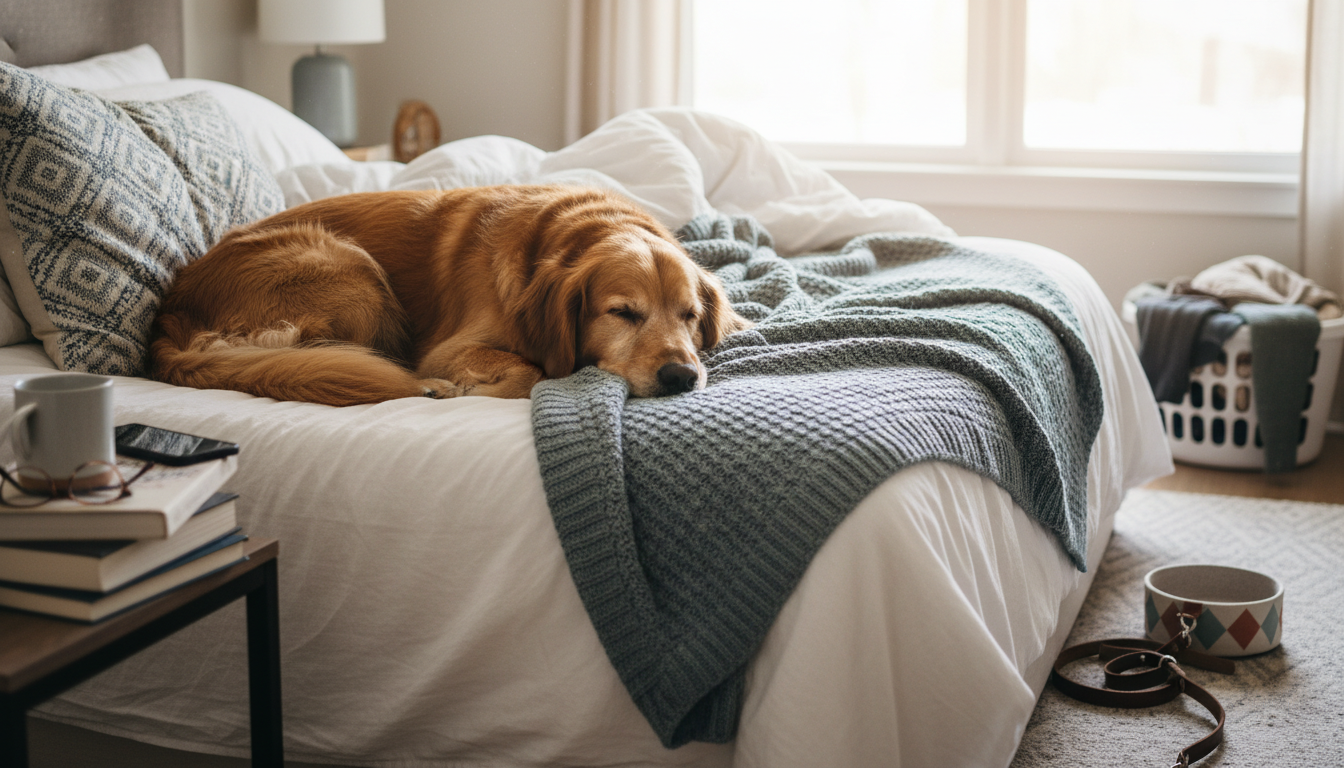
If your dog slides into your spot the moment you stand up, it’s usually a mix of comfort, connection, and simple dog logic: the best seat just opened up.
Your side of the bed holds the strongest “you” scent. For many dogs, that familiar smell works like a cozy security blanket—especially if they’re a little clingy, sensitive to noise, or just deeply bonded to their person.
Beds trap body heat, and your spot is often the warmest area in the room. Dogs are excellent at finding the coziest microclimate available, and a freshly-warmed mattress is hard to resist.
Some dogs choose your space because it feels like the “home base.” Resting where you were can be a quiet form of watchfulness—staying close, monitoring the doorway, or keeping track of where you went.
Most of the time, this isn’t about taking over or challenging you. It’s about feeling safe, comfortable, and connected—especially in a place your dog associates with rest and routine.
If the bed-switching comes with pacing, whining, panting, or an inability to settle, it could point to separation stress or restlessness. And if your dog only chooses the bed because their own sleeping setup is thin, slippery, or too hot, upgrading their space can help.
Give your dog a dedicated bed that’s supportive, cozy, and stays put—then place it near your bed so they still feel close. If you’re exploring options that are easy to keep fresh and comfy, this guide is a helpful next step: washable, non-slip dog bed mattress and plush pad guide.
It usually means your dog finds comfort in your scent and warmth. It can also be a sign of closeness and routine—your spot feels familiar and safe.
Many dogs like being near you while still having their own space and cooler temperature. The floor can also feel more secure for dogs that prefer firm surfaces or easy “on guard” positioning.
Facing you often signals trust, bonding, and a desire to keep tabs on you. Some dogs also do this because your movements and breathing help them relax.