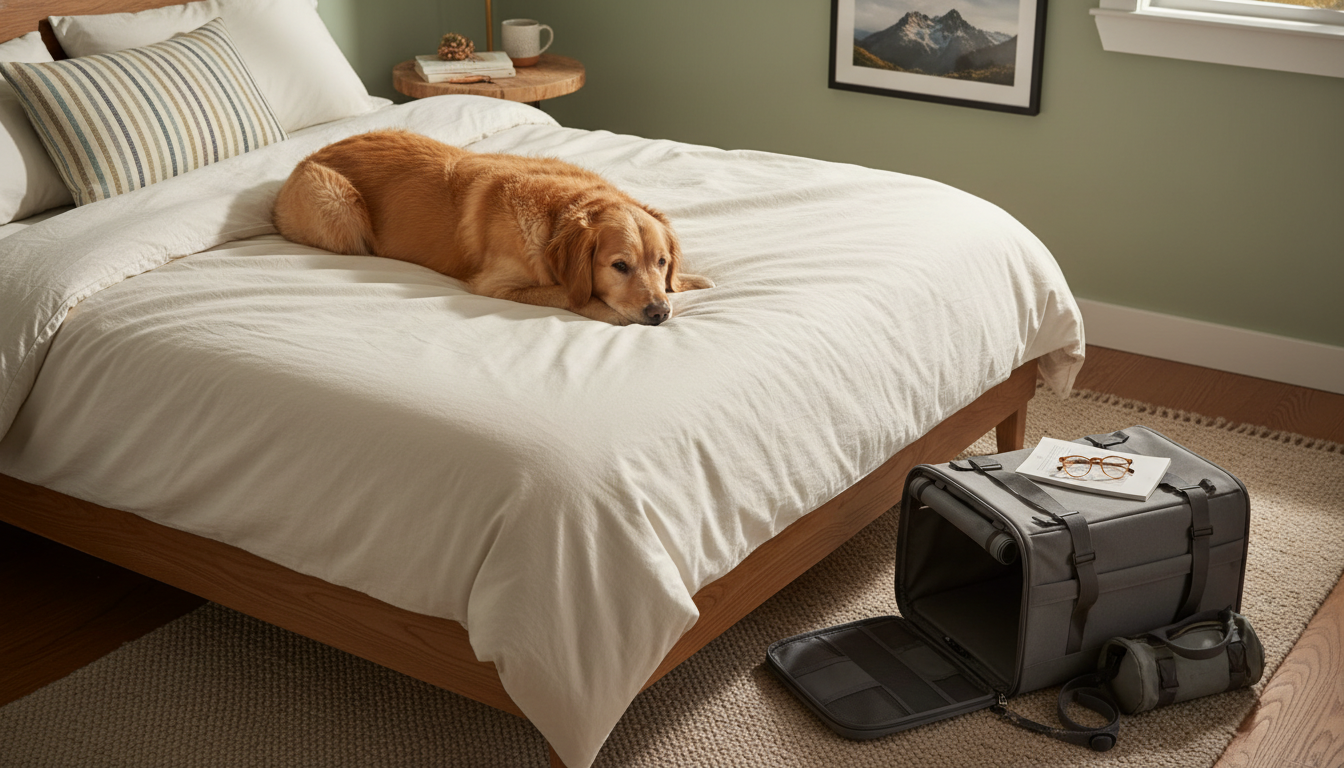
For many dogs, your bed is the coziest “all-in-one” spot: it’s soft, it smells like their favorite human, and it’s usually placed in a calm part of the home. If your dog spends most of the day stretched out on your comforter, it’s often a blend of comfort-seeking, routine, and a desire to feel close to you—even when you’re not in the room.
Comfort and warmth: Mattresses and blankets hold heat and cushion joints, which is especially soothing for puppies, seniors, or dogs with stiffness.
Your scent = security: Bedding carries a strong “family” smell. Laying there can help a dog feel settled when the house is quiet or when they’re home alone.
Habit and boundaries: If bed access has been allowed, many dogs naturally choose the softest, safest spot available. Some also prefer the bedroom because it’s lower-traffic and less noisy.
Stress or boredom: A dog may retreat to your bed during storms, neighborhood noise, or changes in schedule. Other times, it’s simply a default hangout when enrichment and activity are low.
If your dog’s bed-lounging is new and paired with changes like reduced appetite, limping, excessive panting, accidents in the house, or unusual clinginess, consider a check-in with your vet. A sudden shift can sometimes point to discomfort, anxiety, or illness.
Create a “yes” spot that rivals your bed: a supportive dog bed in a quiet corner, plus a familiar blanket or item with your scent. Reward your dog for choosing it, and keep the routine consistent. For a simple home setup that stays comfortable and easy to maintain, see this guide to a cozy, clean, sleek dog bed setup.
Your bed is warm, soft, and smells like you, which can feel extra safe and calming. It can also become a habit if it’s a consistently allowed resting place.
Dogs often move to the spot that smells most like you and holds your warmth. It can also be a comforting way to stay connected when you leave the room.
Sudden changes can be linked to stress, a new routine, or seeking extra comfort. If it comes with other behavior or health changes, it’s smart to rule out pain or illness with a vet.