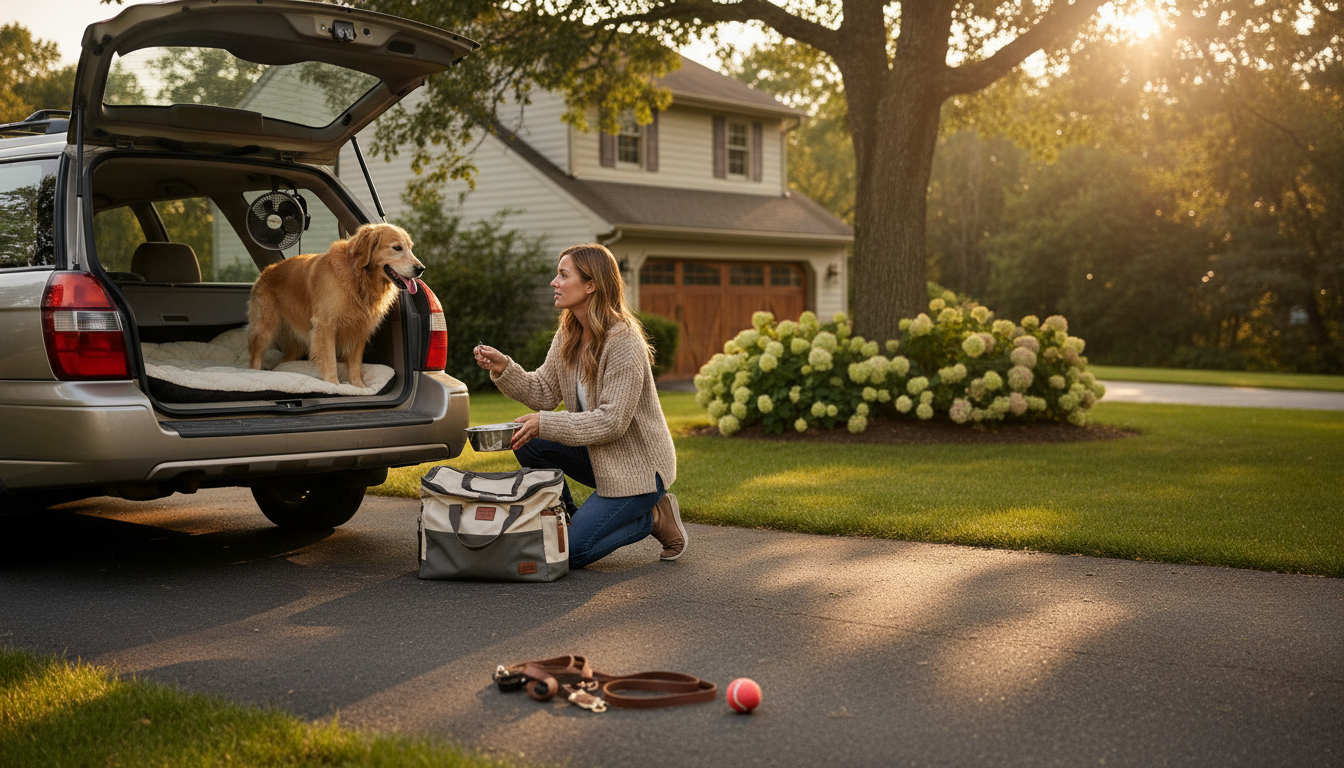
When the AC is on and your dog is still panting, it’s usually not about temperature—it’s about emotion and stimulation. Car rides pack in unfamiliar sounds, movement, scents, and anticipation, and panting is one of the most common ways dogs release that extra adrenaline.
Below are practical points for most common reasons (even in cool weather).
Many dogs associate the car with something intense—like a vet visit, crowded places, or past nausea. Stress activates the nervous system, which can cause rapid panting, drooling, yawning, and restlessness even if your dog isn’t overheated.
Panting can be an early sign of motion sickness. You might also notice lip-licking, swallowing, whining, or eventually vomiting. Puppies and younger dogs are especially prone to this because their inner ear balance system is still developing.
Some dogs pant because they’re thrilled. If your dog heads to hikes, parks, or fun errands, panting may be “happy energy” paired with pacing, alert ears, and eager scanning out the window.
Sliding on upholstery, struggling to brace during turns, or being unable to see where they are can make dogs feel unsafe. A stable, supportive setup can reduce panting that’s driven by tension and constant rebalancing.
Start with short, low-pressure rides that don’t always end at the vet. Keep the cabin quiet, avoid heavy meals right before driving, and offer a familiar blanket or scent. Most importantly, help your dog stay secure and comfortable—using a well-fitted travel seat or carrier can limit slipping, improve posture, and create a cozy “safe zone” during the ride.
For a comfort-first approach to safer travel, visit this guide to the Puff Puppy Dog Car Seat & Carrier Bag.
Try shorter practice trips, a secure seat or carrier, and calm routines (quiet music, familiar blanket). If shaking and panting are intense or worsening, ask your vet about motion sickness or anxiety support.
Panting can be a normal response to excitement, mild stress, or recent activity. If it’s new, frequent, or paired with coughing, lethargy, or pacing at rest, check in with your vet.
Driving adds motion, noise, and uncertainty, which can trigger anxiety or nausea. Better stability, gradual conditioning, and avoiding meals right before trips often help.