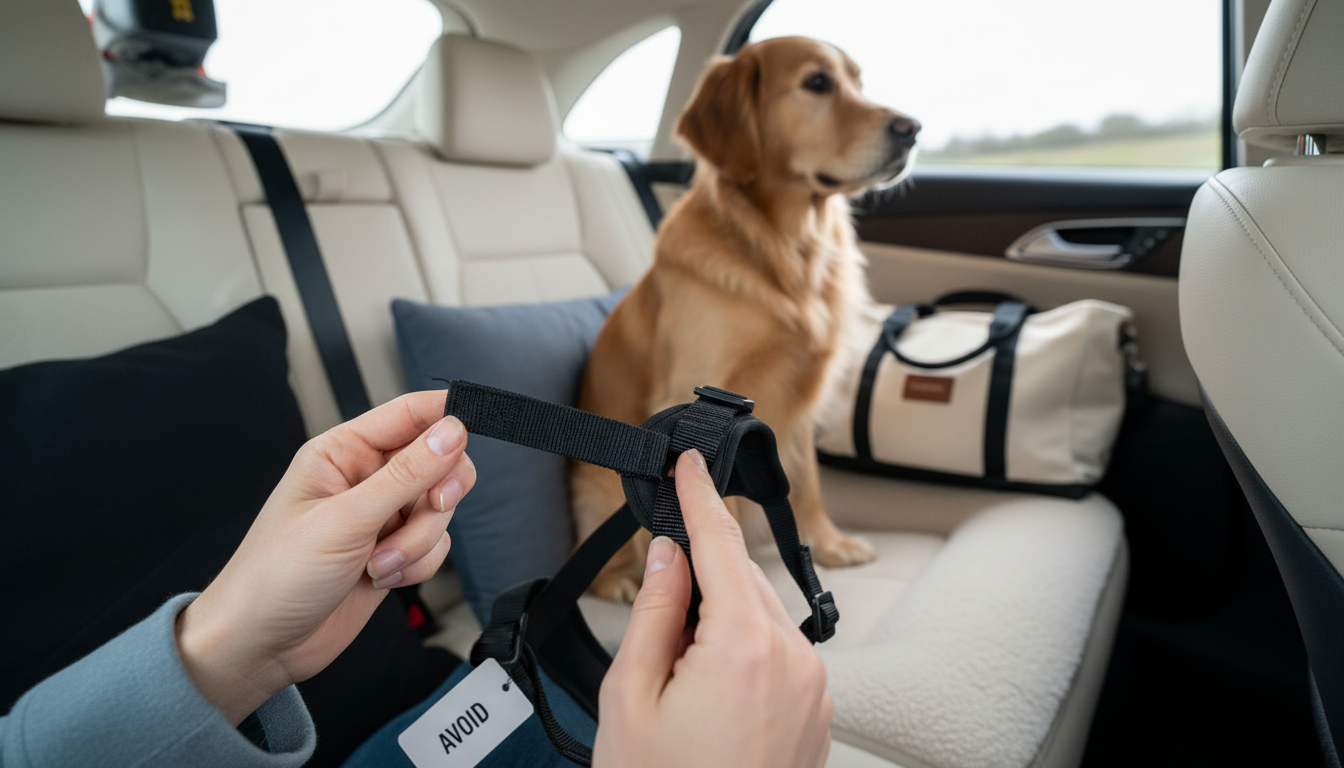
Not every harness is a good match for comfort and safety. The ones to avoid are typically the styles that restrict natural movement, put pressure on delicate areas, or are easy to escape—especially if the fit isn’t dialed in.
1) Neck-restricting “strap across the throat” designs. If a harness sits high on the neck or tightens near the windpipe when your dog leans forward, it can cause coughing, gagging, or discomfort. A better option distributes pressure across the chest and shoulders instead of the throat.
2) Poorly padded, thin webbing harnesses for strong pullers. Narrow straps can dig into the skin and rub behind the armpits, especially on longer walks. If you see redness, hair loss, or your dog hesitating to move, the harness is likely causing friction.
3) “No-pull” harnesses that twist your dog’s body. Some front-clip designs can pull the dog sideways sharply, which may strain shoulders over time—particularly for athletic dogs or puppies still developing. If your dog’s gait looks uneven or they seem stiff after walks, reconsider the style and fit.
4) Overly bulky or heavy harnesses. Thick, rigid panels can limit shoulder extension and make walks feel awkward. For small dogs, extra weight can be tiring fast.
5) Easy-escape harnesses with minimal adjustability. If there aren’t enough adjustment points, a harness can slide, rotate, or allow a dog to back out. This is a safety risk near traffic or in crowded places.
Choose a harness that allows full shoulder movement, has smooth padding in high-rub areas, and offers multiple adjustment points for a secure fit. For travel days, it also helps to pair smart walking gear with supportive, cozy travel essentials. For more comfort-and-safety tips on travel setups, visit this guide.
Yes—many dogs do better in a well-fitted harness than a collar when pulling is an issue. Pick a style that protects the neck and doesn’t rub the armpits, and pair it with positive training for best results.
No harness can “prevent” pulling on its own, but front-clip options can reduce leverage and help redirect forward momentum. The best choice is one that fits well and keeps your dog comfortable while you reinforce loose-leash walking.
They can help manage pulling by improving comfort and giving you better control, but training is what changes the behavior long-term. If the harness causes rubbing or awkward movement, it may make pulling worse.