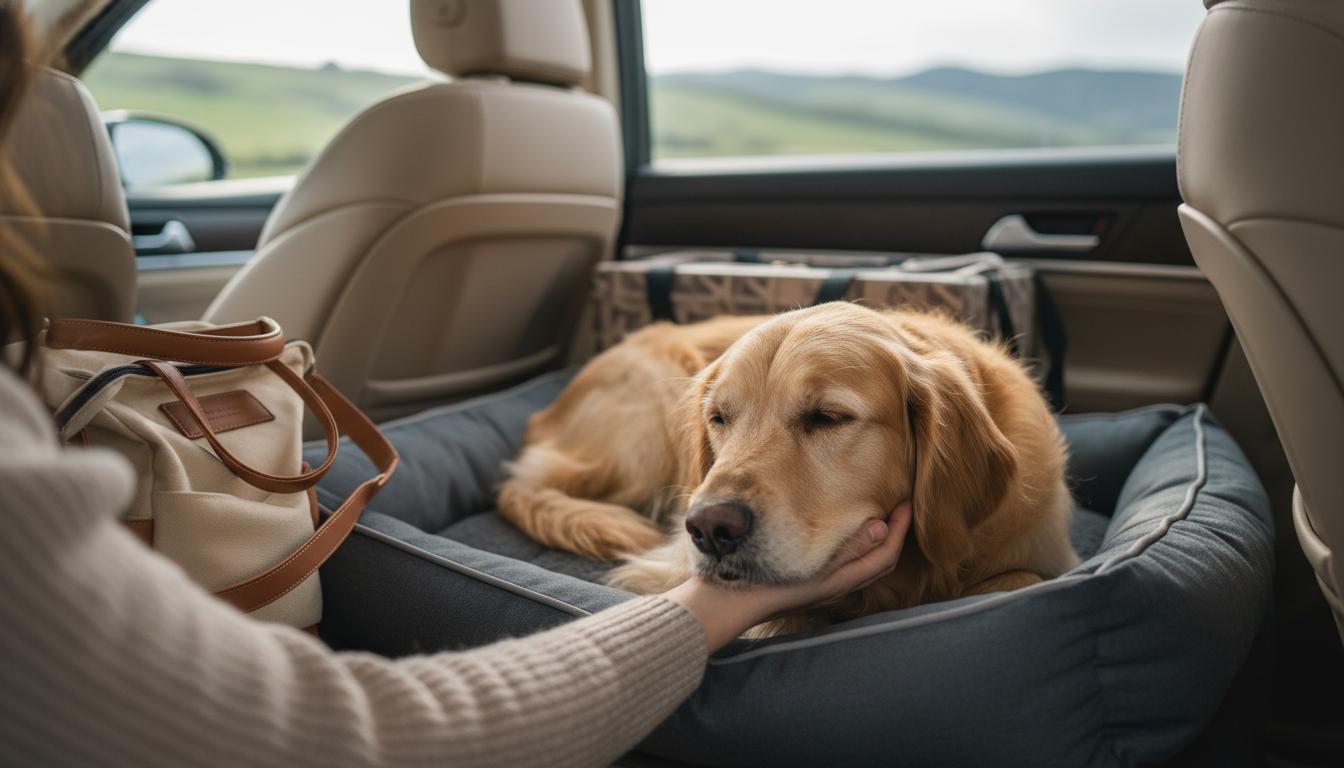
To help a dog get drowsy, pet in places that naturally encourage relaxation: slow strokes along the chest, shoulders, and the side of the neck, plus gentle rubs at the base of the ears. Use calm, predictable movements and light-to-medium pressure—think “steady and soothing,” not exciting. Many dogs start to soften their eyes, loosen their jaw, and lean in when the touch feels safe and comforting.
Chest and sternum: Slow, downward strokes on the chest often feel grounding and can lower arousal. This is a great option for dogs who don’t love being touched on top of the head.
Shoulders and upper back: Long, smooth strokes from the shoulder area toward mid-back can help a dog settle, especially after a walk or play session.
Side of the neck: Gentle rubbing or light circular motions along the side of the neck can be calming without feeling intrusive.
Base of the ears: Many dogs love soft rubs where the ear meets the head. Keep it slow—quick scratching can ramp them up.
Start when your dog is already somewhat calm, then match their breathing pace with your hands: slow strokes, brief pauses, repeat. If your dog starts pawing, mouthing, or getting “wiggly,” ease off and slow down even more. Avoid high-energy spots like the belly (some dogs get playful), paws (often sensitive), and the top of the head (can feel intense to some dogs).
Touch works best when the environment supports rest—dim lights, a quiet corner, and a comfortable surface. After a travel day or busy outing, giving your dog a familiar, supportive place to curl up can make all the difference. For comfort-focused travel and home tips, visit this guide to pet travel and comfort gear.
Many dogs enjoy gentle petting on the chest, shoulders, and along the side of the neck. Start there and watch for relaxed body language like leaning in, soft eyes, and a loose tail.
A quiet, low-traffic spot near you is ideal, with a comfy bed or crate set up like a safe “den.” Keep things calm and predictable so they can decompress.
Use soft, brief strokes on the chest or shoulders and stop before they get overstimulated. Keep sessions short, gentle, and positive so handling feels safe.