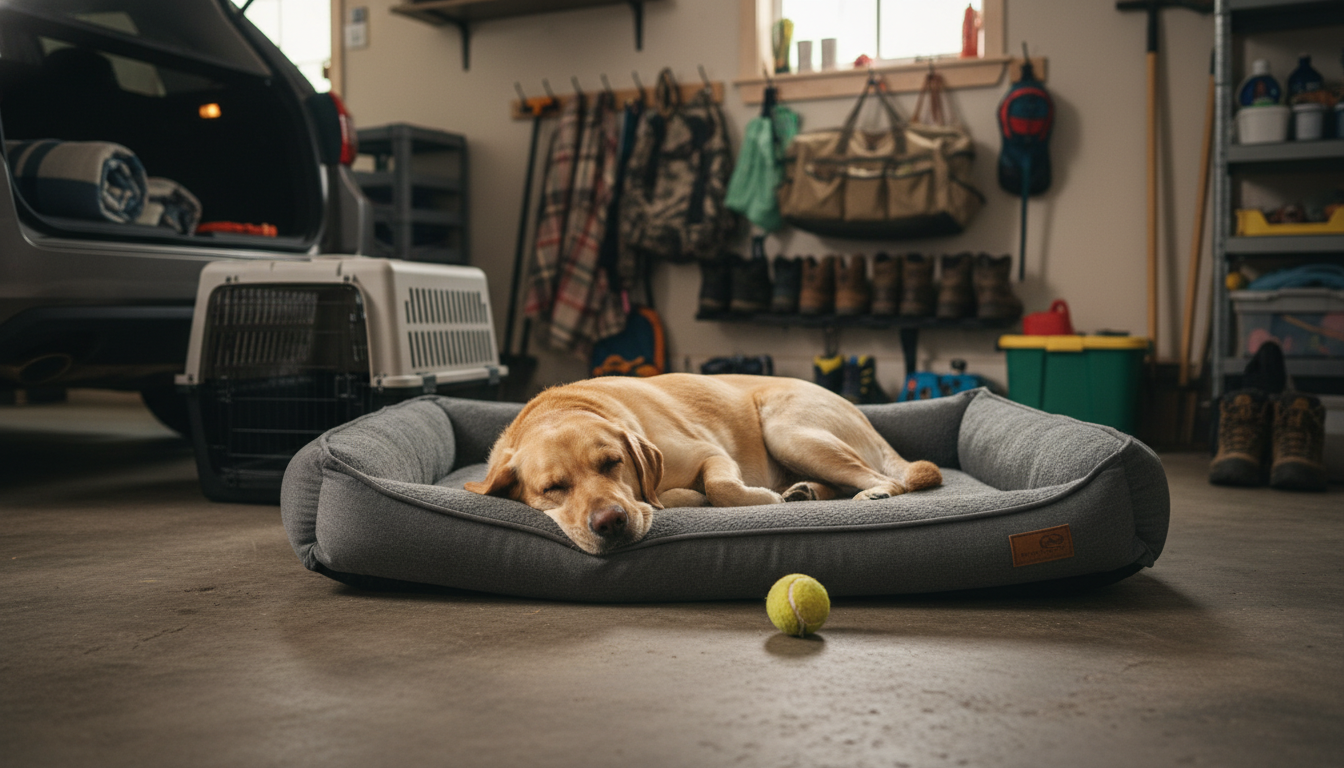
A Labrador should sleep somewhere that feels calm, close to the family, and easy to keep consistent—most often in a cozy corner of a bedroom or living area. Labs are social, people-oriented dogs, so placing their sleep spot near where you spend time helps them settle faster and feel secure.
Choose a low-traffic area away from exterior doors, chilly drafts, and loud household noises. A predictable location (same place every night) supports better rest, especially for puppies or newly adopted dogs adjusting to a new routine.
Wherever your Lab sleeps, prioritize a comfortable, supportive dog bed that cushions joints and keeps them off hard floors. Look for durable materials (Labs can be enthusiastic nesters), a washable cover, and enough space to stretch out. Many Labs love a slightly raised edge or bolstered shape that lets them curl up and feel snug.
Bedroom: Great for bonding and reducing nighttime restlessness—just keep the bed on the floor, not on your mattress, to protect boundaries and sleep quality.
Crate: Helpful for puppies, anxious dogs, or dogs who get into mischief at night. Make it inviting with a bed that fits well and doesn’t bunch, plus a safe chew if needed.
Free roaming: Works best once your Lab is reliably house-trained and calm at night. Even then, many do best when they still have a “home base” bed in a consistent spot.
Offer a last potty break, keep lights low, and use a simple bedtime cue like “bed.” If your Lab is a warm sleeper, avoid overly heavy bedding and aim for breathable comfort.
For more guidance on choosing a cozy, supportive sleep setup, visit this dog bed guide.
Most Labs don’t need a blanket in a temperature-controlled home, but a light blanket can add comfort for dogs who like to burrow. Skip loose bedding for heavy chewers or puppies who might shred and swallow fabric.
Happy Labs usually show relaxed body language, a loose wag, interest in play, and a healthy appetite. At home, you’ll often see them choose to be near you and settle calmly after exercise.
Not usually. Wild canines tend to sleep in shorter bouts and stay more alert for safety and environmental changes.