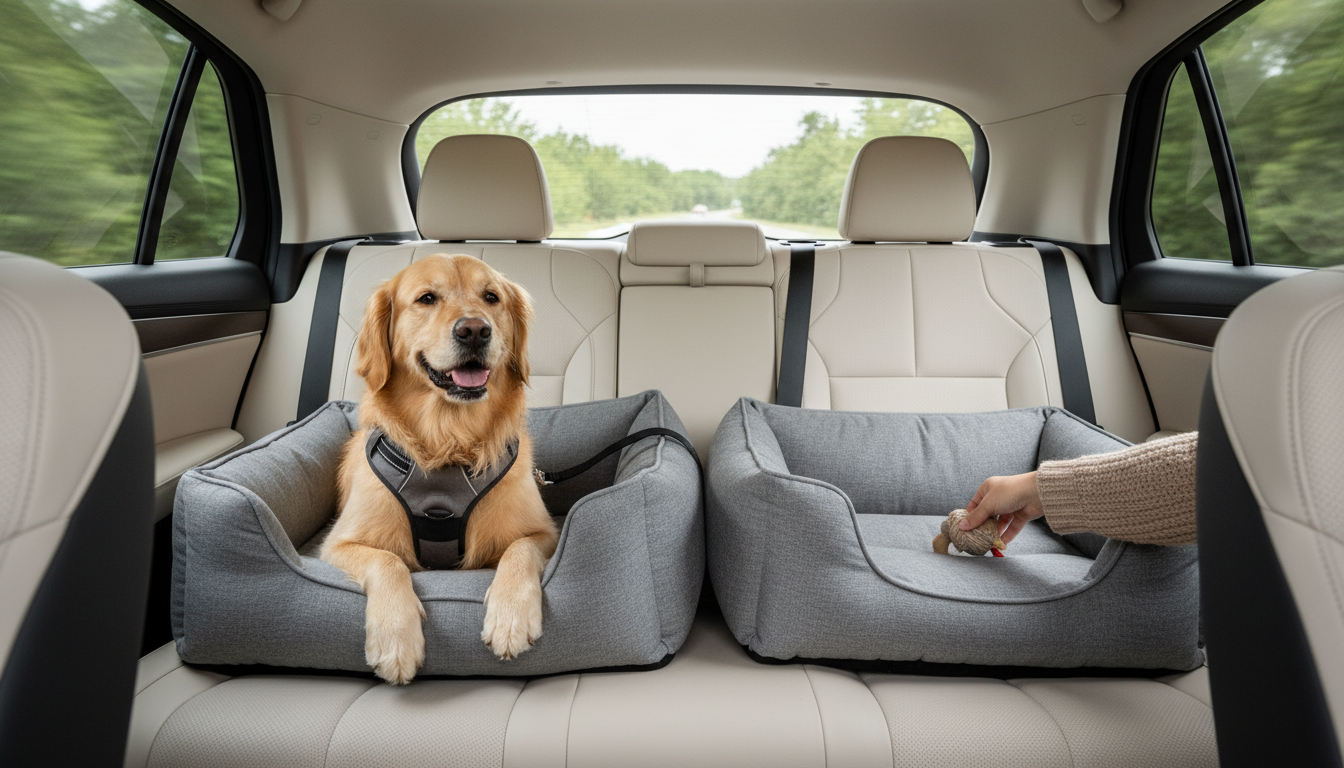
The safest place for most dogs is the back seat, properly restrained in a crash-tested harness or secured inside a well-anchored carrier. The back seat offers more protection than the front seat (where airbags can seriously injure a pet) and helps keep your dog from becoming a distraction while you drive.
In a sudden stop or collision, an unrestrained dog can be thrown forward—putting your pet, you, and passengers at risk. The back seat is typically the “sweet spot” because it’s farther from the dashboard, provides a more stable riding area, and reduces the chance of direct impact. If your dog rides in the front, airbags and hard surfaces can turn even a minor accident into a major injury.
For small to medium dogs, a secured carrier or a well-designed dog car seat can add an extra layer of stability while keeping your pup cozy and contained. Look for secure attachment points (seat belt routing or anchors), sturdy construction, and enough room for your dog to sit and lie down naturally. For larger dogs, a crash-tested harness clipped to a seat belt system is often the most practical option.
Avoid letting your dog ride loose in the cabin or on your lap. Also avoid the front passenger seat, especially if an airbag is active. And if your dog rides in the cargo area of an SUV or hatchback, don’t rely on open space alone—use a secured crate or a crash-tested barrier plus a restraint so your dog isn’t tossed around.
For a deeper, dog-parent-friendly walkthrough of safe, comfortable travel setups, visit this guide to dog car seat carrier options.
Use a secured crate in the cargo area or a crash-tested barrier with a harness to limit movement. Keep your dog away from loose items that could shift during braking.
If a seatbelt isn’t available, the safest alternative is a properly anchored crate or carrier that’s secured to cargo tie-downs or anchor points. Avoid letting your dog ride loose, even for short trips.