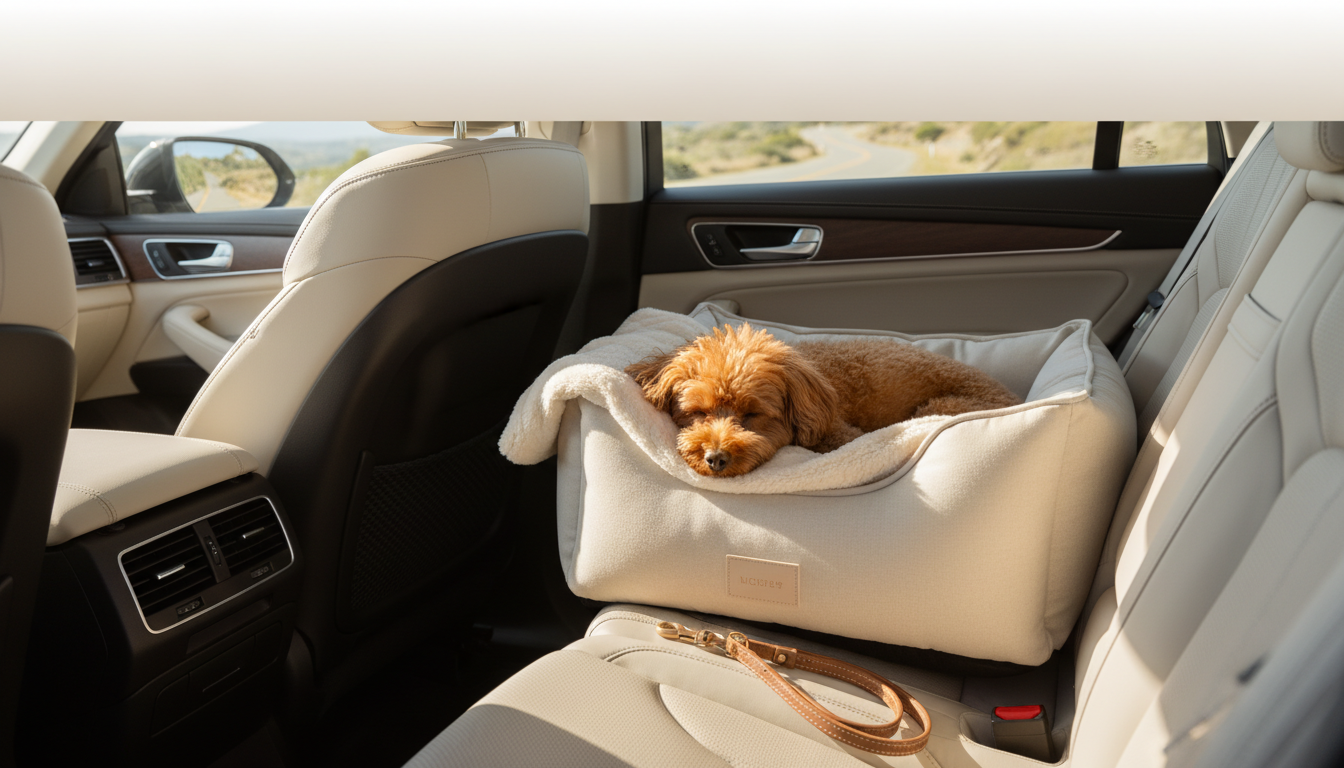
The safest place for your dog to ride is in the back seat, secured with a crash-tested restraint system. This can be a safety-certified carrier that’s buckled in with a seat belt, or a travel harness attached to your car’s seat-belt system. Keeping your dog out of the front seat protects them from airbag deployment and reduces distractions for the driver.
For small to medium dogs, a structured, well-ventilated carrier provides both comfort and containment. Place the carrier on the rear seat and thread the seat belt through the carrier’s designated loops to prevent tipping or sliding. For larger dogs, use a crash-tested harness attached to the rear seat belts, or a secured crate positioned against the back of the rear seats to minimize movement.
A calm, cozy setup also matters. Soft interiors, breathable panels, and stable bases help dogs settle in for the ride—lowering stress and keeping them safely in place during turns or sudden stops. Always avoid letting your dog ride with their head out the window or loose in the cargo area without secure anchoring.
Looking for a comfortable, stylish way to secure your small dog on the go? Explore our guide to the Seashell Dog Carrier Bag in Brown for thoughtful travel comfort and safety details: Read the full guide.
Below are practical points for key safety tips.
Dogs should ride in the backseat, not the trunk. If you have an SUV, a secured crate in the cargo area is acceptable when anchored properly and positioned against the rear seats.
Plan a short break every 2–3 hours for water, a bathroom walk, and a quick stretch. For longer trips, build in regular stops and keep the interior cool and well-ventilated.
Use the backseat with a harness or carrier, or a secured crate in the cargo area anchored to prevent shifting. Keep your dog behind the front seats and away from airbags.