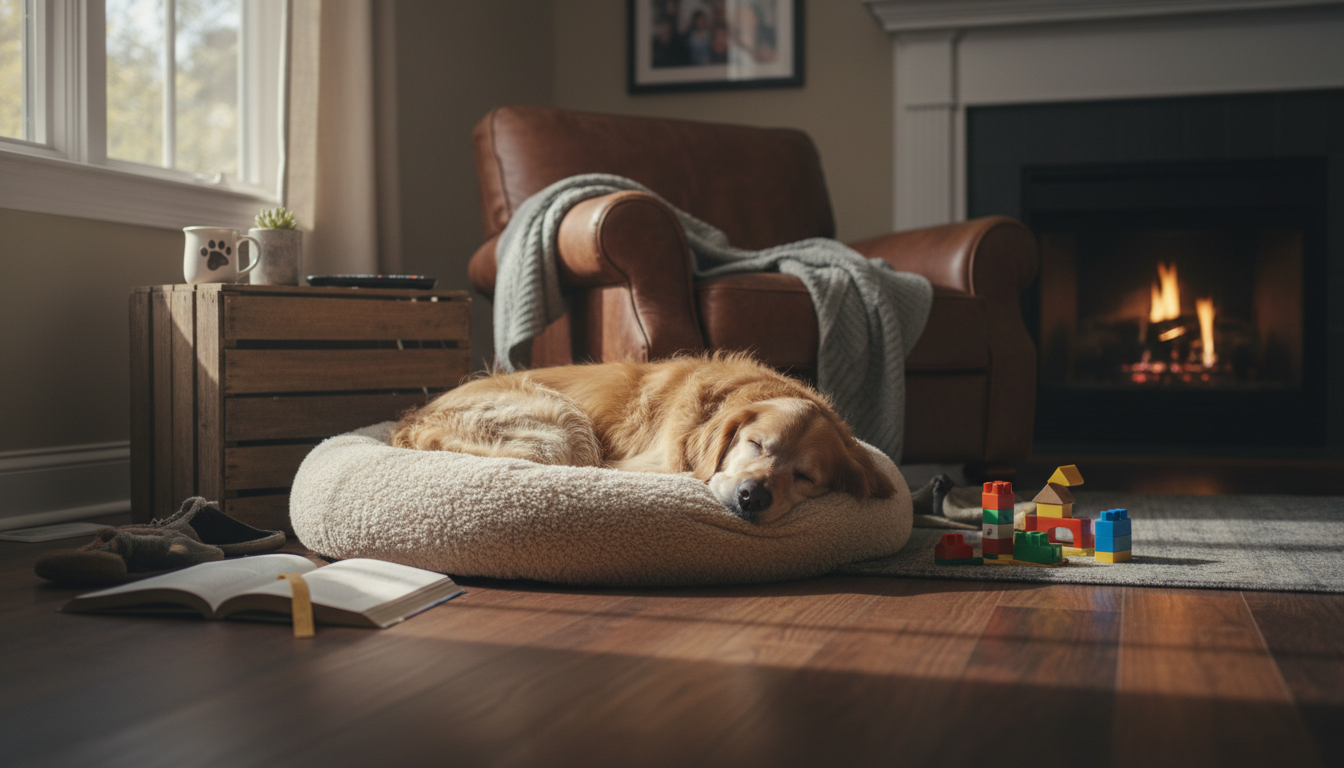
The best place for a dog to sleep at night is a quiet, temperature-comfortable spot where they feel safe, can fully relax, and won’t be disturbed by foot traffic or loud noises. For many dogs, that means a dedicated dog bed in the same general area where the family settles down—often a bedroom corner or a nearby hallway nook—so they can rest while still feeling close.
A good sleep setup starts with consistency. Choose one spot and keep it predictable: same bed, same location, and a calm bedtime routine. Look for an area away from drafts, direct heat vents, and slippery floors. If your dog startles easily, avoid spots near the front door, windows facing the street, or a busy kitchen path.
A supportive dog bed works well for most pets, especially if it has enough cushioning to protect joints and a surface that’s easy to keep clean. A crate can be ideal for dogs who naturally seek a den-like space or for pups who do better with boundaries—as long as it’s properly sized, comfortable, and never used as punishment. If your dog sleeps on your bed, it can be fine when it doesn’t disrupt anyone’s rest and the dog can safely get on and off (consider stairs for small dogs or seniors).
Pick a sleeping location that allows your dog to stretch out, change positions, and breathe easily. Keep water accessible, remove chew hazards (cords, small items), and make sure the bed stays put—especially for older dogs. If nighttime pacing, panting, coughing, or sudden restlessness shows up, a quick call to your vet can help rule out discomfort or anxiety triggers.
For a deeper dive on choosing a cozy, clean, sleek setup that fits real life, visit this dog bed comfort guide.
A calm, low-traffic area with a comfortable bed is ideal, especially somewhere your dog feels secure and can sleep uninterrupted. Many dogs rest best near their people without being in the middle of activity.
Common signs include chronic pain, withdrawal, loss of interest in favorite activities, frequent accidents, appetite changes, or trouble sleeping. If these persist, a vet can help assess comfort and next steps.
It can be okay if your dog is confident, the area is safe and comfortable, and they settle easily. Dogs that show anxiety, whining, or nighttime pacing may do better sleeping closer to family.