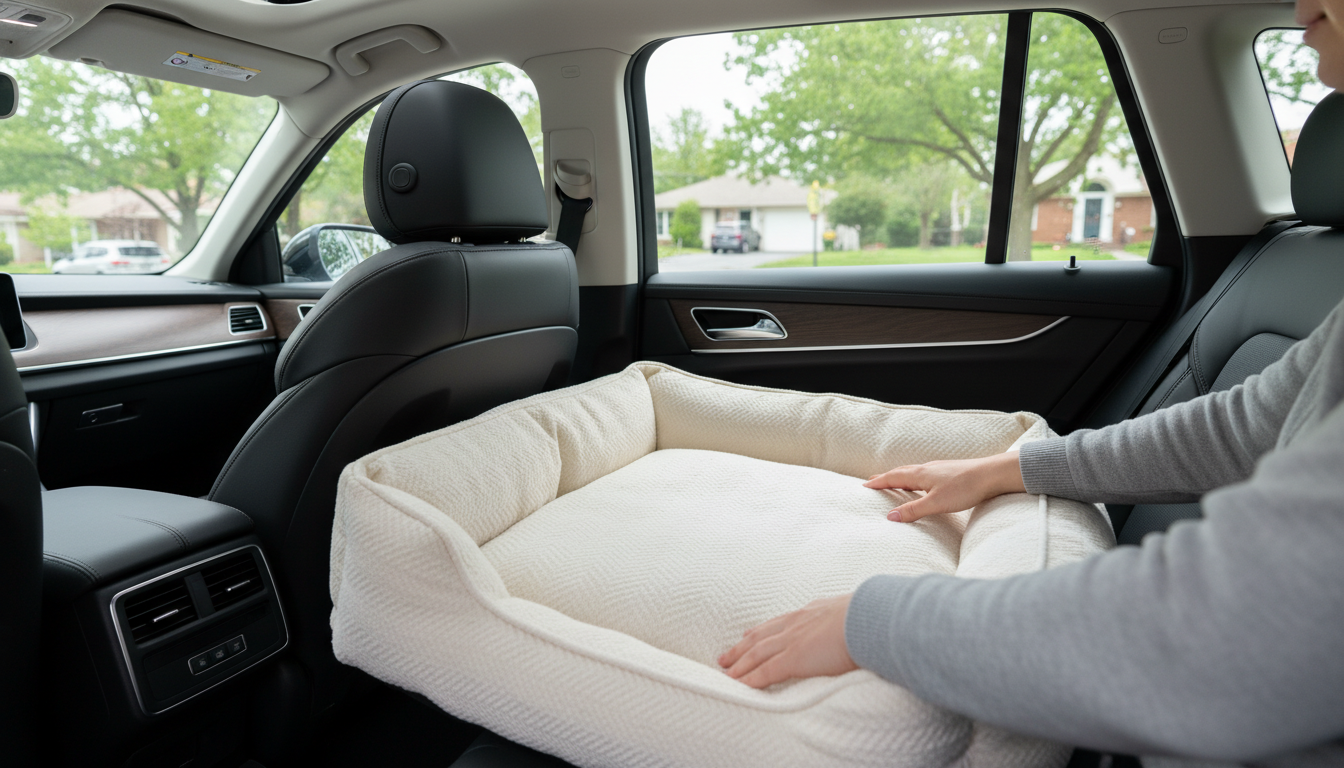
In most homes, an “alpha dog” (more accurately: a confident dog who likes to manage space and attention) will choose a sleeping spot that feels secure, comfortable, and close to the people or activity they care about. That might be a bed near the bedroom door, a spot with a clear view of the hallway, or a cozy corner where they can relax without being bothered.
Some dogs also prefer sleeping slightly elevated or tucked against a wall—places that help them feel grounded and in control of their surroundings. Others want the opposite: a soft, open bed right in the middle of the family’s daily flow. The key isn’t dominance—it’s what makes your dog feel safe, settled, and included.
A great sleeping setup supports your dog’s comfort and your household routine. Place your dog’s bed in a quiet area that still feels connected to the family—like a living room corner or a spot just outside the bedroom. Avoid high-traffic pinch points (right in front of doors, narrow hallways) where your dog may feel the need to monitor everything.
Offer one main “home base” bed and keep it consistently available. A clean, supportive bed with a cozy surface can reduce restless pacing, help with joint comfort, and make it easier for your dog to relax without guarding the couch or blocking pathways.
That’s common for confident, people-focused dogs. If it works for your family, set boundaries that keep everyone comfortable—like designated blanket space or an “off” cue. If it doesn’t work, provide an inviting alternative right next to you (same room, same bedtime routine) so your dog doesn’t feel isolated.
For a deeper look at creating a sleep space that stays cozy, clean, and supportive, visit this guide to a cozy dog bed setup.
Look for consistent confidence around resources and spaces—like choosing prime resting spots, moving first through doorways, or attempting to control attention. Keep in mind that many of these behaviors can also reflect excitement, insecurity, or learned habits, not true “alpha” status.