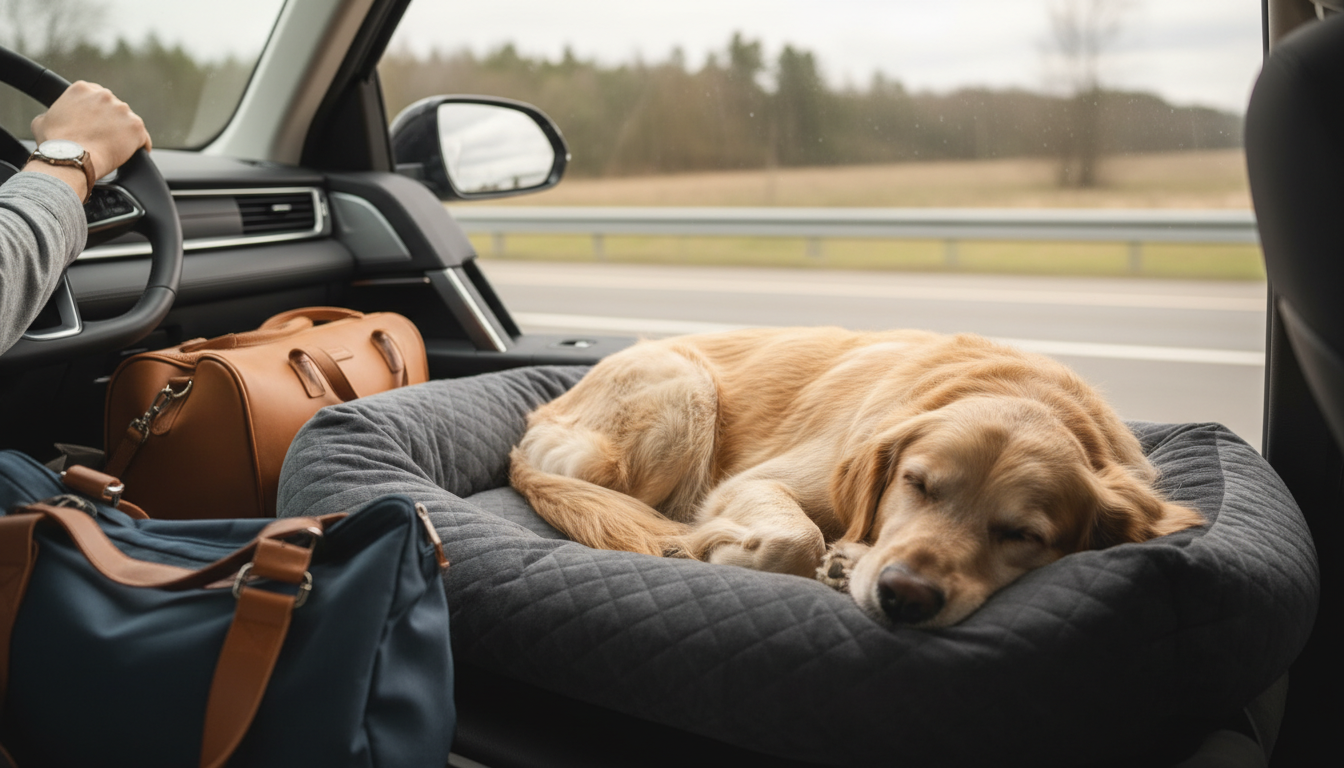
Most people’s dogs sleep indoors, typically in a bedroom (either on the owner’s bed, on the floor beside it, or in a dog bed nearby). Another common spot is a living room corner where the family gathers, especially if the dog prefers to keep an eye on everyday activity.
In the owner’s bedroom: Many dogs settle in the bedroom because it feels safest and closest to their favorite humans. Some share the bed, while others prefer their own space in a plush dog bed or crate nearby.
In a dedicated dog bed: A well-placed bed—quiet, draft-free, and away from heavy foot traffic—often becomes a dog’s nightly go-to. Beds with supportive cushioning can be especially helpful for adult dogs who need comfort and joint-friendly support.
In a crate or covered nook: Dogs that enjoy den-like spaces may sleep best in a crate (door open or closed, depending on training and comfort). A crate can offer a cozy “room” that reduces overstimulation and helps some dogs settle faster.
On couches or soft rugs: Some dogs gravitate to the comfiest surface available. If furniture is allowed, a couch can feel warm and familiar; if not, a thick rug or mat near the family can be the next best thing.
Age, temperament, and household routines all play a role. Puppies and senior dogs may benefit from an easy-to-access bed with stable support, while anxious dogs may do better in a quieter corner or a crate that feels secure. Temperature matters too—many dogs avoid hot, stuffy areas and seek cooler floors in summer.
For tips on creating a cozy, clean sleeping setup that looks great at home, visit this guide to a cozy dog bed setup.
It depends on the dog and what’s happening. When a dog is waiting alone, 10 minutes can feel longer due to anticipation and routine, but during play or stimulation it can pass quickly.
The dog acts as a hunting companion that helps with tasks like tracking and locating, depending on its type and training. Players can give commands and improve the dog’s effectiveness through progression.
In the story, the other dogs usually sleep outdoors near camp or in makeshift shelters. Their sleeping spots reflect survival needs, hierarchy, and the harsh conditions they endure.