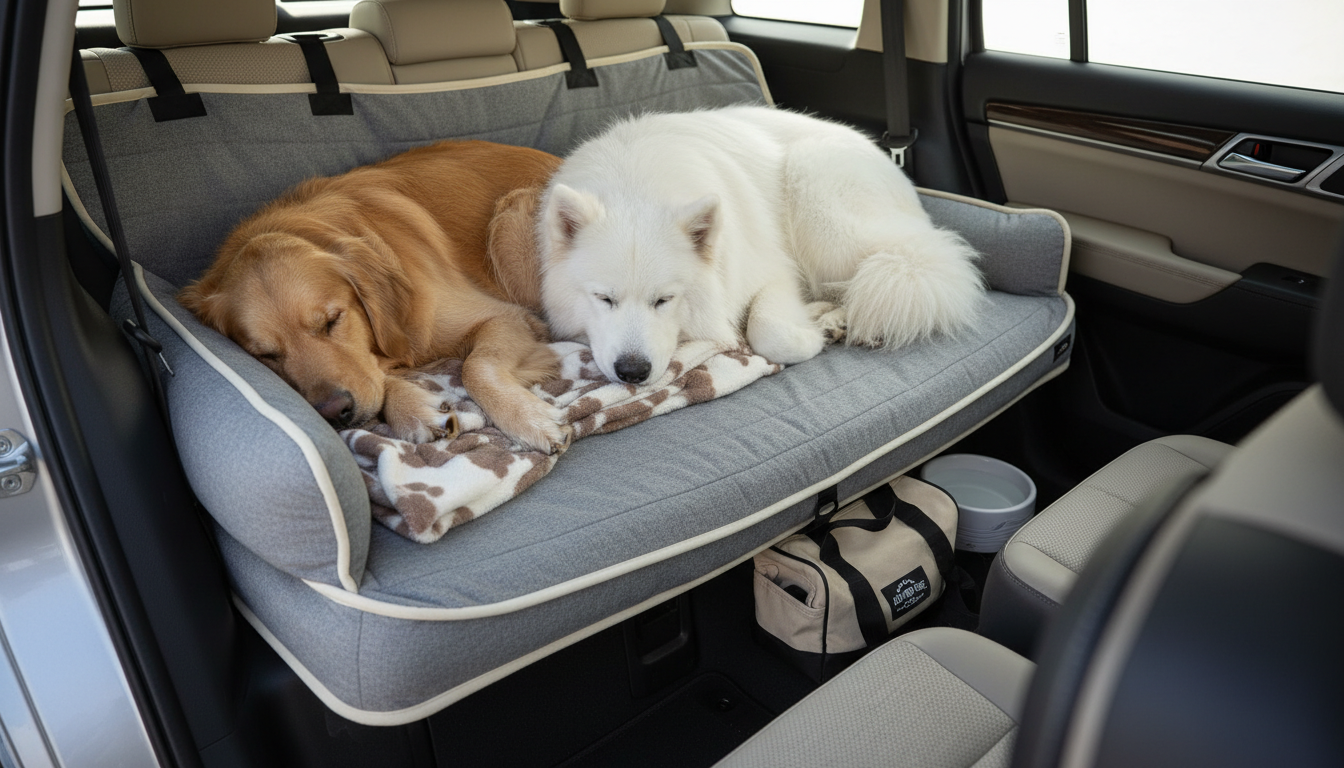
Most dogs feel safest and most comfortable sleeping in a quiet, sheltered spot where they can fully relax without being startled by traffic, bright lights, or sudden noises. For many pups, that “just right” place is a cozy corner of a familiar room, close enough to their people to feel secure, but not in the middle of foot traffic.
Dogs naturally look for warmth, gentle support, and a sense of protection. That’s why many choose to curl up along a wall, under a table, or in a den-like space. A bed with raised sides (or a covered “cave” style) can help a dog settle faster by creating boundaries, blocking drafts, and offering a snug spot to tuck their nose.
Some dogs sprawl out and prefer an open, flat surface with plenty of room. Others are curlers and snugglers who want bolstered edges to lean into. If your dog often burrows into blankets, wedges behind cushions, or seeks out small enclosed spaces, a covered bed can match those instincts and feel especially calming.
A great bed won’t get used if it’s placed in a stressful spot. Aim for a stable, low-traffic area away from drafty doors, noisy vents, and direct afternoon sun. If your dog likes to keep an eye on things, choose a spot with a clear view of the room. If they’re easily startled, choose a tucked-away corner where they won’t be stepped around.
Temperature, scent, and routine all play a role. A washable cover helps keep the bed fresh without losing that familiar “home” smell. For anxious sleepers, consistent bedtime cues and a cozy, den-like setup can make nights smoother.
For a deeper look at choosing a snug, safe setup—especially for dogs who love to burrow—visit this cozy cave dog bed guide.
Common signs include appetite changes, vomiting/diarrhea, unusual tiredness, limping, coughing, or behavior that seems “not like them.” If symptoms are sudden, severe, or last more than a day, contact a veterinarian.
Some dogs show major energy loss, little interest in food or water, trouble breathing, confusion, or difficulty standing. A vet can help assess comfort and discuss supportive care options.
Many owners report dogs prefer quiet corners, near their people, or in den-like beds that feel enclosed and secure. The best choice still depends on your dog’s personality, age, and sleep habits.