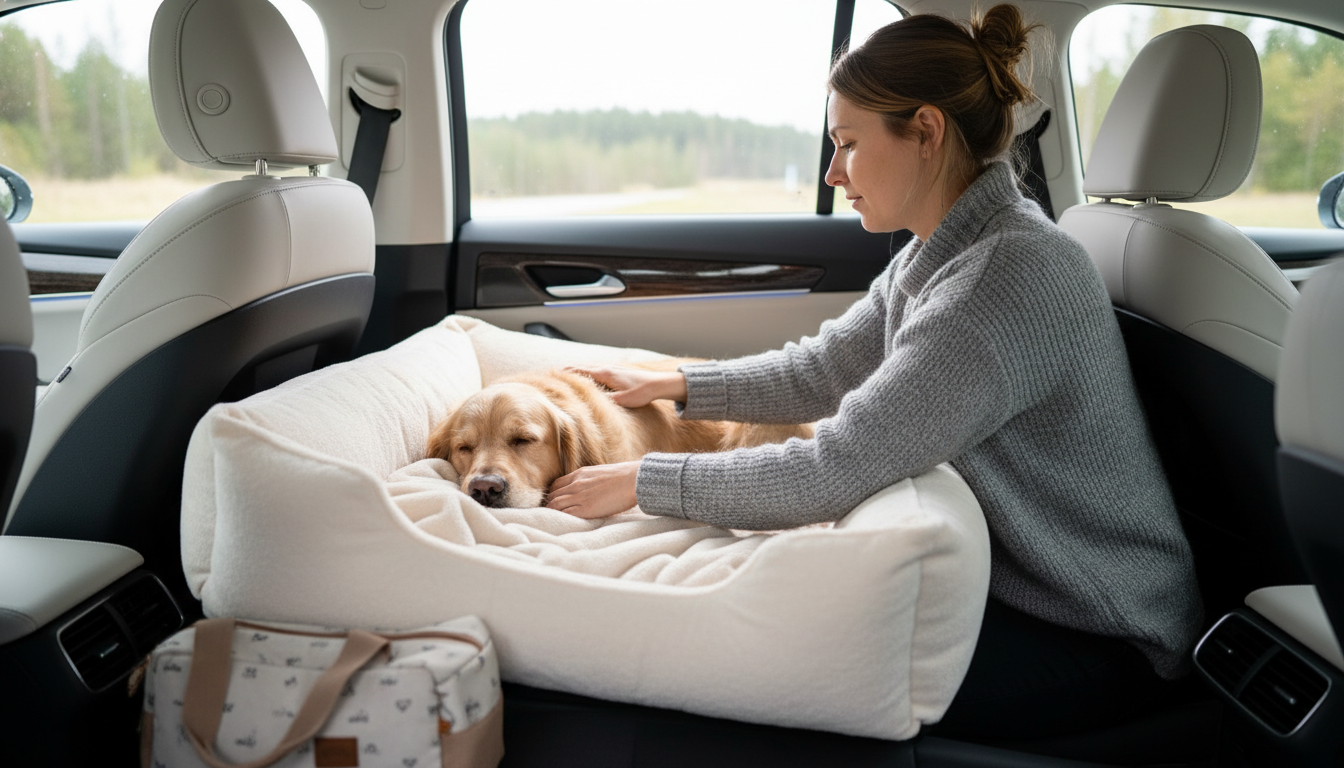
A dog who sleeps well usually has three things covered: comfort, calm, and consistency. Start with a simple evening rhythm—last potty break, a quiet wind-down, then lights low and voices soft. When nights feel predictable, many dogs stop “waiting for the next thing” and settle faster.
Comfort is more than softness—it’s support and a sense of safety. Choose a bed that fits your dog’s size and sleep style (curlers often love bolsters; sprawlers do better with more surface area). A supportive, cushioned bed can reduce pressure on joints and help pups stay asleep instead of shifting positions all night. If your dog likes to burrow, add a light blanket; for anxious sleepers, a snug, den-like spot can feel grounding.
Small changes in the room can make a big difference. Keep the sleep area comfortably cool, offer a draft-free corner, and consider white noise if household sounds trigger alert barking. Dim lighting signals bedtime and helps dogs relax—especially puppies learning day vs. night routines.
Dogs settle best when they’ve had appropriate exercise and enrichment before evening. A walk, a short training session, or a puzzle toy at dinner can reduce nighttime restlessness. Avoid intense play right before bed; aim for calm activities in the last hour so your dog’s body can shift into “rest mode.”
Feeding, walking, and bedtime at similar times help regulate sleep. If your dog suddenly can’t get comfortable, consider possible causes like itching, GI upset, pain, or needing a late potty break—then adjust the routine or talk with your vet if it persists.
For extra help choosing a cozy bed style for small dogs and puppies, visit this dog bed guide.
Start with non-medication options like a supportive bed, a calm routine, and a comfort item (blanket or shirt with your scent). If you’re considering supplements or sleep aids, check with your veterinarian first to ensure they’re safe for your dog’s size, age, and health.
Restlessness can point to unmet needs (potty break, hunger, more daytime activity) or overstimulation from a busy evening. It can also signal discomfort like itching, digestive upset, or anxiety.
Pacing is often a sign your dog can’t get comfortable or feels on alert due to noises, separation stress, or changes in routine. If pacing is new, intense, or paired with panting or whining, it’s worth checking for pain or illness with a vet.