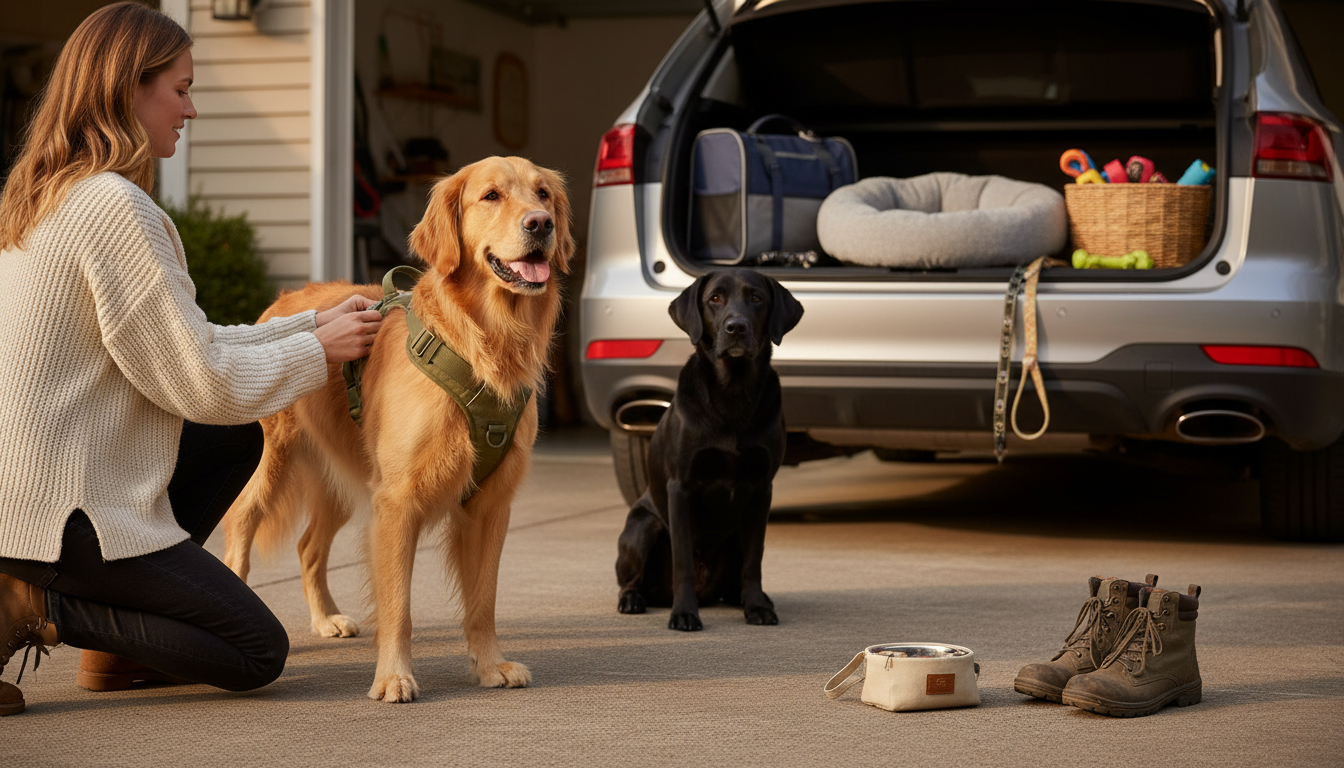
The safest dog harness is one that fits correctly, distributes pressure across the chest and shoulders (not the neck), and stays secure during sudden stops, pulls, or wiggly moments. For everyday walks, a well-fitted Y-front (sometimes called “non-restrictive”) harness is a top choice because it supports the body’s natural movement while keeping pressure off the throat—especially helpful for dogs who lunge, cough with collars, or have sensitive airways.
Look for a harness with a sturdy back clip or a dual-clip design (front and back). A front clip can reduce pulling by gently redirecting the dog, while a back clip is often more comfortable for steady walkers. Either way, the safest option is the one that stays centered on the chest, doesn’t rub behind the elbows, and doesn’t shift when your dog turns or backs up.
Key safety features to prioritize:
For car travel, the safest “harness” is a crash-tested car safety harness used exactly as directed, typically paired with a seat belt system. Smaller dogs may also be safest in a well-designed travel setup that keeps them supported and contained. For practical travel tips and cozy ways to keep your pup secure on the go, visit this helpful guide: https://kingwuff.com/blog/guide-puff-puppy-dog-car-seat-carrier-bag-king-wuff/.
A comfortable harness is usually a padded Y-front style with adjustable straps that don’t rub behind the elbows. Comfort improves when the harness stays in place without squeezing the shoulders.
Some dogs do at first, especially if the fit is off or the straps chafe. A proper fit, soft materials, and short, positive practice sessions usually make harness-wearing feel normal.
They can work very well when fitted correctly and used consistently, especially designs with an extra belly strap. Even “escape proof” harnesses can fail if they’re too loose or worn out.