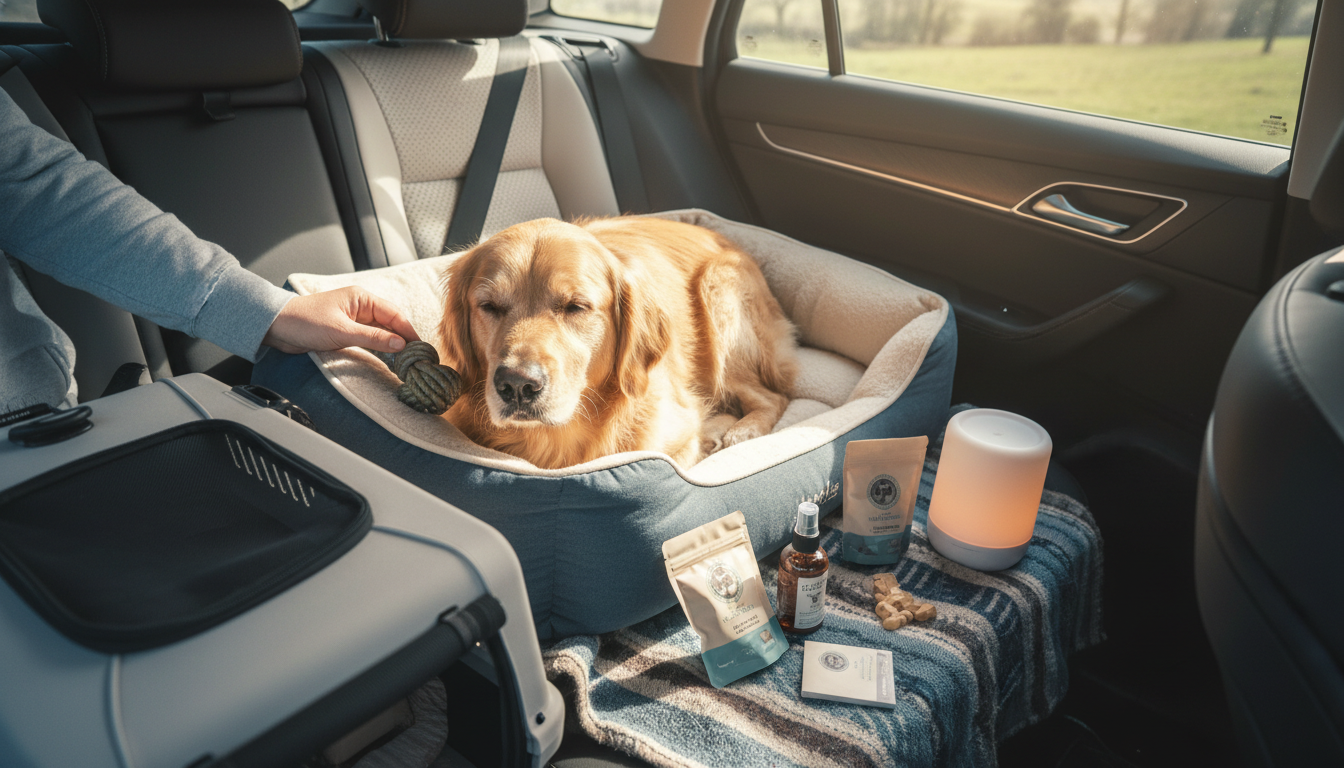
A calmer car ride usually starts with simple, dog-safe comforts rather than “something to give” right away. Try a light meal a few hours before leaving, a potty break, and a short walk to take the edge off. Then set your dog up with a familiar-smelling blanket or tee, gentle background noise, and a secure spot where they can settle.
If your dog needs an extra nudge, a vet-approved calming chew or supplement (often featuring ingredients like L-theanine, chamomile, or colostrum) can help some dogs relax. Always follow label directions, test it on a non-travel day first, and check with your veterinarian—especially if your dog is on other medications or has health conditions.
Below are practical points for comfort-first options that help most dogs.
Dogs tend to relax when they feel stable and contained. A supportive, well-padded carrier or car seat can reduce sliding, brace the body during turns, and make it easier to lie down. Clip your dog in with a harness (not a collar) and keep the space cozy with a washable liner or blanket.
A familiar smell can be surprisingly grounding. Pack bedding from home or a worn shirt. Some dogs also respond well to dog-specific calming pheromone sprays (used on bedding, not directly on your dog).
Crack a window slightly for fresh air, keep the cabin cool, and drive smoothly. If your dog gets carsick, ask your vet about nausea support—nausea and anxiety often show up together.
Offer high-value treats for calm behavior once the car is parked, then gradually reward relaxed body language during short practice rides. Avoid feeding a big meal right before travel.
For practical guidance on choosing a secure carrier and setting up a comfortable ride, visit this dog car seat carrier guide.
Veterinarians may prescribe anti-anxiety medications or mild sedatives for car anxiety, depending on your dog’s health and symptoms. Never give human medication unless your vet specifically instructs you to.
Pack water, a leash, waste bags, and a familiar blanket, plus a secure harness or carrier for safety. Calming chews can help some dogs, but it’s best to test them before travel and confirm they’re appropriate with your vet.
Start with short, positive practice rides and reward calm behavior, then gradually increase duration. Pair that training with a stable, comfortable setup (secured carrier or harness) and a predictable routine before departure.