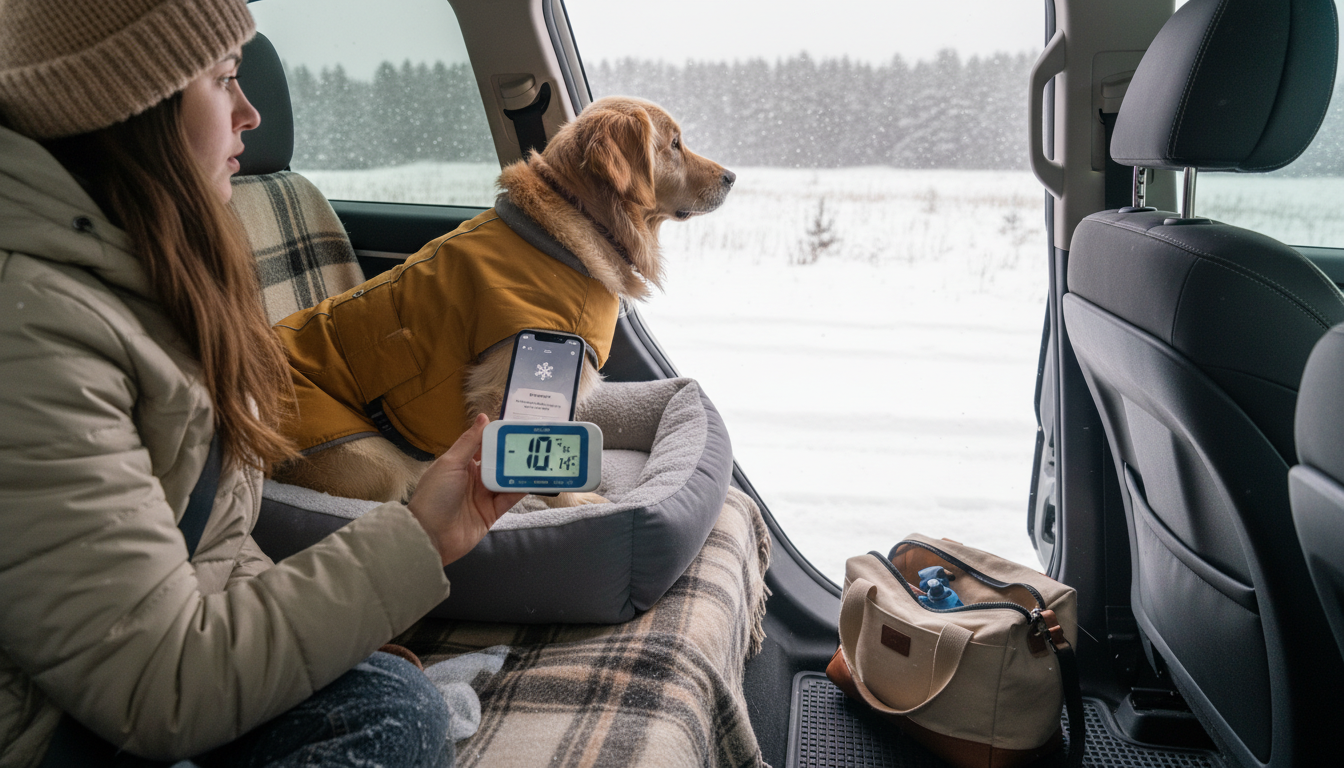
A good safety line for many healthy adult dogs is that walks start getting risky around 20°F (-6°C), and they can become dangerously cold around 0°F (-18°C)—especially with wind, wet snow, or long exposure. That said, the “too cold” point depends on your dog’s size, coat, age, health, and how used they are to winter weather.
32–45°F (0–7°C): Usually comfortable for most dogs, though short-coated or small dogs may want a sweater for longer outings.
20–32°F (-6–0°C): Many dogs are still fine, but keep walks shorter and watch for shivering or paw lifting.
0–20°F (-18–-6°C): High caution. Limit time outside, consider booties, and skip lingering at the park.
Below 0°F (-18°C): Too cold for most dogs. Stick to quick potty breaks and indoor enrichment.
Cold tolerance varies a lot. Smaller dogs, puppies, seniors, short-haired breeds, and dogs with arthritis or heart/lung issues chill faster. Thick-coated breeds may handle cold better, but they can still get frostbite on ears, tails, and paws.
Turn back if you notice shivering, anxious pacing, slowing down, whining, lifting paws, refusing to walk, or skin looking pale/gray on ears or toes. Also consider windchill: a breezy 20°F can feel much colder on exposed skin.
Choose sunny routes, keep sessions short, dry your dog after, and rinse off salt or de-icers to prevent paw irritation. For hands-free comfort and better organization on brisk walks, see the hands-free dog walking bag guide.
For many dogs, sustained walks become a poor idea around 20°F (-6°C), and most should avoid walks below 0°F (-18°C) beyond quick potty breaks, especially in wind or wet conditions.
Paw risk increases around 0°C and below, and becomes much more serious near -6°C to -10°C, especially with ice, salt, or prolonged contact with snow.
Many healthy dogs can manage short walks around -6°C (20°F) with precautions, but below -18°C (0°F) is generally too cold for anything more than a brief bathroom trip.