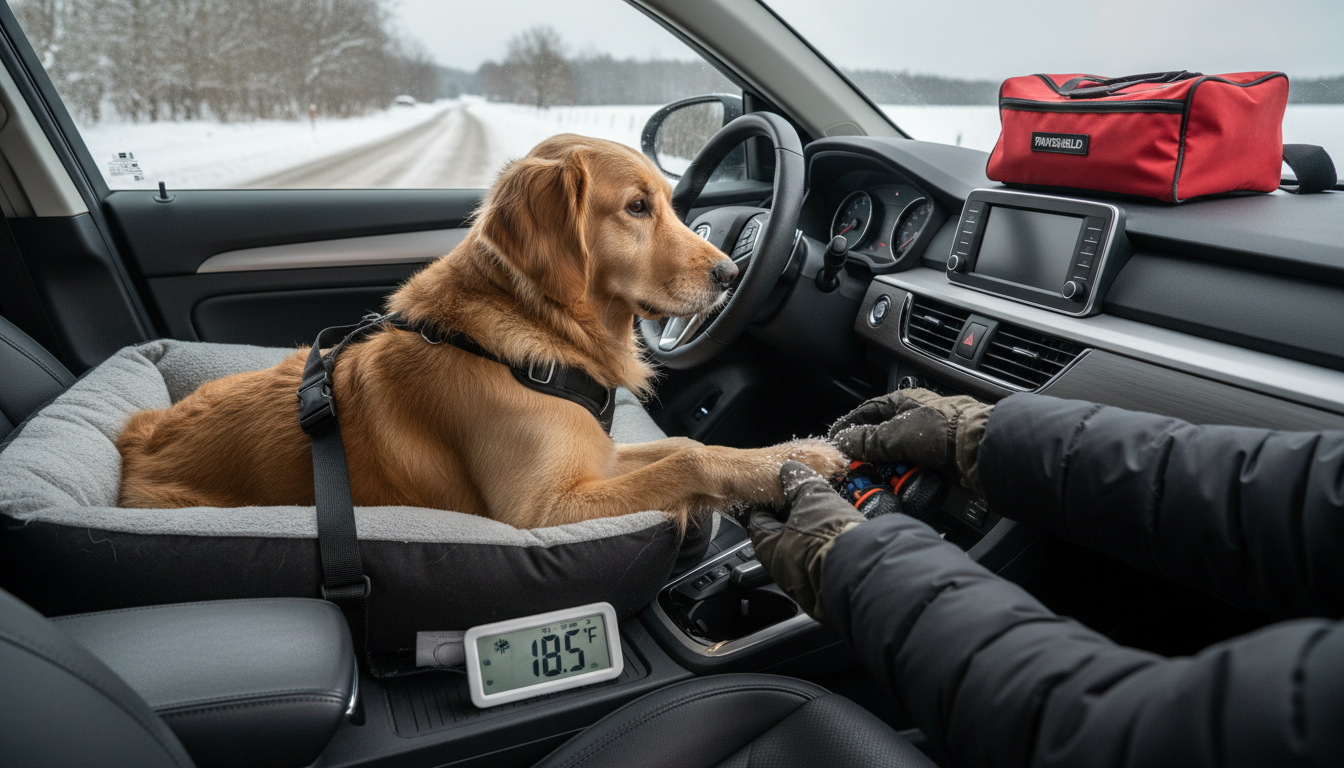
For most dogs, paw discomfort can start once the ground temperature drops to around 32°F (0°C), especially if sidewalks are wet, icy, or treated with de-icing salt. A good rule of thumb: when it’s consistently 20°F (-6°C) or colder, many dogs’ paws can get painfully cold quickly, and time outside should be shortened. At 0°F (-18°C) and below, conditions can become dangerous for exposed paws in just minutes, particularly for small dogs, seniors, and short-coated breeds.
Paws lose heat fast when they’re in direct contact with snow, ice, frozen pavement, or slush. Add wind, moisture, and road salt, and the risk of irritation goes up even more. Some dogs tolerate cold better than others, but the ground is often the deciding factor.
Watch for lifting or favoring a paw, frequent stopping, whining, licking at feet, sudden limping, or trying to turn back. After the walk, check for redness between the toes, cracking pads, or tiny ice balls stuck in fur (common in fluffy feet).
Many dogs do fine for short periods around 32°F (0°C), but tolerance varies by breed, coat, age, and whether the ground is wet or salty. Below about 20°F (-6°C), most dogs benefit from shorter outings and paw protection.
Frostbite risk increases as temperatures approach 0°F (-18°C) and below, especially with wind or wet paws. Exposure time matters—frozen surfaces can chill paws faster than expected.
For most pet dogs, temperatures near or below freezing can be unsafe overnight, especially without proper shelter and bedding. Colder conditions can become dangerous quickly for small, short-haired, sick, or older dogs.