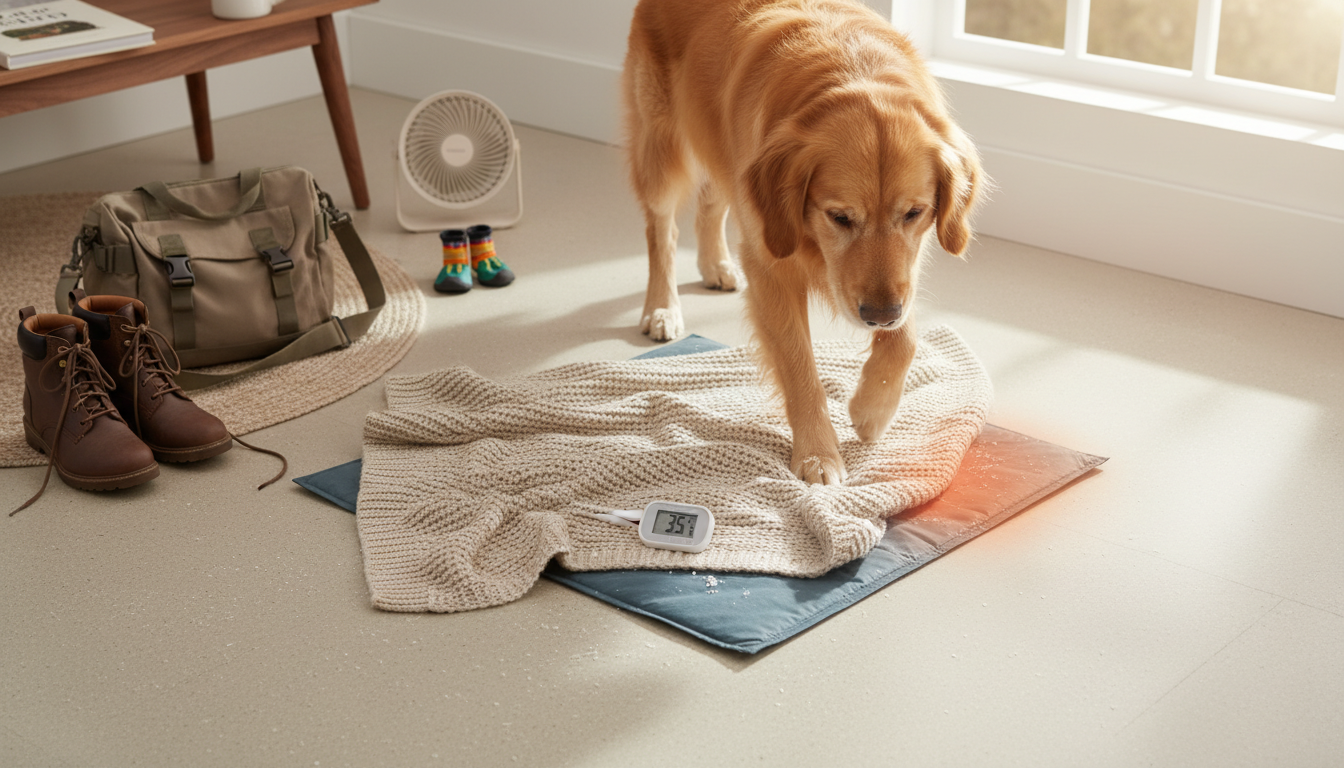
Dog paws are tougher than human feet, but they’re not heatproof or frostproof. A practical rule is to watch the ground temperature, not just the air: pavement, sand, and even dark decking can get dangerously hot (or painfully cold) fast.
As a general safety range, many dogs do best when outdoor surfaces are moderate—think roughly 45°F to 85°F—while extra precautions are smart outside that window. Below about 32°F, ice, salt, and sharp crusted snow can irritate pads. Above about 85°F, sun-baked pavement can become hot enough to burn pads even if the day doesn’t feel extreme.
A simple “7-second test” helps: place the back of your hand on the walking surface. If you can’t comfortably hold it there for 7 seconds, it’s too hot for your dog’s paws. In winter, if the surface feels painfully cold or you notice ice-melt chemicals, it’s time to shorten the walk or add protection.
Paw pads can burn quickly on hot surfaces. As a reference point, asphalt around 125°F can start causing injury with exposure, and around 130°F and up can burn in under a minute depending on the dog. That’s why midday summer walks on pavement are a common culprit—even when the air temperature seems “fine.”
On hot days, walk early or after sunset, stick to grass or shaded trails, and bring water. On cold days, limit time on icy sidewalks and wipe paws after walks to remove salt and grit. Dog booties or paw balm can add a protective layer, especially for sensitive dogs or long outings.
If you’re building a more comfortable routine for longer walks—treats, water, wipes, and paw protection included—this hands-free walking setup guide is a helpful companion: https://kingwuff.com/blog/guide-red-rover-dog-walking-bag-hands-free-waist-pack/.
They can be, but many dogs need shorter walks and paw protection when it’s around freezing. Ice, salt, and packed snow can crack or irritate paw pads.
Hot surfaces are the biggest risk: asphalt around 125°F can start causing injury, and around 130°F+ can burn very quickly. If the ground fails the 7-second hand test, don’t walk there.
Dog pads are tougher than skin, but they still burn and blister on hot pavement. Heat tolerance varies by breed, size, coat, age, and how long they’re exposed.