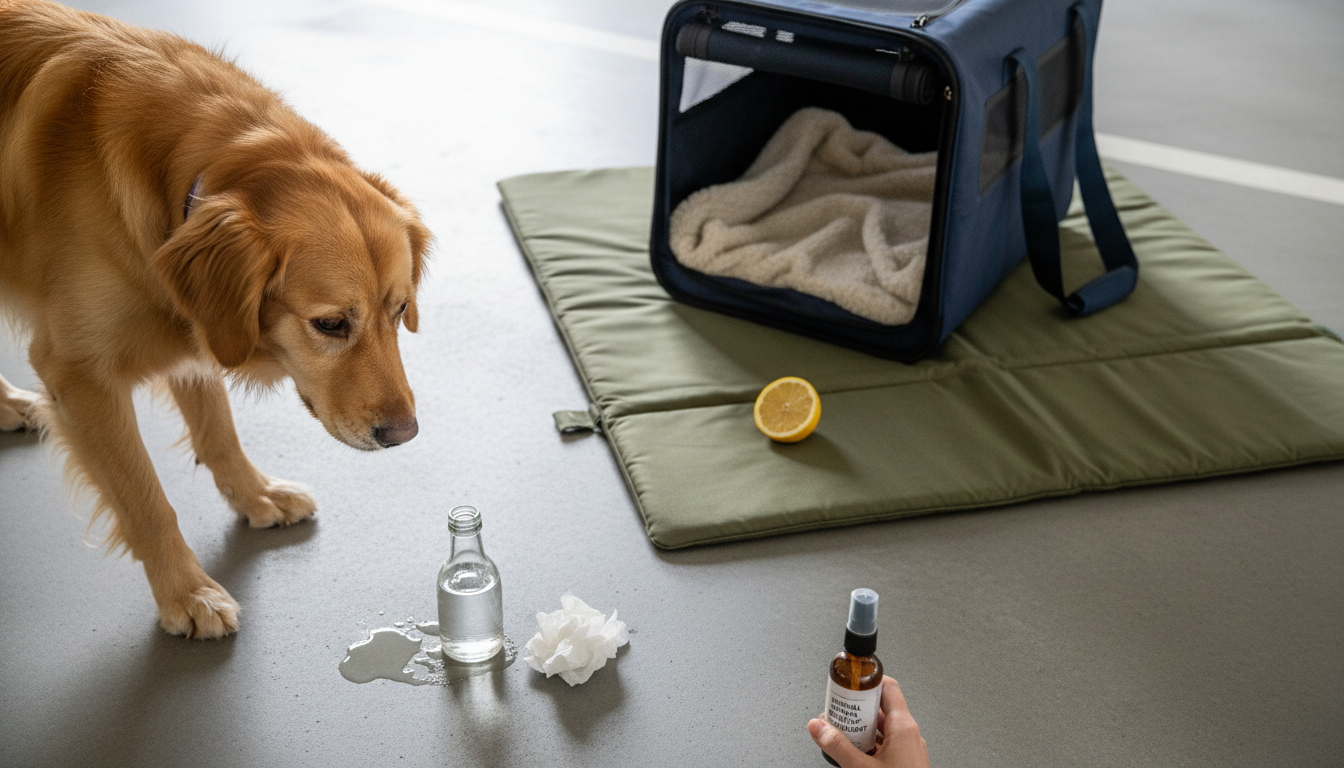
Most dogs strongly dislike sharp, acidic, “stingy” smells—especially citrus (like lemon, lime, and orange) and vinegar. These odors can feel overwhelming to a dog’s sensitive nose, which is why they often turn away, sneeze, or leave the area when they catch a strong whiff.
Every dog is a little different, but these scents are frequently disliked:
If the goal is simply to guide your pup away from a spot—like a trash area, a new rug, or a room during cleaning—choose the gentlest option and prioritize pet safety. Avoid applying strong scents directly where your dog eats, sleeps, or rests. Ventilation matters, and “more” isn’t better; a mild odor that discourages your dog is enough.
For day-to-day outings, many behavior issues come down to comfort and routine rather than deterrents. Staying organized on walks helps you redirect quickly with treats, bags, and wipes on hand—especially when your dog gets curious about a smell that’s hard to resist. For a cozy, hands-free setup that keeps walking essentials within reach, see this guide: Beige Rover Dog Walking Bag: Hands-Free, Organized Carry.
Citrus is commonly the top “nope” for many dogs, especially strong lemon or orange scents. That said, individual sensitivity varies by dog.
Citrus and vinegar are often used as deterrent smells, but they aren’t reliable solutions for bathroom habits. Consistent training, a set potty schedule, and proper cleanup usually work better.
No scent is guaranteed, but dogs often avoid strongly citrus- or vinegar-scented areas. If used, keep it mild and make sure it’s pet-safe and doesn’t irritate your dog’s nose or paws.