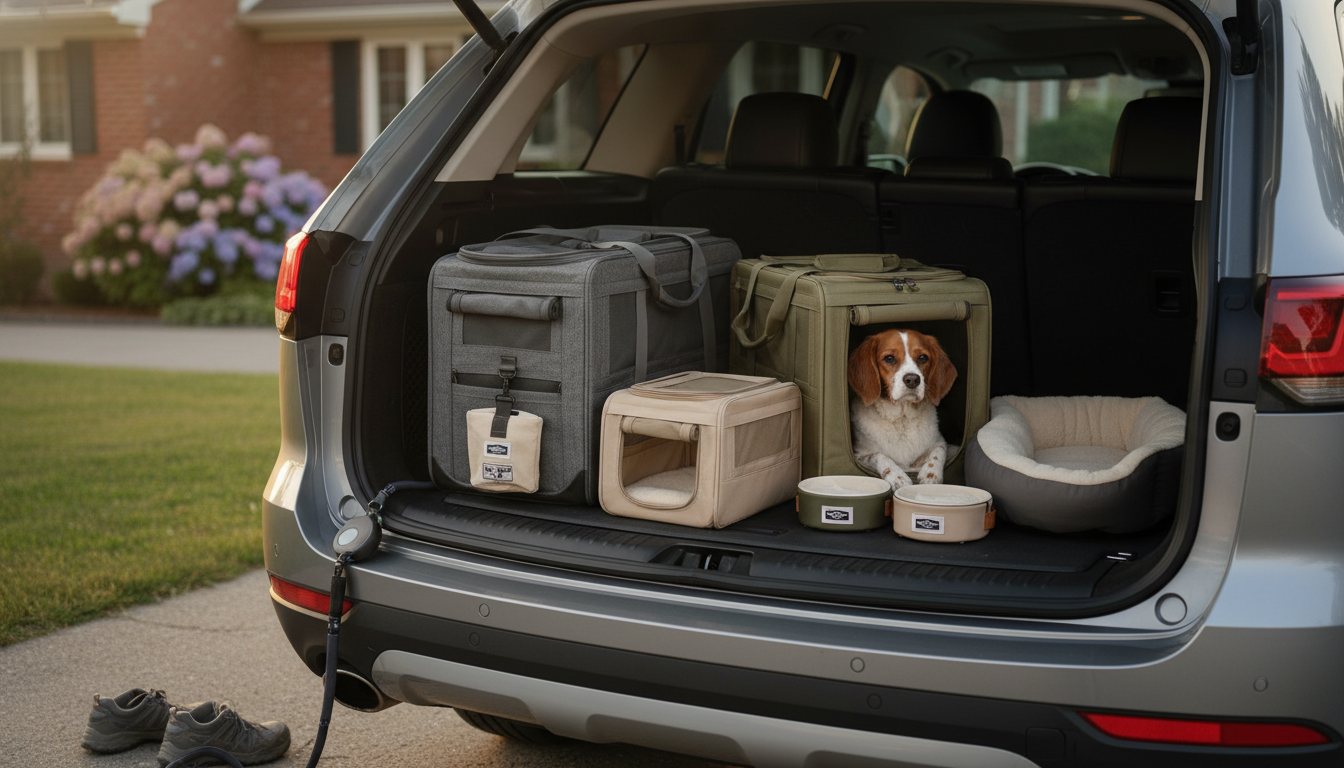
A TSA approved pet carrier doesn’t have one single universal size, but most airlines follow similar under-seat limits for in-cabin travel. A good rule of thumb is to look for a carrier around 18″ long x 11″ wide x 11″ high (about 46 x 28 x 28 cm) or smaller—then confirm the exact measurements with the airline you’re flying, because under-seat space varies by aircraft.
Think of “TSA approved” as more about security-screening friendly design and “airline approved” as about fit under the seat. To get the size right, start with the airline’s posted maximum carrier dimensions, then choose a carrier that’s slightly under those limits to account for soft sides that can compress.
Also check your pet’s fit: your dog should be able to stand up, turn around, and lie down comfortably. If your pup is right on the edge, prioritize comfort and safety over squeezing into the smallest option—then consider flying in-cabin only if the carrier still fits the airline’s requirements.
Most major U.S. airlines list maximum in-cabin carrier sizes in the neighborhood of:
If the carrier is soft-sided, many airlines allow a bit of “give,” but the bag still needs to slide fully under the seat in front of you.
At security, pets typically come out of the carrier while the bag goes through the X-ray. A carrier that’s easy to open, secure, and re-zip smoothly can make that moment calmer for both you and your dog. Look for sturdy construction, breathable panels, and comfortable carry options—especially for longer walks through terminals.
For a closer look at a stylish, travel-ready option and how it fits real-life dog travel needs, visit this KingWuff guide to the Totengo Brown Canvas Dog Carrier Bag.
Measure your dog’s length (nose to base of tail) or their curled-up sleeping size, add about 4–6 inches, and choose a bed with a sleep surface that lets them stretch or curl comfortably.