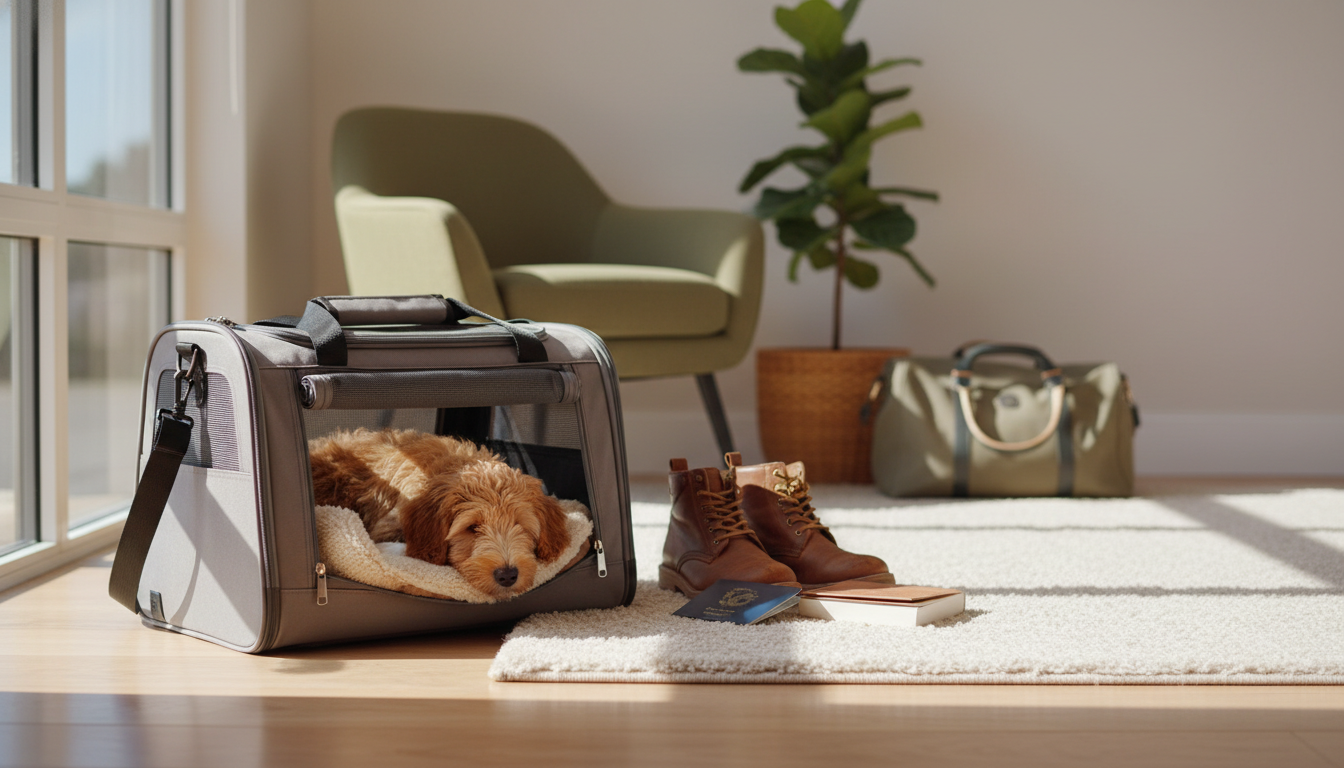
Airline-approved dog carrier sizes vary by airline and aircraft, but most in-cabin carriers must fit completely under the seat in front of you. As a general guideline, aim for a soft-sided carrier around 17–19 in (L) x 11–12 in (W) x 7.5–11 in (H). Soft-sided carriers are preferred because they flex slightly to slide under the seat while keeping your pup cozy and secure.
Your dog must be able to stand up, turn around, and lie down comfortably inside the carrier. Choose a carrier with breathable mesh, a secure zip, and a stable base to prevent sagging. A padded interior and durable, lightweight materials keep your dog calm and supported during takeoff, landing, and taxiing.
Want a deeper breakdown of sizing, fit, and comfort features? Read the full guide here: Dog Carrier Bag “Tail Traveler” Guide.
TSA does not set specific carrier dimensions; they focus on security screening. Carrier size rules come from the airline. Use your airline’s in-cabin dimensions (often around 18″ x 11″ x 11″) and choose a soft-sided carrier that fits under the seat.
Usually small dogs up to about 15–20 lb including the carrier, depending on the airline and aircraft. Your dog must be able to stand, turn, and lie down comfortably within a carrier that fits fully under the seat.
This question isn’t related to pet travel. Salary ranges vary widely by role, region, and experience; check reliable salary resources or the company’s listings for current information.