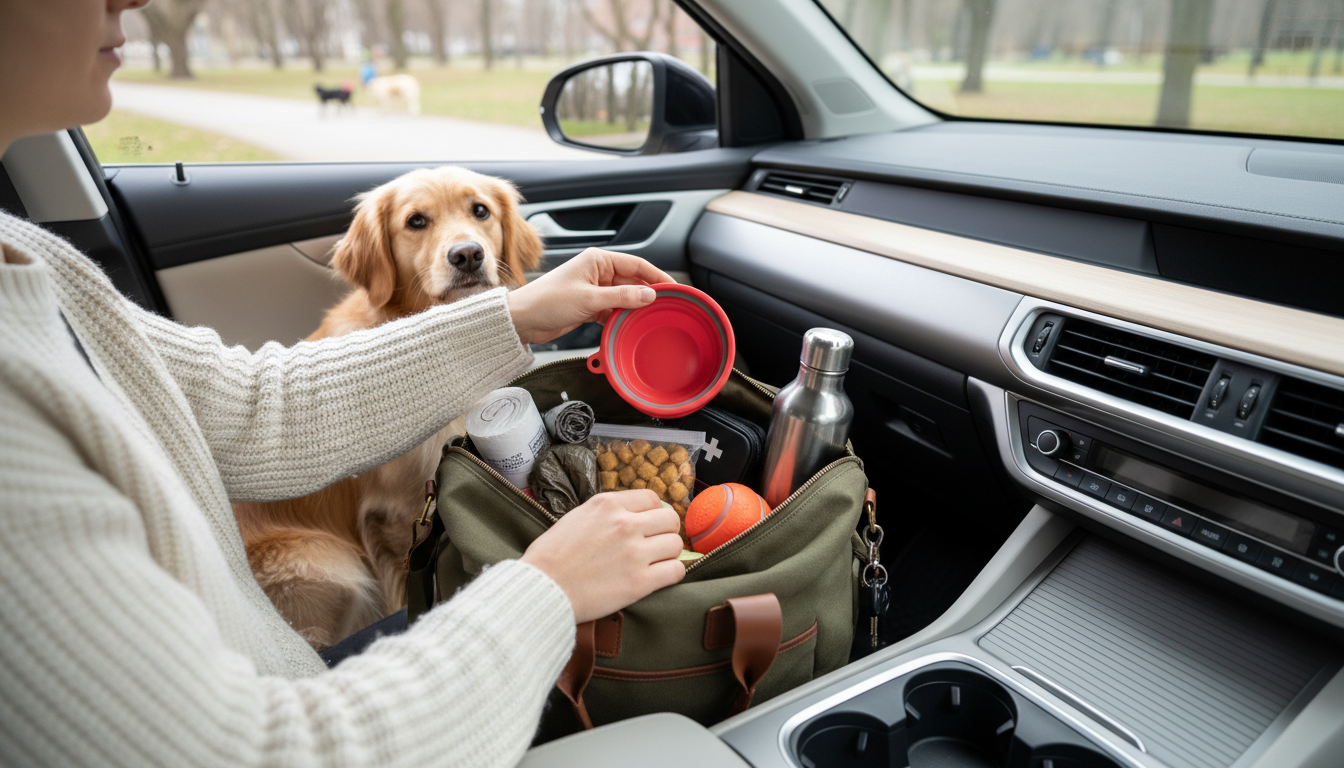
A well-packed dog walking bag keeps outings calm, clean, and comfortable—for both of you. Think in categories: safety, bathroom breaks, hydration, and a few “just in case” essentials. With the right setup, you can stay hands-free and focused on your dog instead of rummaging for supplies.
Waste bags + a small backup roll should always be first. Add a treat pouch or treat pocket for quick rewards, plus a clip or carabiner for used-bag carry when bins aren’t nearby.
Bring fresh water and a collapsible bowl, especially for warm weather or longer routes. A small towel or wipes helps with muddy paws, drool, or quick cleanups before getting back in the car.
Pack a spare leash (or a lightweight slip lead) if your dog’s gear fails. Keep ID info handy (photo of vaccination records or your contact card) and consider a small flashlight or clip-on light for dusk walks. For nervous dogs, a calming chew or familiar comfort item can help on busier routes.
Depending on your dog and the season, add paw balm, booties, tick remover, and a mini first-aid kit (gauze, antiseptic wipes, tweezers). A small zip pouch for keys/cards keeps personal items clean and separate from pet gear.
The best dog walking bags have multiple compartments, wipeable linings, and quick-access spots for treats and bags. For a practical packing breakdown and an organized, hands-free approach, see the full guide here: https://kingwuff.com/blog/guide-beige-rover-dog-walking-bag-hands-free-organized-carry/.
Bring waste bags, treats, water with a collapsible bowl, and wipes. Add a spare leash and a small “just in case” kit based on your dog’s needs and the weather.
It’s a common guideline for rescue or newly adopted dogs: about 3 days to decompress, 3 weeks to learn the routine, and 3 months to feel truly settled. Patience and consistency help a lot during each stage.
Look for a comfortable strap, hands-free options, and smart compartments for poop bags and treats. Durable, wipe-clean materials and secure closures make everyday use much easier.