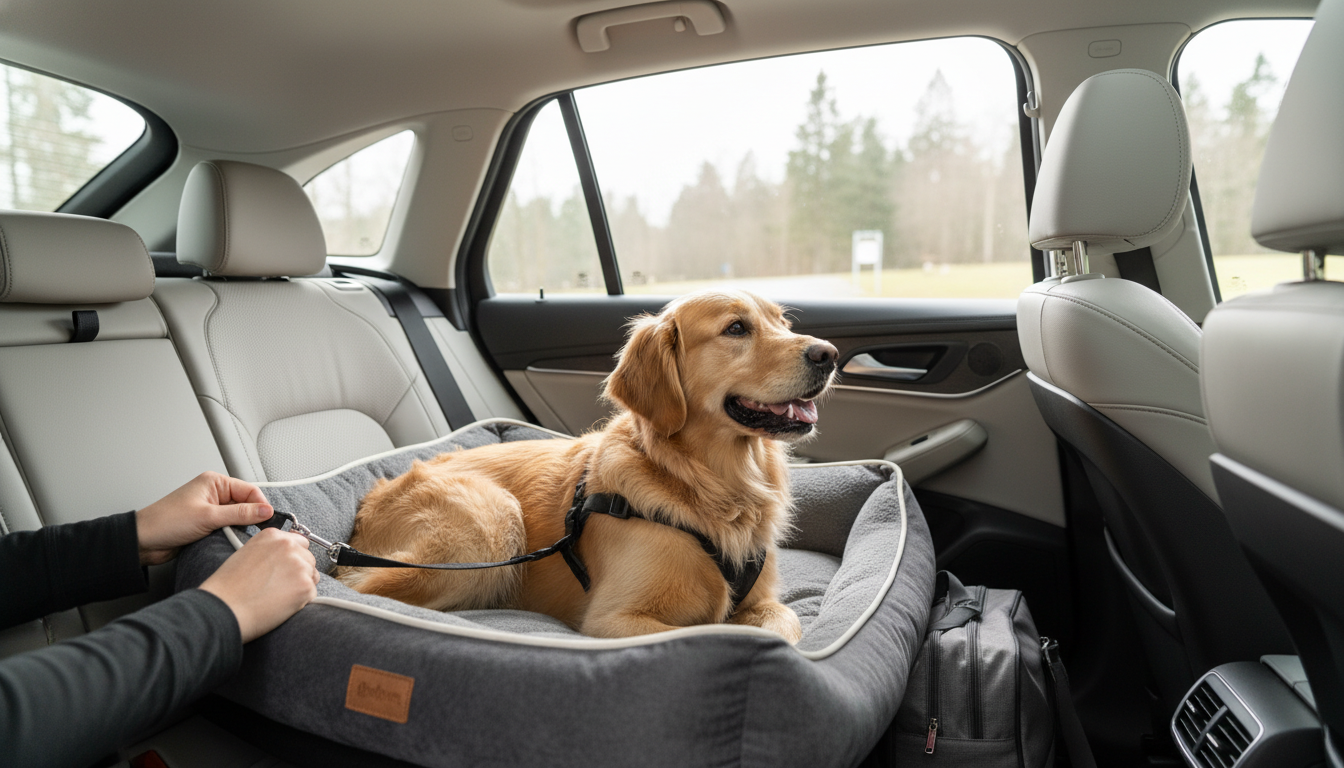
Most dogs sleep best on a dedicated dog bed that keeps them comfortable, supported, and off cold or hard floors. A quality bed also helps protect joints, cushions pressure points, and creates a cozy “safe spot” that can improve nighttime settling—especially for puppies, seniors, and dogs that like to curl up.
If your dog loves to curl into a little donut, a round, bolster-style bed can feel naturally nest-like and calming. Dogs who sprawl out may do better on a flatter mattress-style bed with plenty of surface area. For anxious sleepers, raised sides can provide a gentle sense of security without restricting movement.
Look for supportive fill (or orthopedic foam for older dogs), a soft surface that doesn’t trap heat excessively, and a washable cover to handle muddy paws and everyday shedding. Non-slip bottoms help keep the bed from sliding on hardwood or tile, which can startle dogs as they settle in.
Place the bed in a quiet corner away from drafts and heavy foot traffic, but close enough that your dog doesn’t feel isolated—many dogs sleep more soundly when they can still sense their people nearby. Adding a familiar blanket can help, especially for newly adopted dogs or puppies adjusting to a new home.
Some dogs do fine on furniture, but a dedicated bed is often more hygienic, easier to clean, and safer for dogs that jump down at night (particularly small dogs and seniors). A properly sized bed can also reduce nighttime wandering by giving your dog a clear, comfy place to land.
For a deeper look at choosing the right cozy setup—especially for small dogs and puppies—visit this guide to round dog beds.
Fresh water and a calm, consistent bedtime routine are the safest basics. Only give sleep aids, supplements, or medications if your veterinarian recommends them for your dog’s specific needs.
A comfortable bed, regular exercise earlier in the day, and a predictable wind-down routine often help most. Keeping the sleeping area quiet and slightly dim can also reduce restlessness.
Many adult dogs can sleep through the night, but 12 hours alone may be too long for puppies, seniors, and dogs with medical needs. When in doubt, arrange a late-night potty break option or a pet sitter.