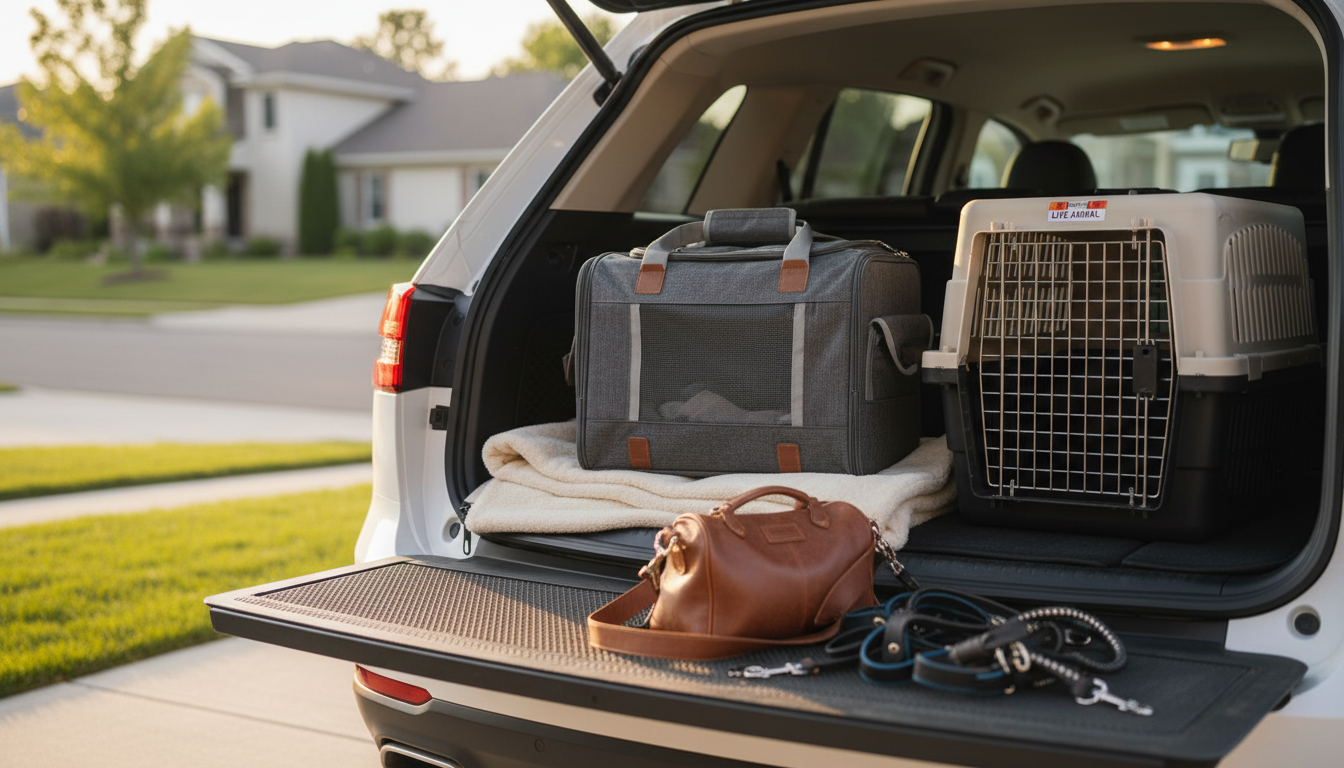
“Airline-approved” pet carriers are the ones that meet a specific airline’s in-cabin (or cargo) rules for size, structure, and safety. Most travelers have the easiest time with a soft-sided, under-seat carrier designed for cats or small dogs, since it can gently flex to fit beneath the seat while still keeping your pet supported and secure.
In general, an approved carrier for flying should have:
For in-cabin travel, airlines usually require your pet to remain inside the carrier (fully zipped) and for the carrier to stay under the seat in front of you during taxi, takeoff, and landing. For cargo travel, requirements are typically stricter: a hard-sided kennel, stronger ventilation specs, and secure hardware are common.
Before booking, check your carrier against the airline’s pet policy and measure it when it’s packed the way you’ll actually use it (pads add height). If you’d like more comfort-first packing ideas and travel-friendly carrier tips, visit this guide: pet travel comfort gear, carriers, and tips.
Compare your carrier’s dimensions and features to your airline’s current pet policy, paying special attention to under-seat size limits and ventilation/closure rules. When in doubt, call the airline with your flight number and seat type to confirm fit.
Yes, most airlines allow pet carriers, but rules vary by carrier and route. Some pets can fly in the cabin under the seat, while others must travel in cargo depending on size, breed restrictions, and destination regulations.
Many airlines are quite strict because the carrier must fit fully under the seat and allow the space around it to remain clear. If your carrier is oversized, you may be required to check in cargo or rebook.