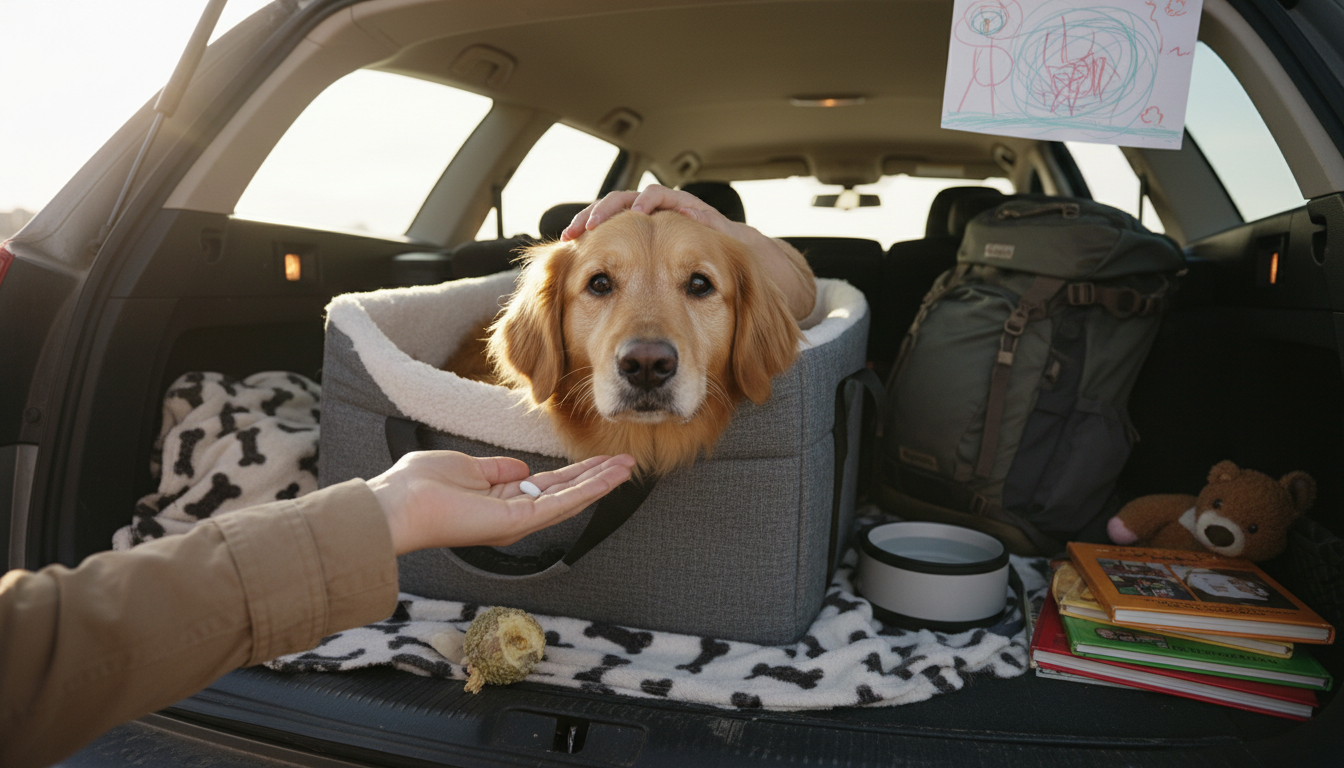
For dogs who get stressed, shaky, or panicky in the car, veterinarians most often use prescription anti-anxiety or calming medications tailored to your dog’s size, health history, and how intense the fear is. Common options include trazodone (a situational calming med), gabapentin (often used to reduce anxiety and “edge” before stressful events), and in some cases benzodiazepines like alprazolam for short, high-stress rides. If motion sickness is part of the problem, a vet may also add an anti-nausea medication such as maropitant (Cerenia).
It depends on what your dog is experiencing:
Always ask your veterinarian for the exact dose and timing. Many meds work best when given 1–2 hours before departure, and some dogs benefit from a test dose on a quiet day to see how sleepy (or wobbly) they get. Never use human anxiety medications without veterinary guidance, and avoid “stacking” multiple sedatives unless a vet specifically instructs you to do so.
Medication works best when the ride itself feels secure. A stable, well-ventilated carrier or car seat can reduce sliding and startle moments that feed anxiety. For a cozy, travel-friendly setup, see this guide on choosing a supportive dog car seat/carrier: https://kingwuff.com/blog/guide-puff-puppy-dog-car-seat-carrier-bag-king-wuff/.
Vets commonly recommend prescription options like trazodone and/or gabapentin for longer trips, sometimes paired with an anti-nausea medication if your dog gets carsick. Your vet can help choose the right plan based on your dog’s age, weight, and medical history.
Yes, gabapentin is frequently used to take the edge off anxiety for car rides and other stressful events. It’s typically given before travel, and dosing should be set by your veterinarian.
Veterinarians may prescribe trazodone, gabapentin, or certain short-acting anti-anxiety medications for situational fear, and they may treat motion sickness when it’s a trigger. The best choice depends on whether your dog’s main issue is panic, nausea, or both.