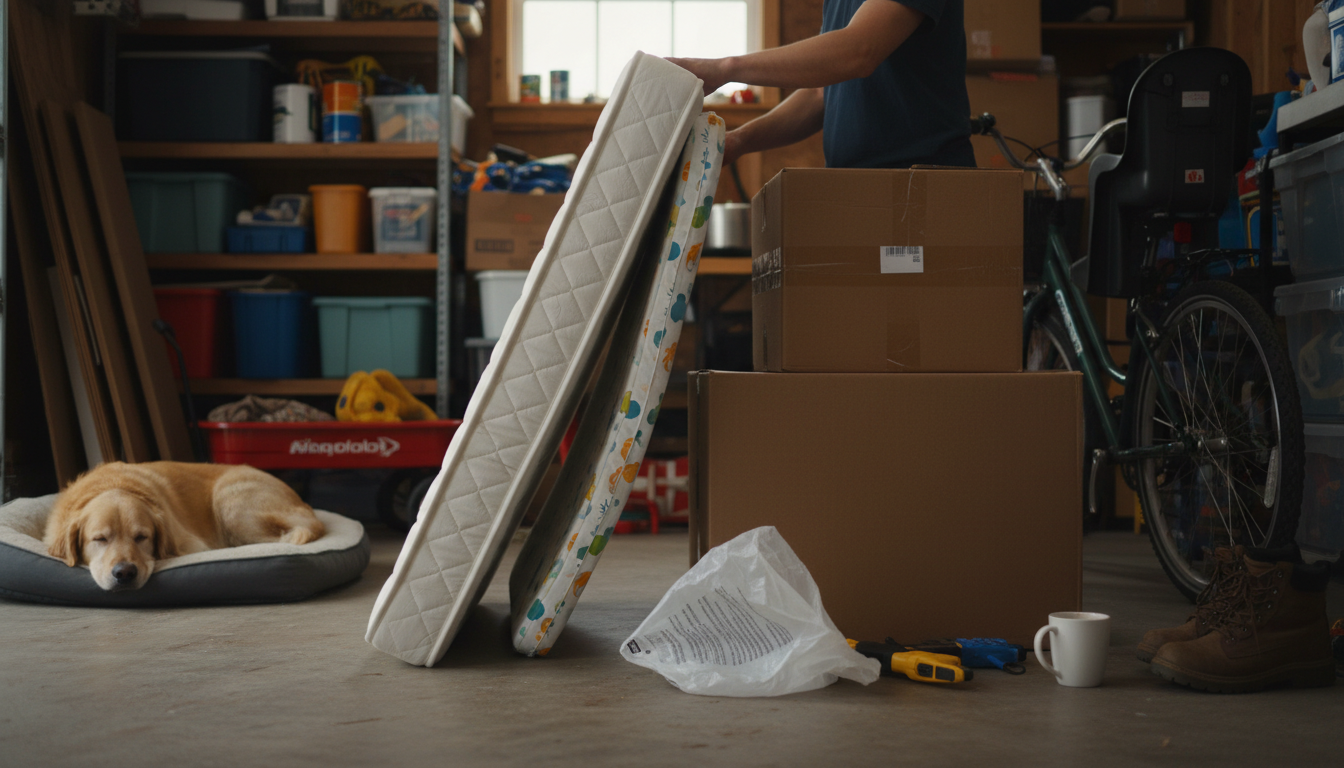
When setting up a crib, the goal is a flat, firm, snug-fitting sleep surface with no “extra” cushioning. Avoid these types of mattresses and add-ons because they can increase the risk of suffocation, overheating, or unsafe gaps along the sides.
Too-soft or plush mattresses: If the surface noticeably sinks when pressed, it’s too soft for an infant. Deep cushioning can let a baby’s face press into the material and make breathing harder.
Memory foam or “ultra-comfort” foam that feels squishy: Some foam mattresses are made firm enough for infants, but many memory-foam styles are designed to cradle and contour, which can be unsafe if they’re not specifically rated for crib use and truly firm.
Used, old, or damaged mattresses: A secondhand crib mattress may be worn, sagging, or no longer supportive. It can also be harder to verify whether it meets current safety standards, and hidden damage can create unsafe dips.
Adult mattresses, sofa cushions, or improvised bedding: These aren’t sized for a crib and often leave dangerous gaps. Even a small space between the mattress and crib sides can trap a baby.
Mattress toppers, pads, and thick “comfort” layers: Anything that changes the firmness or creates a softer surface can introduce risk. Skip thick pads unless they’re specifically designed for infant sleep and keep the surface firm.
Anything that doesn’t fit tightly: If you can fit more than two fingers between the mattress and the crib frame, it’s not a safe fit. A tight fit helps prevent entrapment.
Look for a crib mattress that’s firm, fits snugly in the crib, and is intended for infant sleep. A waterproof, easy-to-clean cover can also help keep things fresh without adding extra layers that soften the surface.
Whether it’s a baby’s crib or a dog’s favorite nap spot, safe sleep starts with the right foundation: supportive, stable, and easy to keep clean. For a practical look at washable, non-slip comfort for pets (great for travel and home), visit this guide.
A firm, flat crib mattress that fits snugly with no gaps is considered the safest option. Choose one made specifically for infant sleep and follow the crib manufacturer’s fit guidance.
No. Off-gassing varies by materials and manufacturing, and some foams are certified to lower certain emissions. For a crib, prioritize a firm mattress intended for infants and follow all safety labeling.
In general, pediatric guidance favors a firm, flat sleep surface with a tight-fitting sheet and no extra padding. The mattress should be designed for infant sleep and fit the crib properly.