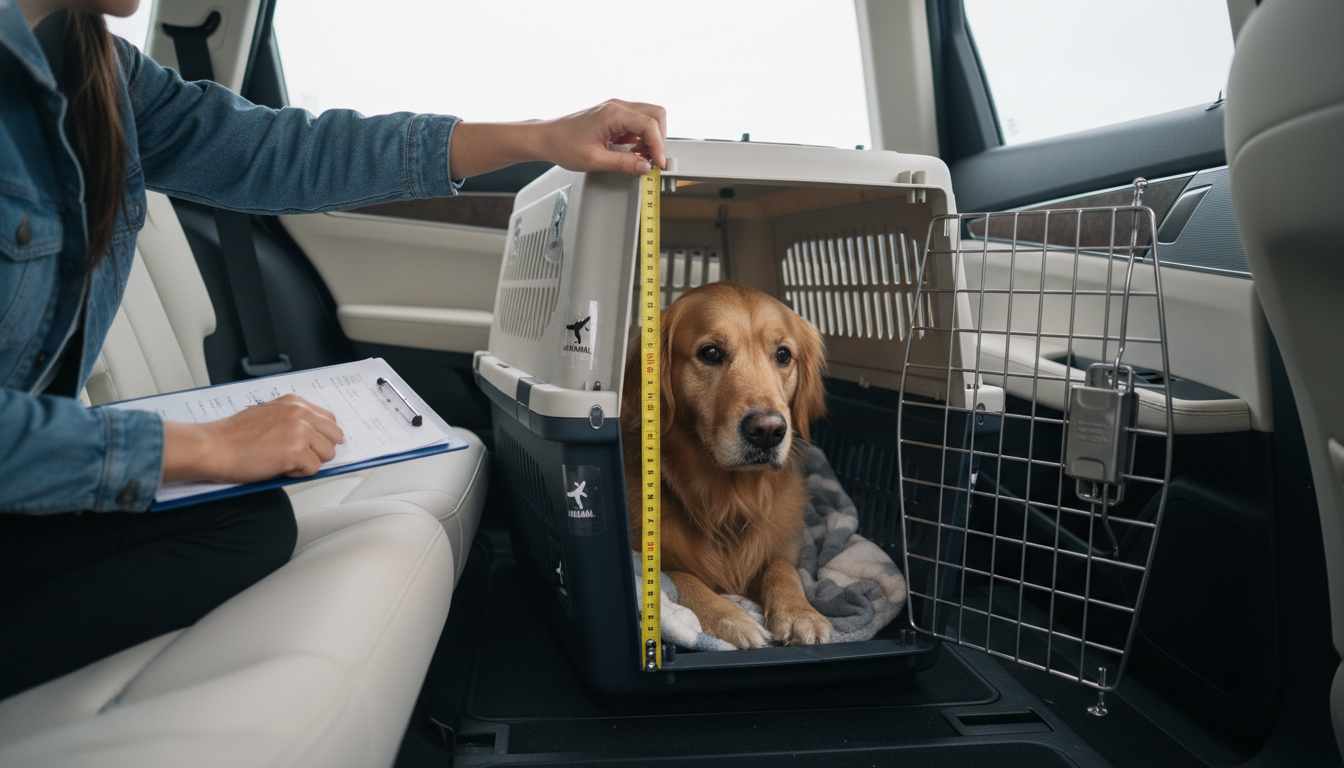
An “airline approved” dog crate is one that meets the specific safety and size rules required for flying—either in the cabin (under the seat) or in the cargo hold (as checked pet travel). The key detail: approval isn’t universal. Airlines set their own requirements, so a crate is only truly “airline approved” when it matches your airline’s current policy for your route and your dog’s size.
For in-cabin travel, the carrier must fit under the seat and still allow your dog to stand up, turn around, and lie down comfortably. For cargo travel, airlines typically require a rigid kennel with enough headroom and floor space for a natural stance and movement.
Airlines look for strong airflow (mesh panels or ventilation openings), a stable frame that won’t collapse, and closures that stay shut. Zippers should be sturdy; hard crates need reliable door latches. A secure design reduces stress and helps keep your pup safe during handling and turbulence.
Many airlines require a leak-proof bottom and absorbent bedding. Even for cozy soft-sided carriers, a reinforced base and water-resistant lining help prevent accidents from becoming a travel mess.
For cargo kennels, many carriers follow International Air Transport Association (IATA) Live Animals Regulations-style features: rigid walls, a secure metal door, ventilation on multiple sides, and hardware that can’t pop open. Some airlines also require “live animal” labels and attached food/water dishes accessible from the outside.
While not always required, thoughtful details—padded interiors, supportive bases, and durable fabrics—make a big difference in how relaxed your dog feels. For a practical, pet-centric overview of what to look for in a travel carrier, see this guide: https://kingwuff.com/blog/guide-totengo-brown-canvas-dog-carrier-bag/.
Check your airline’s pet policy and compare it to your crate’s dimensions, ventilation, and closure requirements. When possible, confirm with the airline directly before booking.
Most Maltipoos fit in a small carrier, but the right size depends on your dog’s height and length. Measure your dog and choose a crate that allows standing, turning, and lying down comfortably.
In-cabin crates must fit under the seat, and size limits vary by airline and aircraft. Cargo crates can be larger but must meet rigid-kennel safety requirements and your airline’s accepted dimensions.