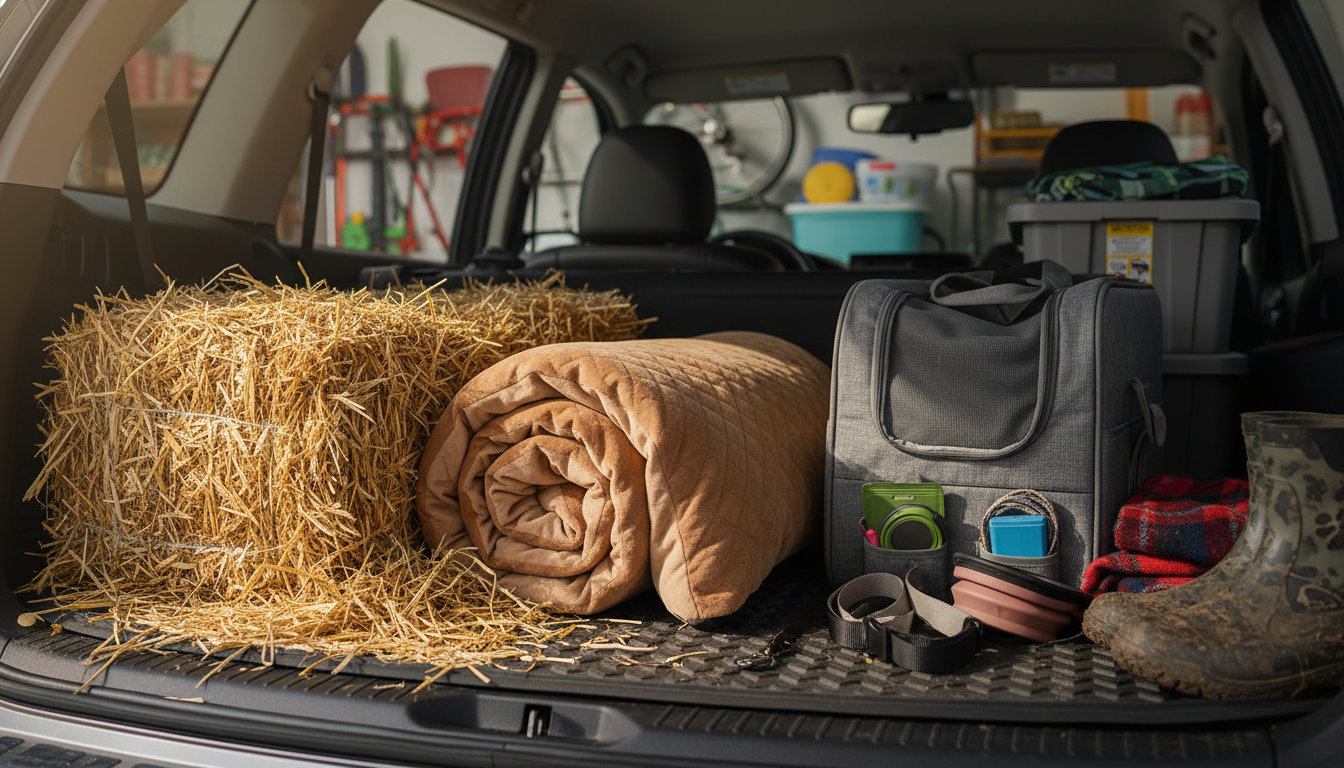
The warmest bedding for outdoor animals is clean, dry straw layered thickly inside a draft-free, weatherproof shelter. Straw traps air between its hollow stems, creating natural insulation that helps animals hold body heat far better than many common alternatives.
For best warmth, build a deep “nest” of straw (several inches to a foot, depending on the animal and space) and fluff it regularly so it stays lofty instead of packed down. Replace it often—wet, flattened, or soiled bedding loses insulating power quickly and can chill an animal rather than protect it.
Blankets and towels can feel cozy at first, but outdoors they often absorb moisture from snow, rain, or condensation. Once damp, fabric pulls heat away from the body and can even freeze. Straw is less likely to hold moisture against the animal, making it a safer, warmer choice for outdoor shelters in cold weather.
Warm bedding works best when paired with smart shelter basics: elevate the sleeping area off the ground, block wind at the entrance, and keep the interior space appropriately sized so body heat can build up. If you’re using a bed or pad, place it on top of insulation (like straw) rather than directly on cold concrete or soil.
If a dog has access to a dry, protected indoor area (like a garage, mudroom, or enclosed porch), a high-quality, plush bed can add comfort and joint support while still feeling warm. For a cozy option designed for everyday comfort, see the guide to the Paw Pillow Round Dog Bed here: https://kingwuff.com/blog/guide-paw-pillow-round-dog-bed-small-dogs-puppies/.
Dry straw is usually the best winter bedding because it insulates well and doesn’t stay as damp as fabric. Use a deep layer and replace it whenever it gets wet or compressed.
Insulating, moisture-resistant bedding like straw works best, especially when paired with a wind-blocking shelter. The goal is to keep the bedding dry, lofty, and off the cold ground.
Provide a small, draft-free shelter with insulation, fresh dry bedding, and unfrozen water. Check daily for damp bedding and signs of cold stress, and bring animals indoors when conditions are extreme.