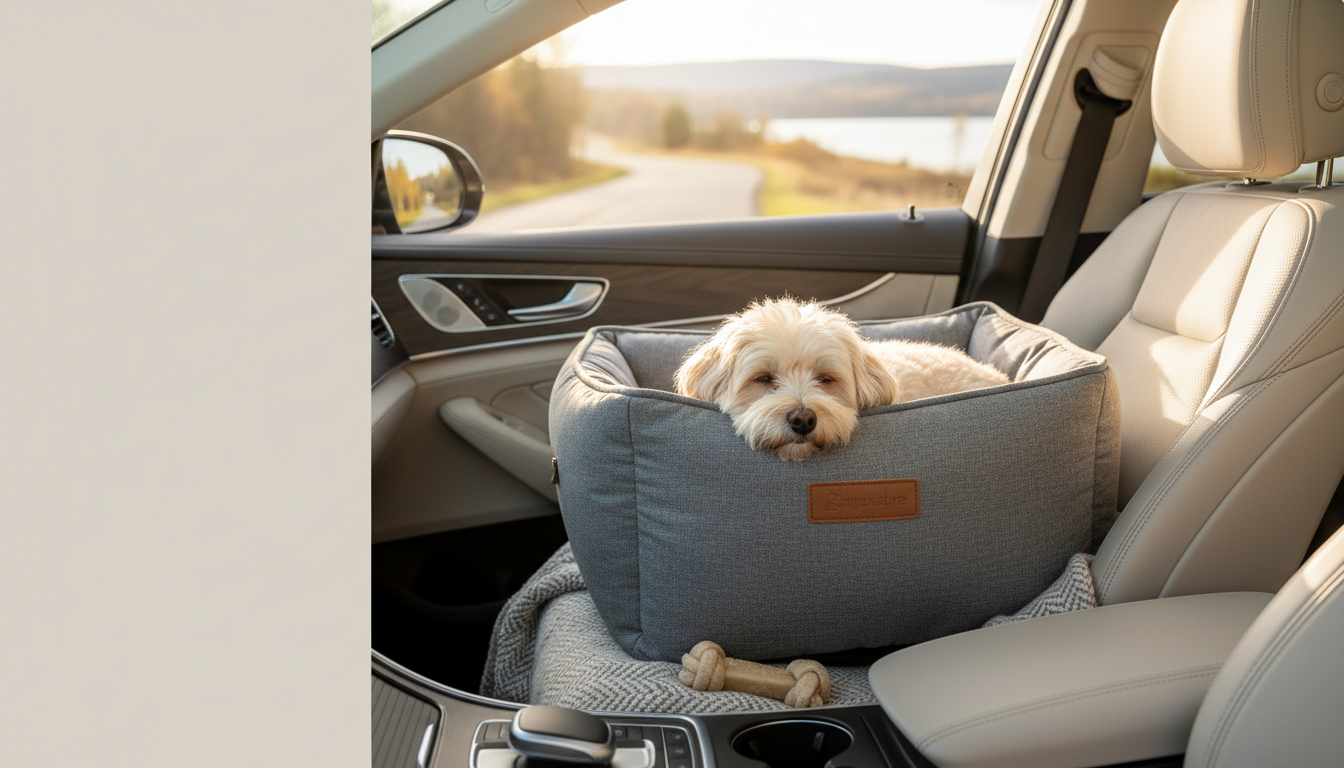
The safest way to travel with a small dog in the car is to keep them secured in a crash-tested, well-ventilated carrier that’s properly anchored to the vehicle. A quality carrier prevents sudden movement, protects your pup in hard stops, and keeps drivers free from distraction. Place the carrier on the back seat or on the vehicle floor behind a front seat to reduce airbag and projectile risks. Secure it using the seat belt or built-in tether points so it can’t tip or slide.
Choose a carrier that balances structure and comfort: firm sides to maintain shape, breathable panels for airflow, and a cozy interior your dog can relax in. A top-entry or wide-zip opening makes loading calm and easy, while interior safety tethers add another layer of protection. If your dog is new to car rides, let them explore the carrier at home first with treats and short practice trips, gradually building up to longer drives.
During travel, keep the car cool and calm. Offer water at breaks, not while the vehicle is moving. Stop every 2–3 hours for short walks and bathroom breaks. Never let your dog ride on your lap, roam freely, or stick their head out the window—debris and sudden stops can cause injury. And please never leave your dog alone in a parked car.
Looking for a carrier that’s both secure and stylish? Explore our guide to the Seashell Dog Carrier Bag in Black—designed for comfort, durability, and modern travel ease. Read the full article.
Use a sturdy, well-ventilated carrier secured to the back seat with a seat belt or tether. The carrier should fit your dog comfortably, with room to lie down, and be placed away from active airbags.
Most dogs can handle a 12-hour trip with planned breaks every 2–3 hours for water, stretching, and bathroom needs. Keep the temperature stable, offer light meals, and watch for signs of stress.
Use a secured carrier, plan frequent rest stops, and pack essentials: water, collapsible bowl, leash, waste bags, a blanket, and any medications. Keep the ride calm with familiar scents and steady airflow.