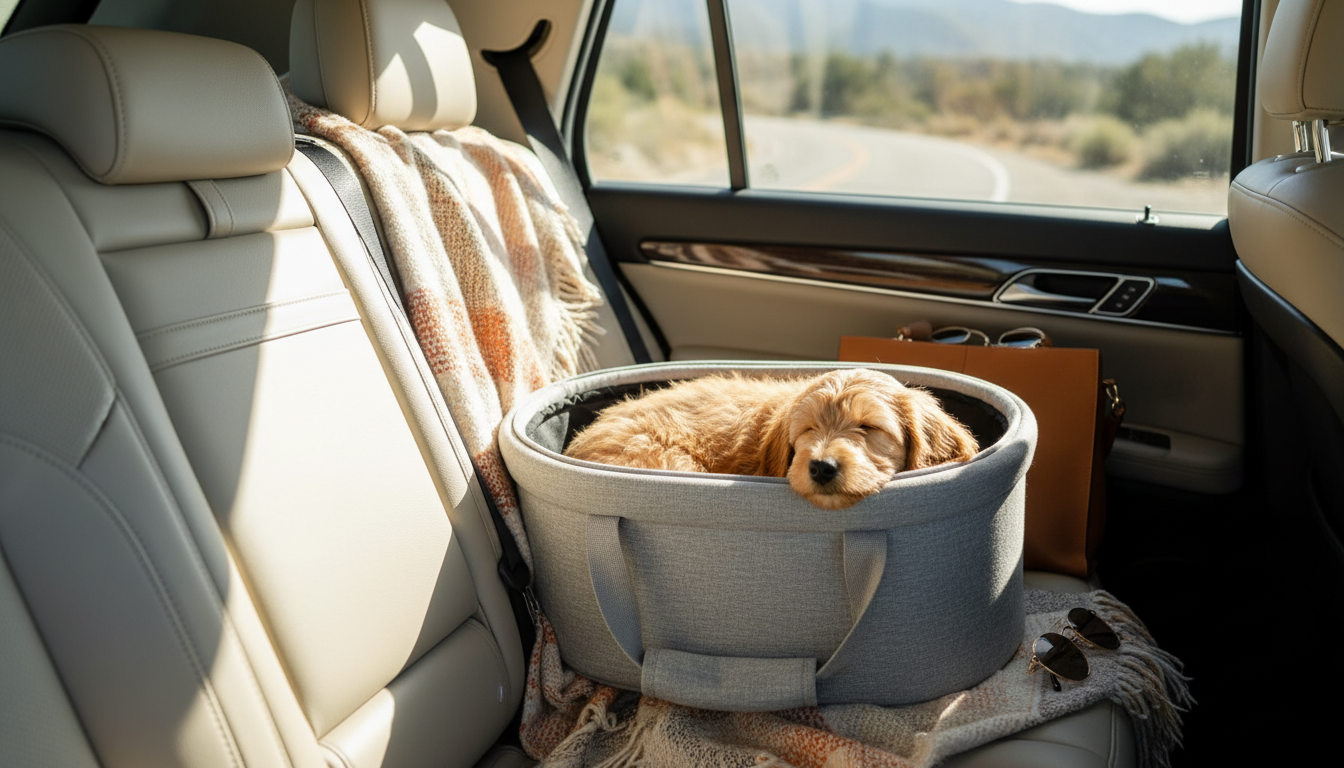
The safest way to travel with a small dog is to keep them secured in a well-ventilated, crash-conscious carrier or crate that’s appropriately sized, stable, and comfortable. Whether you’re driving or flying, your pup should be contained, supported, and never free to roam. A high-quality carrier with structure, soft padding, and lockable zippers helps prevent injury and reduces stress.
For car travel, place your small dog in a carrier that can be anchored using the seat belt or LATCH system. Position it on the back seat to avoid airbag impact zones, and ensure the carrier has rigid sides, breathable panels, and interior tethering. Keep the temperature comfortable, make scheduled breaks for water and potty, and never leave your dog unattended in a vehicle.
For air travel, choose an airline-compliant carrier that fits under the seat if your dog is flying in-cabin. Confirm size and weight rules with the airline, and acclimate your dog to the carrier for at least 1–2 weeks before departure. Pack essentials: collar with ID, leash, vaccines/health certificate if required, pee pads, a familiar blanket, and collapsible bowls. Feed lightly before the trip, and avoid sedatives unless your vet recommends them.
Comfort is safety. A thoughtfully designed carrier supports your dog’s posture, reduces jostling, and keeps them relaxed. The Seashell Dog Carrier Bag in Black from King Wuff blends structure, plush comfort, and stylish durability—great for city commutes, road trips, and airport transits. Want all the details? Read the full guide to the Seashell Dog Carrier Bag.
Before any long journey, talk to your vet—especially if your dog is a brachycephalic breed or has health concerns. Microchip your pet, use up-to-date ID tags, and carry recent photos. With the right carrier, secure installation, and a calm routine, you’ll make every trip safer, cozier, and a lot less stressful.
Secure your dog in a structured carrier on the back seat and anchor it with a seat belt or LATCH. Keep the cabin cool, plan water and potty breaks, and never let your dog ride on your lap or roam freely.
It depends on your dog’s health, breed, airline policies, and season. In-cabin is generally safer for small dogs; if cargo is required, choose a reputable airline, an IATA-compliant crate, and avoid extreme temperatures.
Fees vary by airline, typically ranging from around $100–$250 each way for in-cabin, with cargo costing more. Expect additional expenses for vet checks, health certificates, and any required import paperwork.