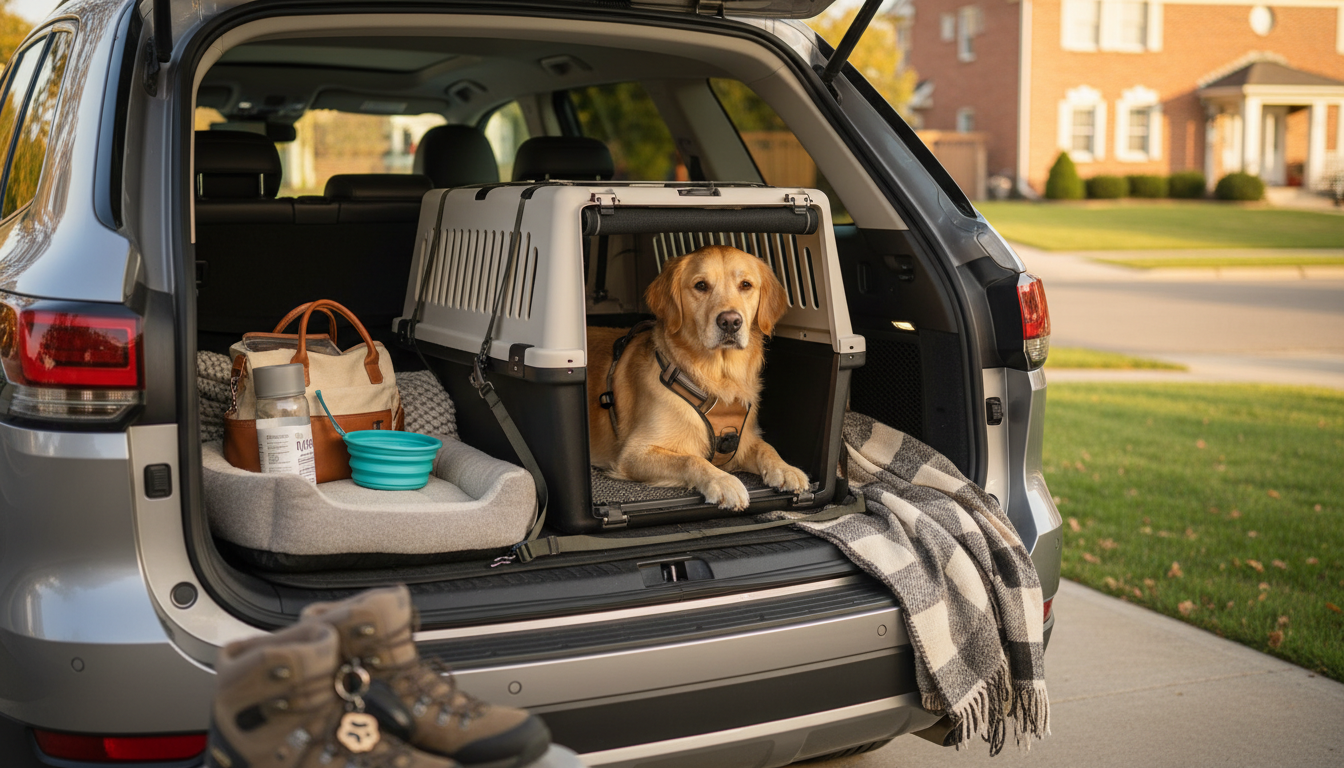
The safest way to travel with a large dog in the car is to properly restrain them so they can’t become a distraction or a projectile during sudden stops. For most big dogs, that means one of two options: a crash-tested harness clipped to a seat belt, or a secured travel crate positioned and anchored correctly. Both help keep your dog stable and protected while also keeping everyone else in the vehicle safer.
Start with the right restraint for your dog’s size, weight, and temperament. A well-fitting car harness should sit snugly (two fingers under the straps is a good guide) without rubbing the shoulders or restricting breathing. Attach it to a seat belt or an approved seat-belt tether system—never to a collar, which can put dangerous pressure on the neck in an impact. If your dog travels better in a crate, choose a sturdy, appropriately sized crate and secure it so it can’t slide or tip.
Placement matters, too. The back seat is generally the safest spot for a harnessed dog, and the cargo area can work for a crated dog if the crate is firmly strapped down and there’s adequate ventilation. Keep dogs out of the front seat where airbags can cause serious injury.
Before you hit the road, remove any slack from the tether (without making it tight enough to be uncomfortable), and do a quick safety check: doors locked, windows only cracked (if at all), and no loose items that could fly forward. For longer trips, build in calm breaks for water and stretching while keeping your dog leashed when exiting.
For more tips on choosing comfortable, travel-friendly gear and building a smoother ride routine, visit this guide on dog car travel and carriers.
The back seat is typically safest for a large dog riding in a crash-tested harness. If using a secured crate, a stable cargo area can also be safe when the crate is properly anchored and ventilated.
A harness is the safest choice for seat-belt restraint. If you don’t have one, use a secured crate as a safer alternative rather than clipping a seat belt to a collar.
A standard leash isn’t designed for crash protection and can tangle or cause injury. For safety, switch to a crash-tested harness or a secured crate instead of relying on only a leash.