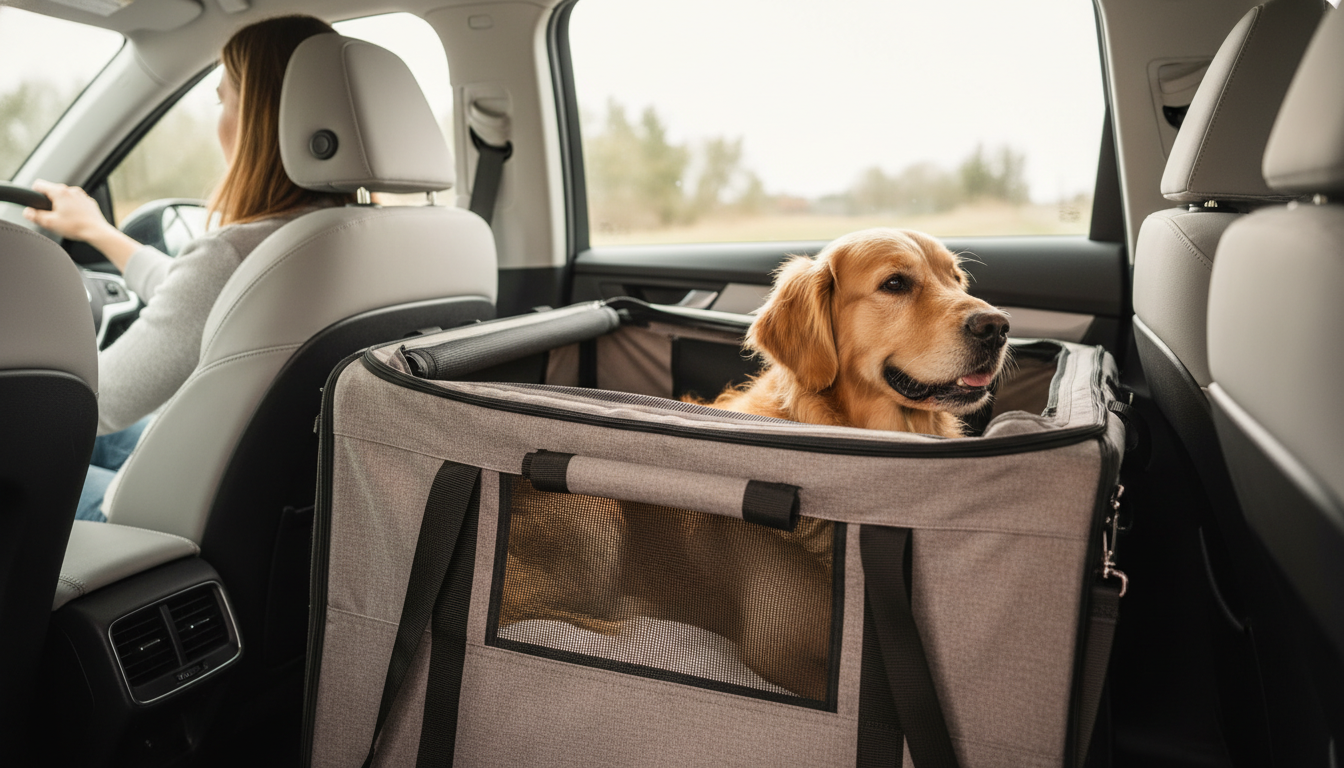
The safest way to transport a large dog in a car is to secure them with a crash-tested restraint system that fits their size and keeps them from roaming the cabin. For most big dogs, that means either a crash-tested harness clipped to the seat belt or a crash-tested travel crate firmly anchored in the vehicle. Both options reduce the risk of injury during sudden stops and help the driver stay focused.
Below are practical points for answer.
Crash-tested harness + seat belt is a popular choice for large dogs because it allows them to sit or lie down while staying restrained. Look for wide, padded straps, strong hardware, and clear sizing guidance to avoid pressure points.
Crash-tested crate can be an excellent option for dogs who settle best in an enclosed space. The crate should be the right size (room to stand, turn, and lie down) and should be secured so it can’t slide or tip.
The back seat is generally safest for harnessed dogs, since front airbags can be dangerous. If you’re using a crate, the cargo area of an SUV can work well when the crate is properly tied down and the dog is separated from loose gear.
Keep the floor and seats clear of items that could become projectiles, and avoid letting your dog ride with their head out the window (debris and sudden stops can cause injuries). Make frequent breaks on long trips, offer water, and use a protective seat cover if your dog sheds or tracks in dirt.
Comfort matters—especially for bigger bodies and longer drives. Use a supportive travel mat or blanket that won’t interfere with the harness fit or block crate ventilation. For more tips on choosing safe travel gear and getting your dog comfy on the road, visit this dog car travel guide.
Most dogs do best with a bed that matches their size and sleep style, offers easy-to-clean materials, and provides enough support for their joints—especially as they get older.