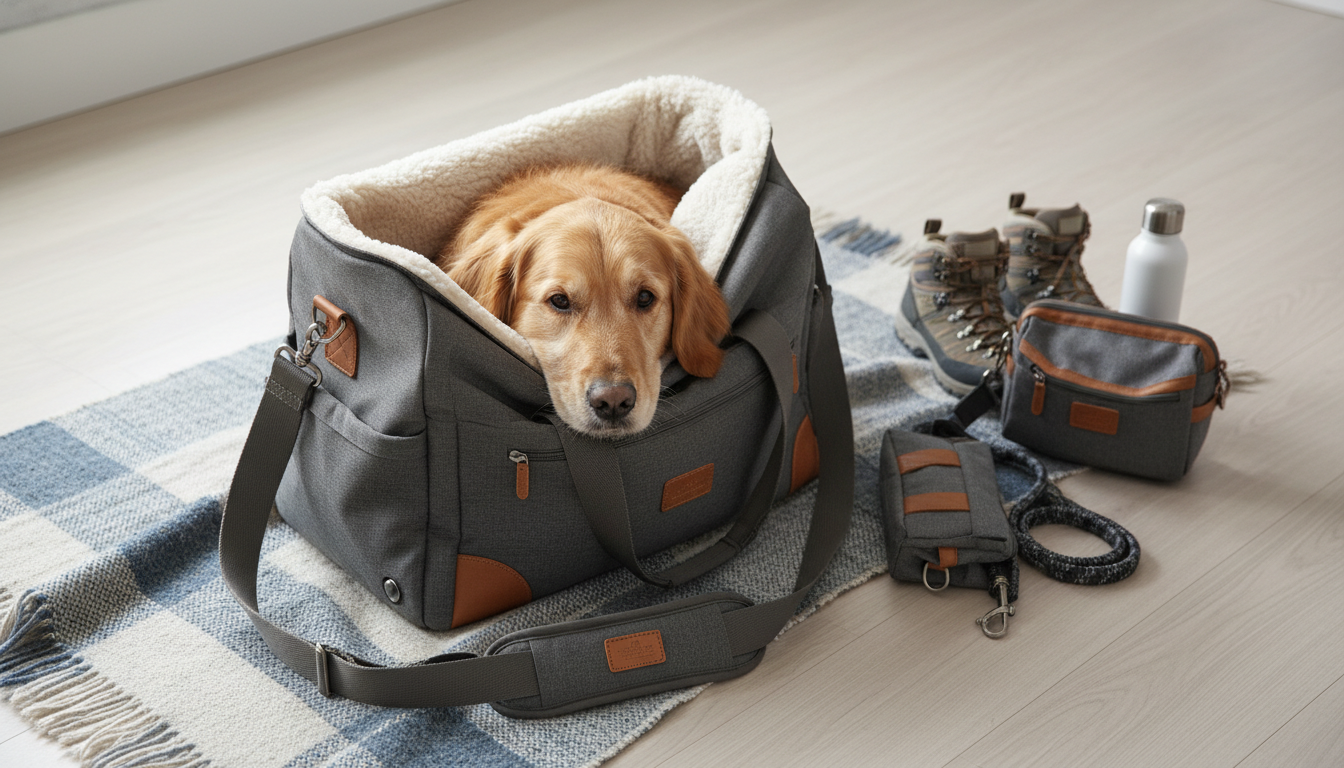
The safest way to carry a big dog is to keep their spine supported, keep their weight close to your body, and lift with your legs (not your back). If your dog is injured, elderly, or simply heavy, consider using a supportive dog carrier, lifting harness, or travel gear designed for stability—because the safest carry is often the one you don’t have to “deadlift” at all.
For a calm, cooperative dog, aim for a “front-and-back” support. Slide one arm under the chest (behind the front legs) and the other arm under the rear end, cradling the hips and thighs. Keep your dog horizontal and snug against your torso so they don’t twist or dangle.
Stand close, plant your feet shoulder-width apart, and squat by bending your knees and hips. Tighten your core, lift smoothly, and avoid sudden jerks. If your dog squirms, set them down and reset—wrestling mid-lift is how strains and drops happen.
For short distances, the supported hold works well. For longer carries or frequent travel, a structured dog carrier or supportive travel accessory helps distribute weight and reduce pressure on your dog’s joints. If your dog is anxious, get them comfortable with the carrier at home first with treats and short practice sessions.
If your dog yelps, resists hard, has trouble breathing, or may have an injury, avoid lifting unless necessary. Use a ramp, ask for help, or use a support harness designed to stabilize the body during movement.
For more tips on comfortable, secure travel setups—including carriers and practical accessories—visit this guide to pet travel comfort gear and dog carriers.
If you must, use a two-arm support hold (chest and rear) and take one step at a time, keeping the dog close to your center of gravity. For safety, a second person guiding from behind or a support harness is often a better option.
Use a stable stance, lift with your legs, and keep your dog level with one arm under the chest and the other under the hips. When possible, use a ramp or steps to reduce strain on both of you.
Squat close to your dog, brace your core, and lift smoothly while keeping them tight to your body. If the dog is too heavy or wiggly, get help or use supportive gear rather than forcing a risky lift.