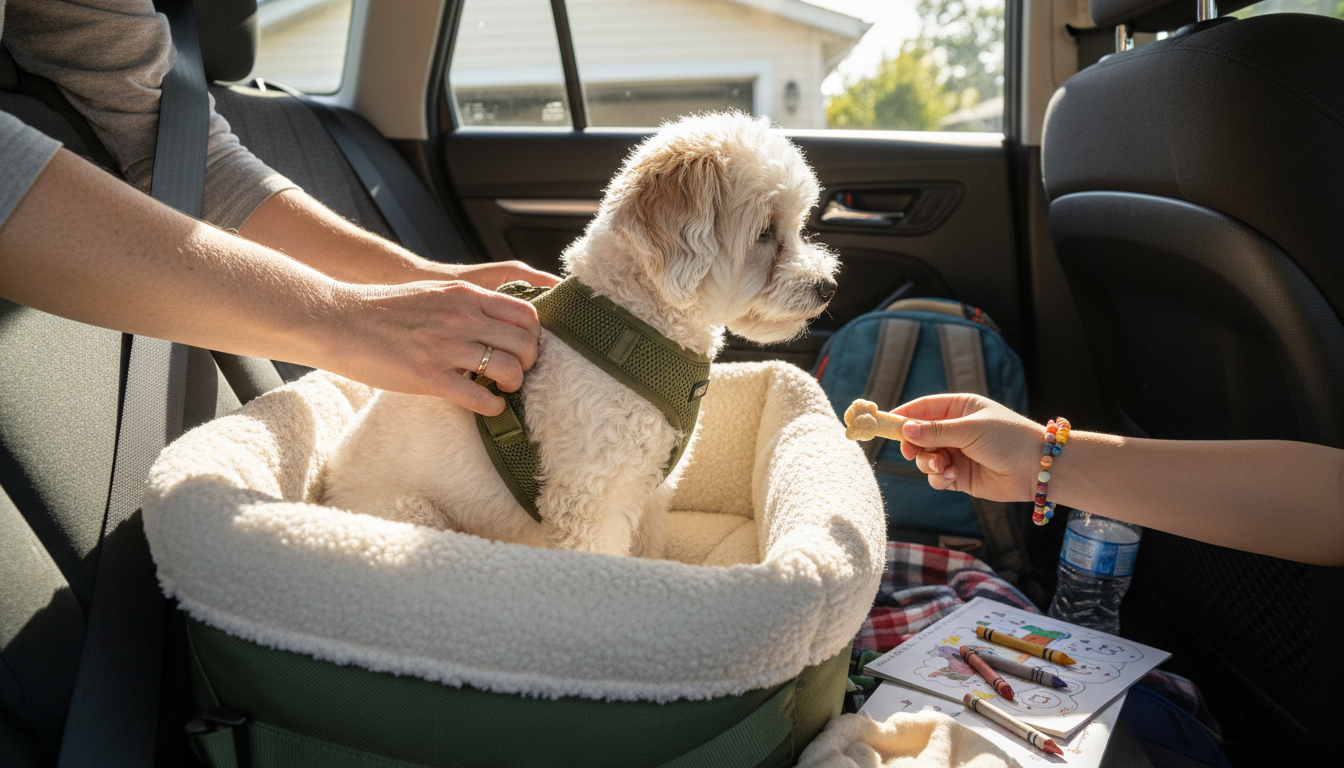
The safest way for a small dog to ride in a car is properly restrained—never loose on a seat, in your lap, or roaming the cabin. A crash-tested harness secured to a seat belt, or a secured, well-structured carrier that’s anchored with the vehicle’s seat belt, helps reduce the risk of injury during sudden stops and keeps the driver from being distracted. For many small dogs, a supportive dog car seat or carrier designed for travel offers a cozy, elevated spot while still prioritizing safety and stability.
1) Crash-tested harness + seat belt
A properly fitted harness designed for car travel can keep your dog positioned on the seat. Make sure the harness is snug (two-finger rule at the straps) and attached to the seat belt per the product instructions—never to a collar.
2) Secured travel carrier or dog car seat
A quality carrier or car seat should have a structured build, comfortable padding, and reliable attachment points to route the seat belt through. The goal is to prevent sliding, tipping, or launching forward. For small dogs who prefer to curl up, a carrier-style car seat can feel calming while still being secure.
Choose the right placement. The back seat is typically the safest spot, away from active airbags. Keep your dog centered on the seat and fully restrained.
Check the fit. Your dog should be able to sit, stand, and turn around comfortably without excessive slack that could allow them to be thrown around.
Prevent common hazards. Avoid letting your dog ride with their head out the window, and don’t use a leash as a restraint—it can tangle or tighten dangerously.
When dogs feel stable and supported, they’re less likely to pace, whine, or try to climb into the front seat. Look for soft, durable materials, supportive padding, and secure straps—especially for frequent trips.
For a deeper look at choosing a secure, cozy option for small dogs, visit this guide to dog car seat carrier bags.
Most dogs do best with a bed that matches their size and sleep style, offers easy-to-clean materials, and provides enough support for their joints—especially as they get older.