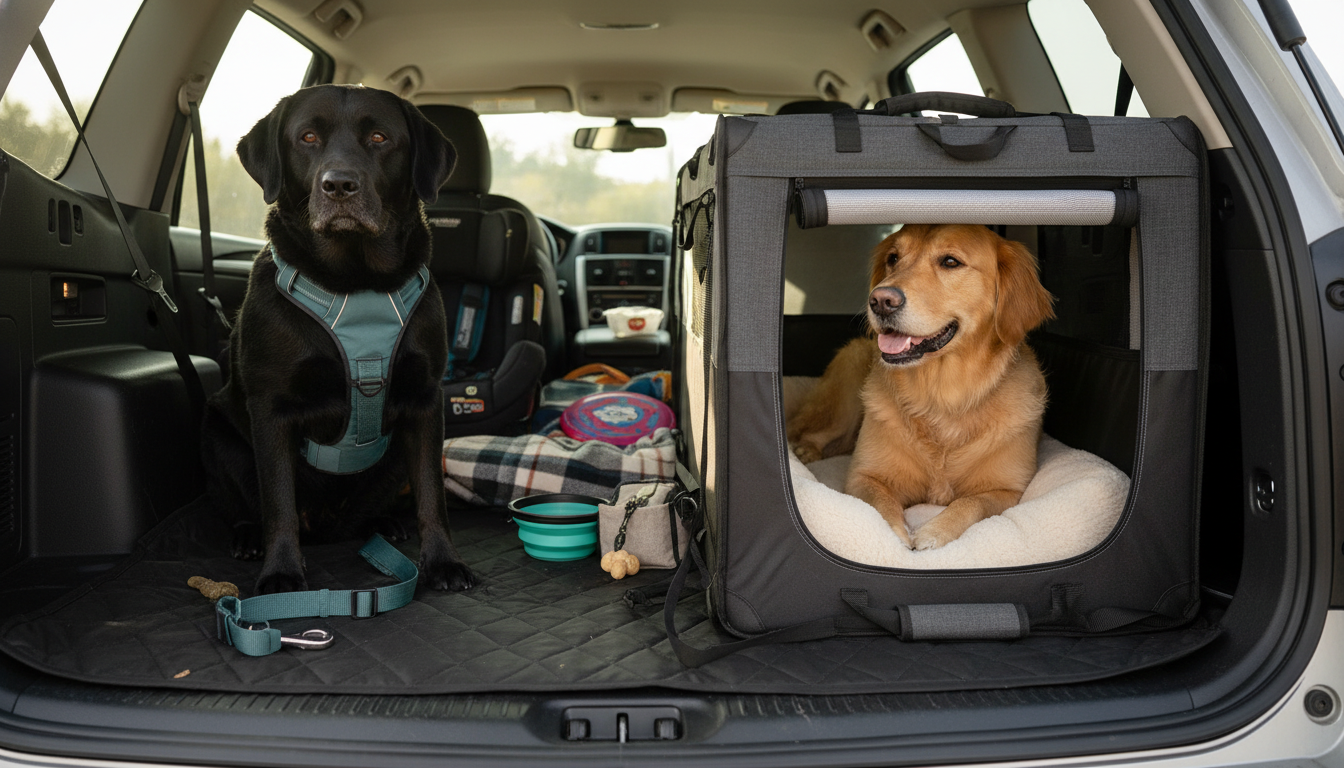
The safest option is to properly restrain your large dog so they can’t become a dangerous projectile during sudden stops or a crash. For most big dogs, that means either a crash-tested harness secured to the seat belt system or a sturdy, well-anchored travel crate that fits your dog’s size and is positioned to minimize movement.
A quality harness designed for car travel helps distribute force across the chest and body (instead of the neck) and keeps your dog from climbing into the front seat. Attach it exactly as the manufacturer instructs, using the vehicle’s seat belt or a dedicated tether point. Place your dog in the back seat whenever possible—airbags in the front can injure pets.
If your dog is crate-comfortable, a crate can be an excellent choice. Pick a crate that’s large enough for your dog to stand and turn around, but not so oversized that they’re thrown around on impact. Secure it so it won’t slide, and keep the interior calm and cozy with a familiar mat or bedding.
Before you hit the road, do a quick safety check: keep windows only slightly cracked (to prevent jumping), stash heavy items so they can’t fly forward, and bring water for longer trips. Start with short drives to build positive associations, especially if your dog gets anxious.
For more travel-friendly comfort ideas and gear guidance, visit the full guide here: https://kingwuff.com/blog/guide-puff-puppy-dog-car-seat-carrier-bag-king-wuff/.
Use a crash-tested harness or a properly secured crate so your dog can’t be thrown forward. Keep your dog in the back seat and make sure the restraint is fitted and attached correctly every time.
It’s still risky—cars can drop to dangerously low temperatures, and dogs can become hypothermic. If you must stop briefly, keep it short and ensure your dog stays warm and monitored.
Not long—car interiors can heat up fast, even with windows cracked, and heatstroke can occur within minutes. The safest choice is to never leave a dog in a hot car.