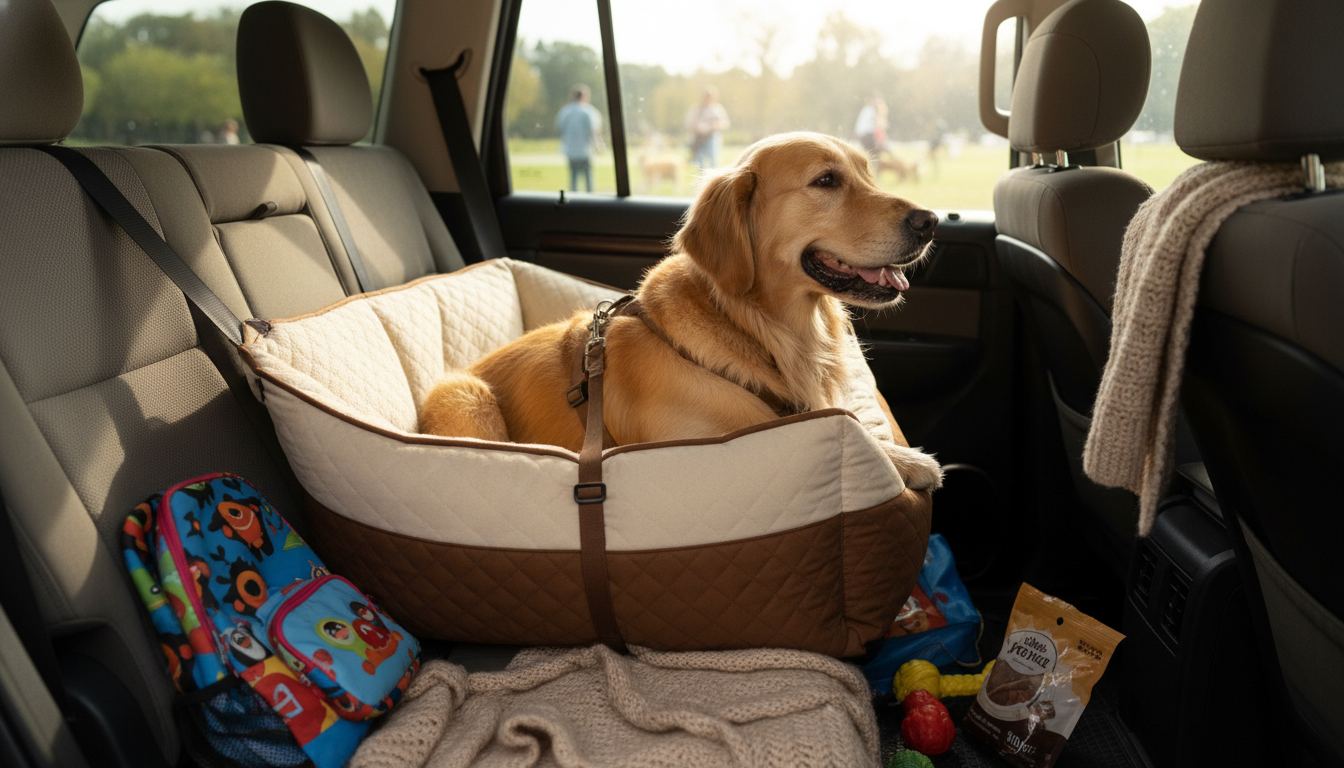
The safest place for most dogs is the back seat, secured with a crash-tested restraint or inside a well-fitted carrier that’s anchored by the seat belt. The rear seating area is farther from airbags and the dashboard, and it generally offers better protection in sudden stops or collisions.
Front-seat airbags are designed for adult humans and can seriously injure a dog, even in a minor crash. In the back seat, a properly restrained dog is less likely to be thrown forward, hit hard surfaces, or become a dangerous projectile for passengers. For small dogs, a seat-belted carrier or a secured dog car seat can also help them stay stable and comfortable while keeping them contained.
If your vehicle has a middle rear seat with a seat belt and a good anchor point, that position can reduce side-impact exposure. If that spot isn’t practical, either rear side seat can work well—what matters most is using a restraint that keeps your dog from jumping, sliding, or flying forward.
Choose a restraint that matches your dog’s size and travel style: a crash-tested harness that clicks into the seat belt for larger dogs, or a secure carrier/seat that routes the seat belt through designated guides for smaller pups. Keep your dog’s leash off while buckled in, and make sure the restraint is snug enough to limit movement without restricting breathing.
For a deeper look at choosing the right setup for comfort and safety, visit this guide: https://kingwuff.com/blog/guide-puff-puppy-dog-car-seat-carrier-bag-king-wuff/.
The back seat is typically safer because it keeps dogs away from front airbags and reduces forward impact risk. The key is using a secure harness or seat-belted carrier.
A supportive, enclosed-style seat or carrier that feels “nest-like” can help anxious dogs settle. Look for a stable design that sits level and stays firmly secured with the seat belt.
Laws vary by state and local jurisdiction. Even when it’s legal, the back seat is generally the safer choice due to airbag risk.