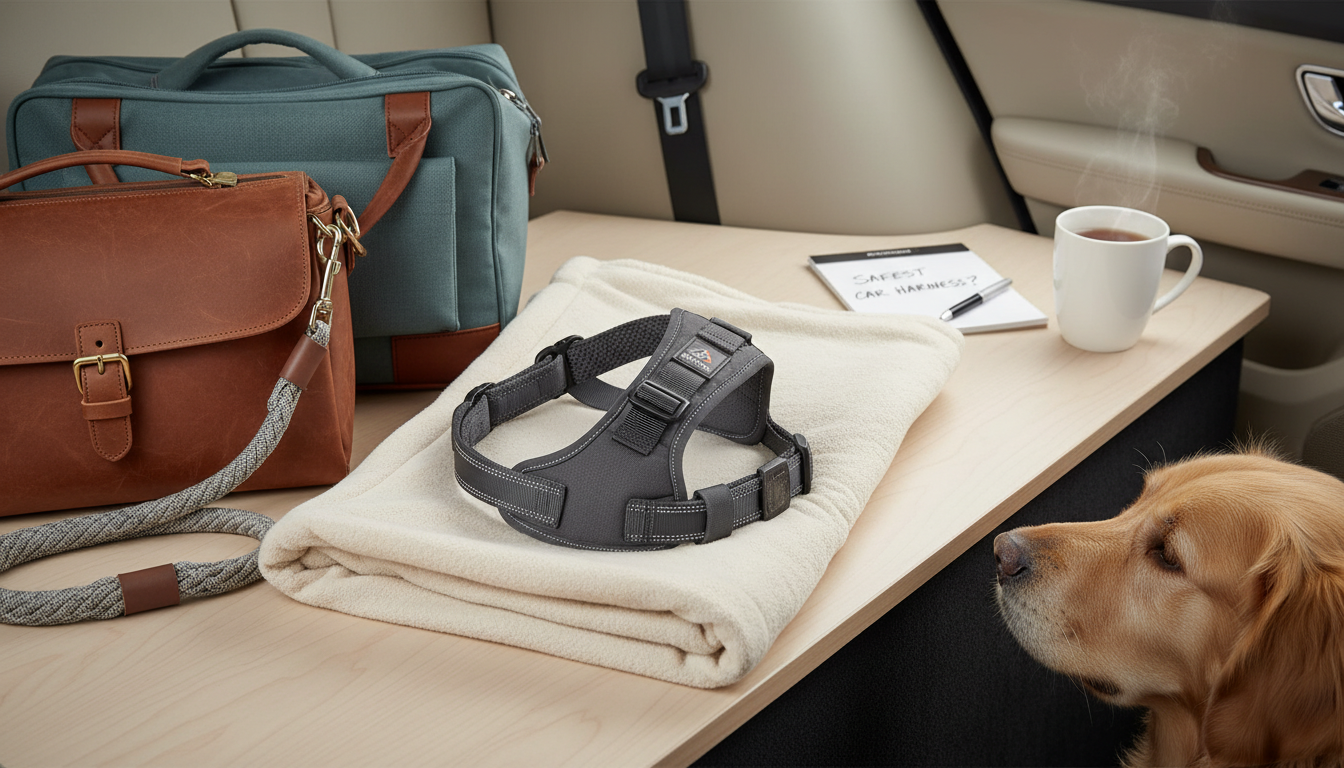
The safest dog car harness in a crash test is one that has been independently crash-tested to recognized standards and can show documented results, not just “crash-tested” marketing language. Look for harnesses tested by reputable programs (like the Center for Pet Safety) or tested to child-seat style standards (such as FMVSS 213) with clear pass/fail reporting and weight-range specifics.
“Safest” comes down to proof and fit. A strong candidate will clearly list the testing protocol used, the crash-test dummy size/weight, and the vehicle restraint method (seat belt or LATCH-style connection). If a brand can’t provide test details, the harness may not perform as expected in a real collision.
Even the best harness can’t help if it’s used incorrectly. Follow the manufacturer’s instructions exactly, keep straps flat (no twists), and re-check the fit before every drive. Dogs should ride in the back seat whenever possible; front seats add airbag risk.
For smaller dogs, a crash-tested carrier or car seat can be another safety-forward option, especially when it’s designed to work with the vehicle seat belt. If you’re exploring comfortable travel setups that keep pups secure and cozy, see our guide here: Puff Puppy Dog Car Seat Carrier Bag Guide.
Below are practical points for quick checklist for choosing the safest option.
Most dogs do best with a bed that matches their size and sleep style, offers easy-to-clean materials, and provides enough support for their joints—especially as they get older.