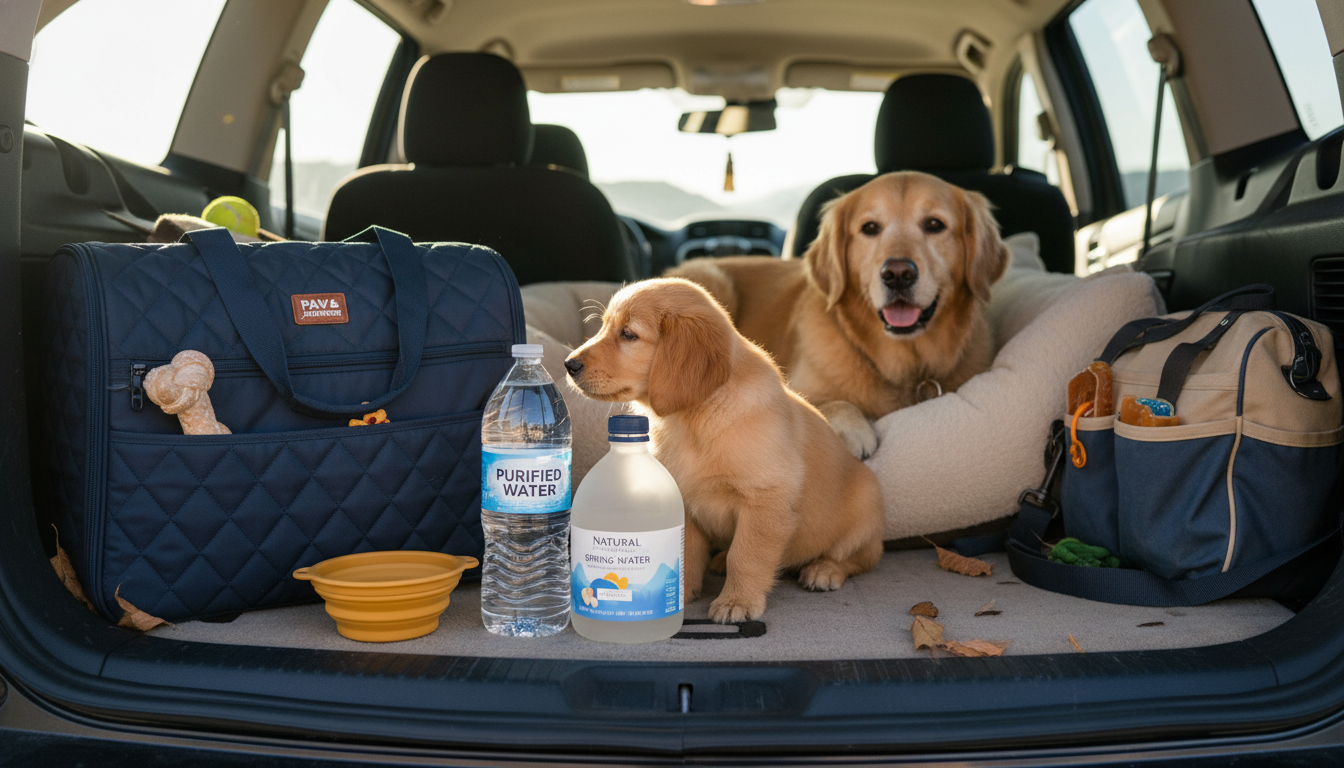
The safest bottled water for dogs is plain, unflavored water that’s been properly treated and packaged—most often purified or spring water from a reputable brand. Look for bottles labeled “purified” (reverse osmosis, distillation, or similar filtration) or “spring water” that’s been tested for contaminants. The best choice is the one that’s clean, consistent, and easy for your dog to drink without stomach upset.
Choose: purified water, spring water, or drinking water with a clear source and treatment method. These options are generally safe for everyday hydration and travel days.
Avoid: flavored water, electrolyte waters made for humans, and anything with added sweeteners (including xylitol) or caffeine. Also skip “sparkling” or carbonated water—some dogs tolerate it, but it can cause gas or discomfort.
When you’re on the go, safety isn’t just about what’s in the bottle—it’s also about how it’s stored. Pick sealed bottles that haven’t been sitting in heat for long periods, and don’t reuse single-use bottles for days at a time. If you’re out walking, transfer water into a clean dog bottle or collapsible bowl and toss leftovers rather than letting them warm up in the sun.
Dogs often drink better when water is familiar. If your pup has a sensitive stomach, stick with the same type of bottled water each time you travel, and offer small sips during breaks. For an organized, hands-free way to carry water, treats, and essentials on walks, check out this guide to a stylish dog walking bag: https://kingwuff.com/blog/guide-beige-rover-dog-walking-bag-hands-free-organized-carry/.
Purified water is usually a great everyday option. Distilled water is generally safe short-term, but it can be less ideal as the only water source for long periods—ask your vet if your dog has health concerns.
Clean, fresh water—typically tap water that’s safe in your area or reputable purified/spring bottled water. The best choice is one your dog drinks comfortably without digestive issues.
Common signs can include extreme weakness, refusal to eat or drink, labored breathing, confusion, or inability to stand. Contact a veterinarian promptly for guidance and comfort care options.