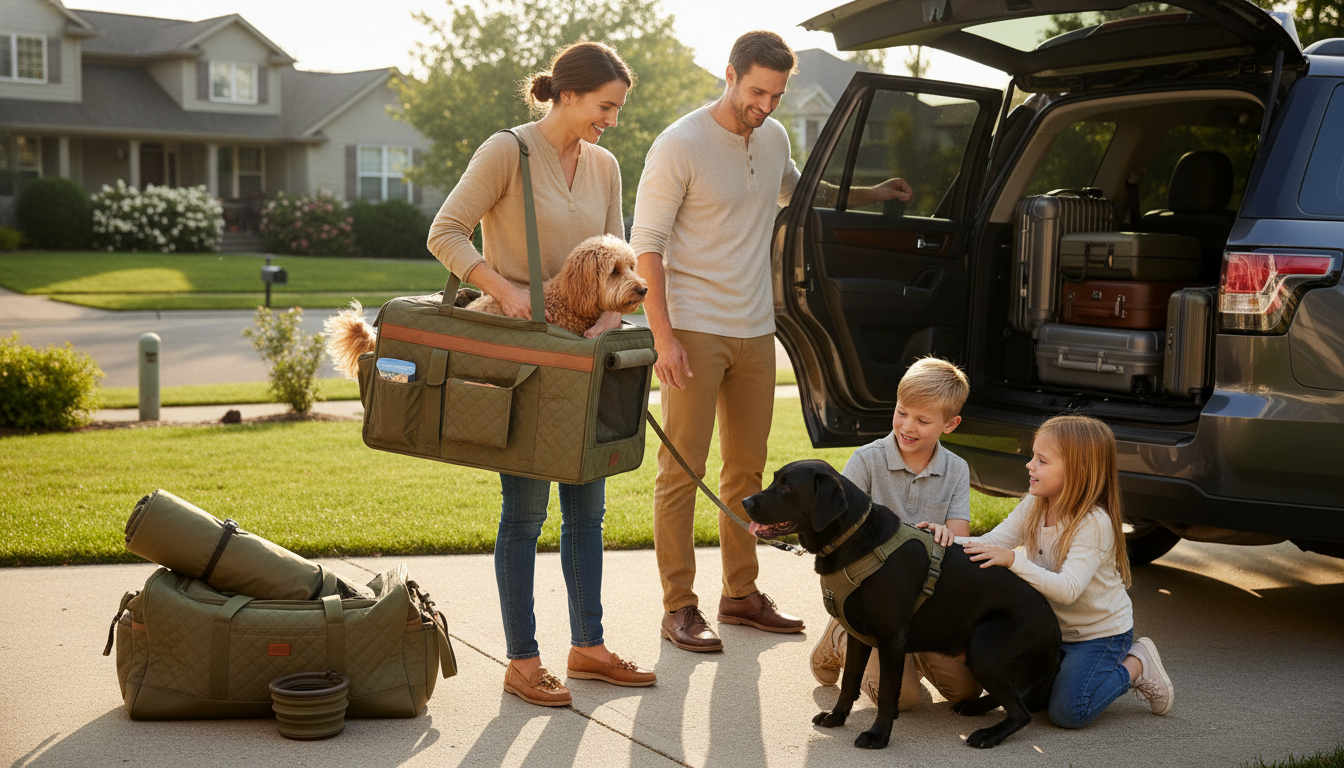
The most comfortable way to carry a dog is the method that keeps their body fully supported, their spine in a natural position, and their stress low—while also protecting your back. For most pet parents, that means using a well-fitted dog carrier for small-to-medium dogs, and a two-person lift or supportive harness technique for large dogs.
If your dog fits safely in a carrier, a structured, padded design is often the coziest choice. Look for a carrier with a stable base, breathable panels, and enough room for your dog to sit or lie down naturally. A wide, cushioned strap (or backpack-style carry) helps distribute weight so you can walk longer without strain.
Comfort tip: keep your dog’s head and airway clear, and aim for “snug but not tight”—your pup should feel secure without being squeezed.
For quick pickups (like stairs, vet visits, or crowded spaces), support your dog with two points: one arm under the chest (behind the front legs) and the other arm under the rear (supporting the hips). This keeps weight balanced and prevents dangling legs, which can feel scary and uncomfortable for many dogs.
Start with short practice sessions, add a soft blanket or familiar scent item when using a carrier, and keep movements slow and steady. Watch for signs your dog needs a break—stiff body, whale eye, heavy panting, or trying to climb out.
For more comfort-first travel and walking gear ideas, visit this pet travel comfort guide.
Use a two-person lift when possible, supporting the chest and hips evenly. If you’re alone, a supportive lift harness or sling made for large dogs is safer and more comfortable than carrying in your arms.
Avoid grabbing under the armpits or lifting by the front legs, which can strain joints. Don’t scoop quickly from above; instead, support the chest and rear and lift smoothly.
The safest option is a properly fitted lift harness with handles or a two-person carry that supports both the front and back end. Keep the dog close to your body and lift with your legs to protect your back.