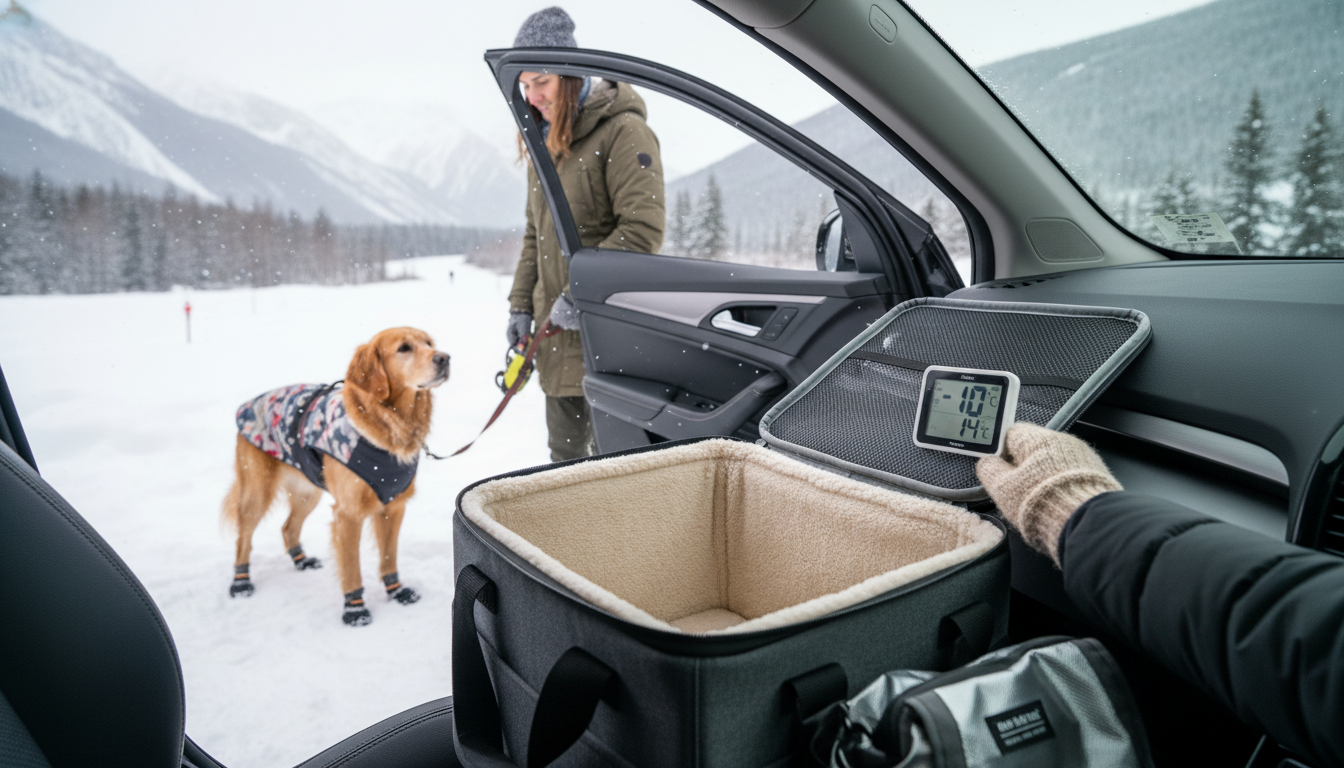
For most healthy, adult dogs, short walks can be safe down to about 20°F if conditions are dry and the route is clear of ice and harsh de-icers. Once temperatures drop to around 0°F, many dogs are at higher risk for discomfort and cold-related problems, and it’s usually better to keep outdoor time very brief or skip the walk entirely.
That said, the “lowest safe temperature” isn’t one-size-fits-all. Small breeds, short-haired dogs, seniors, puppies, and dogs with health issues often need a higher cutoff (sometimes 32°F or warmer), while northern breeds with thick coats may handle colder weather better—though their paws can still be vulnerable.
Pay attention to body language, not just the thermometer. Head home if you notice shivering, lifting paws, slowing down, tucking the tail, whining, or trying to turn around. Cold wind can make it feel much colder than the listed temperature, and damp fur can pull heat from the body quickly.
Keep winter walks cozy and practical:
For a simple way to keep gear close and hands free on chilly days, see the full walking setup guide here: hands-free dog walking bag guide.
It can be. Cold surfaces, ice, and salt can dry, crack, or irritate paw pads, especially on longer walks.
If it’s near 20°F or below, keep the walk short and watch for shivering or paw-lifting. Wind, wet conditions, and your dog’s coat type can make it too cold sooner.
Many dogs tolerate brief exposure around freezing, but ice, salt, and very cold pavement can quickly cause discomfort. Booties or paw balm help extend comfort and protect pads.