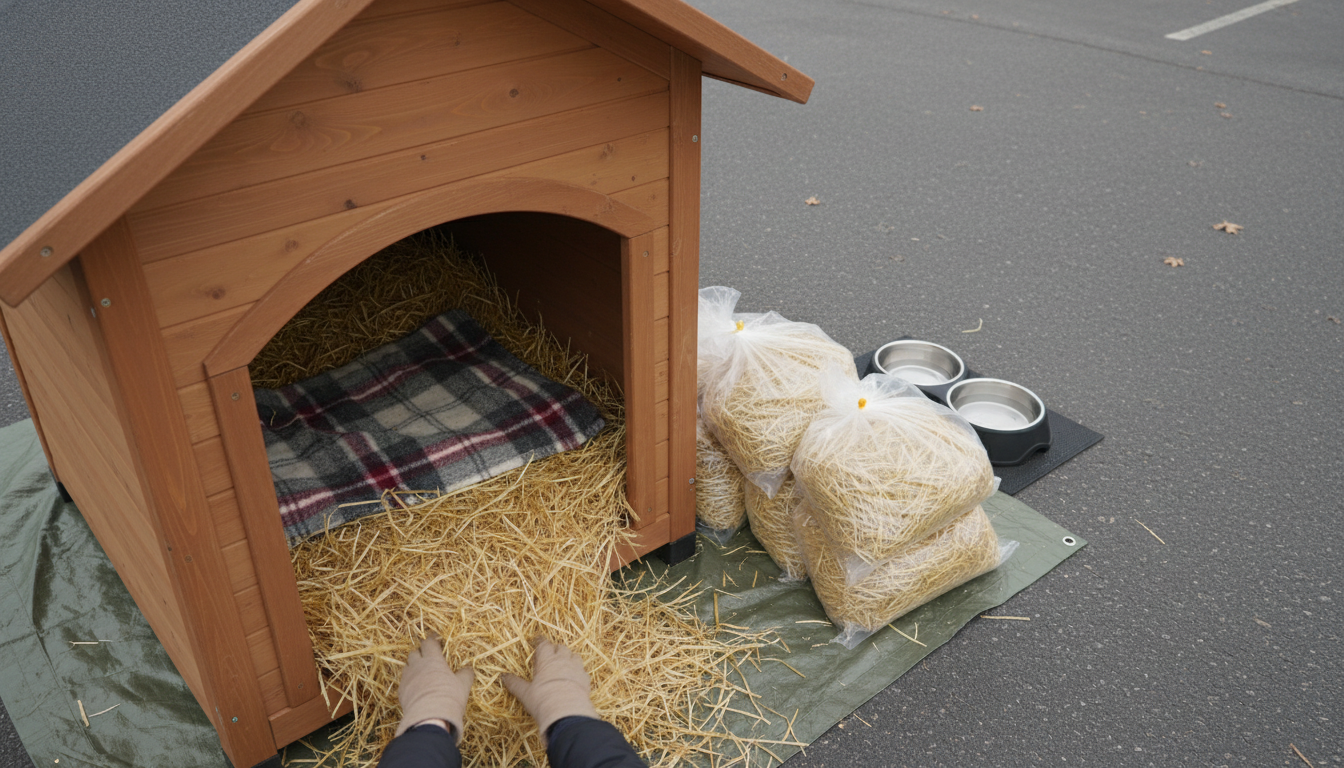
The best winter bedding for an outside dog is dry, deeply insulating, and easy to swap out when it gets damp. For most climates, the go-to choice is a thick layer of clean straw (not hay) because it traps warm air, resists moisture better than fabric, and lets dogs burrow to create a cozy “nest.” If straw isn’t available, shredded paper designed for animal bedding can work as a temporary alternative, but it typically needs more frequent replacement.
Avoid blankets, towels, and foam pads in outdoor dog houses during winter. While they feel soft at first, they can absorb moisture from snow, rain, and condensation, then freeze—pulling heat away from your dog. Cedar shavings can irritate some dogs’ skin and respiratory systems, so they’re usually not the best pick for a closed dog house.
Use enough to create a deep, burrow-friendly layer—generally 4–8 inches for small dogs and 8–12 inches for medium to large dogs. Top it off as it compresses. A well-bedded space should allow your dog to tuck in and turn around comfortably without lying on a cold surface.
Bedding works best when the dog house is set up for winter: raised off the ground, draft-free, and protected from wind and precipitation. Place the entrance away from prevailing winds, and consider a vinyl door flap to reduce heat loss. Keep water from spilling into the bedding area, and check daily for dampness—dry bedding is warm bedding.
Many outside dogs spend part of the day indoors or in a warmer space. A supportive indoor bed can help them recover and rest comfortably between cold-weather outings. For a cozy, pet-centric guide to choosing the right bed, visit this King Wuff dog bed guide.
Pine straw can provide some insulation, but it tends to break down faster and may not loft as well as clean straw. If used, replace it often and keep it dry.
Clean, dry straw is one of the warmest, most practical options because it insulates well and handles moisture better than fabric. The warmest setup also depends on a draft-free shelter and plenty of bedding depth.
Raise it off the ground, block drafts, add a wind-facing barrier like a door flap, and use deep, dry straw bedding. Keep the interior dry and check bedding frequently for moisture.