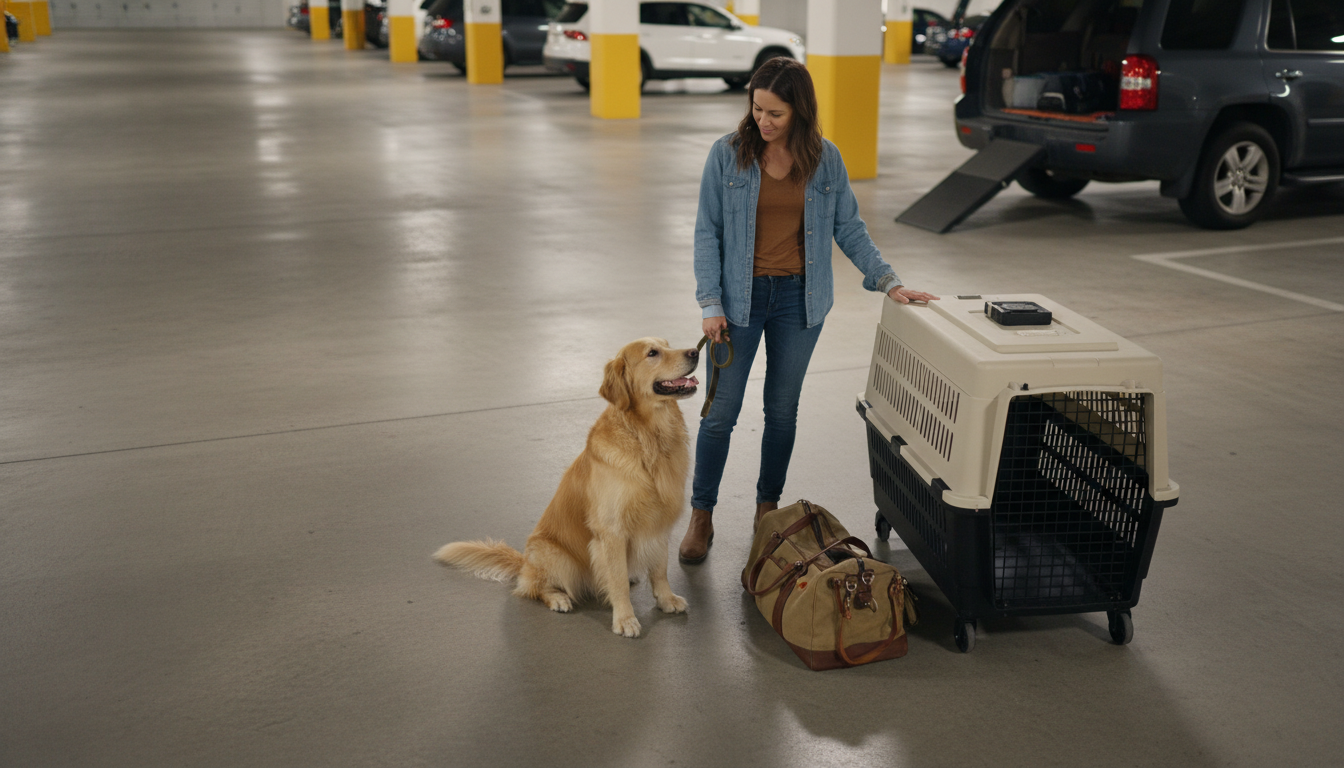
If your dog is too big to comfortably fit in an airline-approved carrier (able to stand up, turn around, and lie down naturally), it’s a sign to switch plans—not to squeeze them in. Airlines can deny boarding if the carrier is cramped, soft-sided bulges, or your pup looks uncomfortable, and that can turn travel day into a stressful scramble.
Start with your airline’s in-cabin pet policy and measure your dog’s length (nose to base of tail) and height (floor to top of shoulders) while they’re standing. Then compare those numbers to the carrier’s interior dimensions, not the “product size” listed on a tag. If your dog is brushing the top or can’t pivot easily, they’re too large for that carrier.
If in-cabin isn’t possible, the next best option depends on your dog’s size, temperament, and route:
For a cozy, practical rundown on picking travel-friendly gear—carriers, walk bags, and comfort essentials—visit this pet travel comfort gear guide.
A dog is usually “too big” for in-cabin travel if they can’t stand up, turn around, and lie down comfortably inside an airline-compliant carrier that fits under the seat. Exact limits vary by airline and aircraft, so always confirm the specific dimensions allowed.
Sometimes, but weight alone doesn’t decide fit—body length and height matter more. A lean 20 lb dog may fit comfortably while a stockier dog may not, even at the same weight.
Use an airline-approved, IATA-compliant hard crate sized for your dog to stand, turn, and lie down naturally, and follow the airline’s health, temperature, and check-in requirements. Schedule direct flights when possible and confirm breed and seasonal restrictions early.