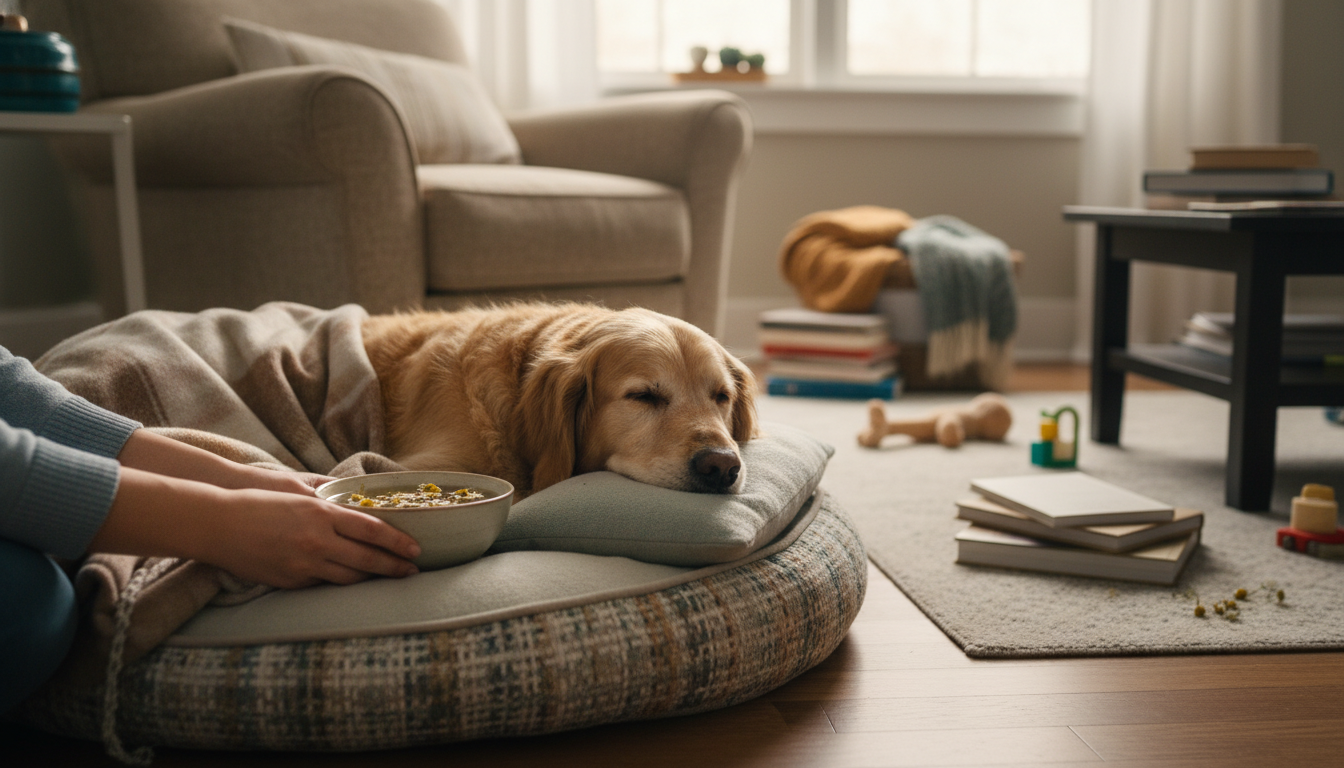
If your dog is restless at bedtime, the safest “home remedy” usually isn’t something to give them—it’s a set of calming, comfort-first changes that help them feel secure and sleepy. Start by looking for an obvious trigger: late-night noise, a too-bright room, an empty stomach, lack of evening exercise, or a bed that doesn’t feel cozy or supportive.
1) Create a consistent wind-down routine. Aim for the same last potty break, a quick drink of water, then lights down. Dogs relax faster when the pattern is predictable.
2) Add gentle evening activity (not a workout). A short sniff walk or a few minutes of easy “find it” games helps burn mental energy without revving them up.
3) Offer a small, boring bedtime snack. For some dogs, a little portion of their regular kibble can take the edge off overnight hunger. Avoid rich treats that can upset stomachs.
4) Make their sleep spot feel like a cue for calm. Choose a quiet corner away from drafts and foot traffic. Many dogs sleep better with a plush, nest-like bed that supports joints and helps them feel tucked in.
5) Use low-risk calming comforts. Try a soft blanket that smells like home, gentle massage along the shoulders, and steady background sound (a fan or white noise). If your dog likes it, a covered crate can also feel den-like and secure.
Avoid giving human sleep aids, essential oils, or “natural” herbal products without veterinary guidance—many can be unsafe for dogs or interact with medications. If your dog’s sleeplessness is sudden, paired with pacing, panting, itching, accidents, or signs of pain, contact your vet to rule out discomfort or anxiety.
Need a cozier setup for bedtime? This round-bed guide can help you build a snug sleep space your dog actually wants to settle into: https://kingwuff.com/blog/guide-paw-pillow-round-dog-bed-small-dogs-puppies/
“Naturally” usually works best through routine, a calm environment, and a comfortable bed rather than supplements. If you’re considering anything ingestible, check with your vet first.
Try a consistent bedtime routine, a short sniff walk, a small kibble snack if needed, and a quiet, cozy sleep area. Avoid human medications and strong scents like essential oils.
It’s safest to focus on comfort and calming cues (quiet room, dim lights, white noise, gentle massage). If your dog still can’t settle, ask your vet before using any calming chews or supplements.